
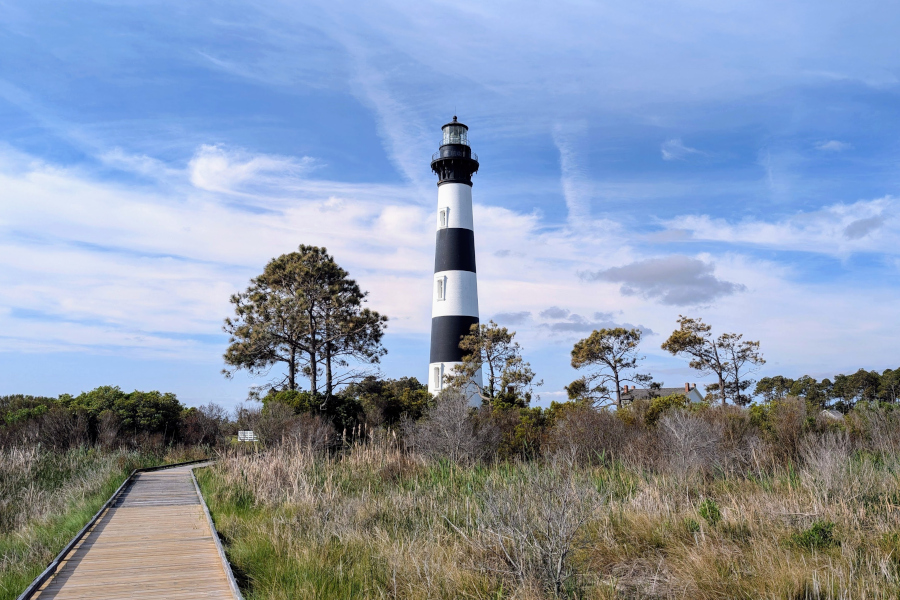
Each year, visitors flock to the Outer Banks, North Carolina, to enjoy its beaches and laid-back lifestyle. The OBX lighthouses of North Carolina are each unique, and some of them are climbable. I have fond memories of climbing Currituck Beach Light and waving to my grandmother below. Today, the lighthouses that were introduced to help guide sailors have a wide appeal to road trippers, history lovers, photographers, and families. This guide covers all major Outer Banks lighthouses, including which ones you can climb, the best times to visit, and how to plan a lighthouse-focused road trip.
Plan your next Outer Banks lighthouse tour with this guide!
Outer Banks Lighthouses at a Glance
- Total lighthouses: 4 historic ocean-facing lighthouses
- Climbable lighthouses: Currituck Beach, Bodie Island, Cape Hatteras
- Not climbable: Ocracoke Lighthouse (exterior viewing only)
- Best time to visit: Spring and fall for fewer crowds and mild weather
- Best for photography: Bodie Island Lighthouse
- Most iconic: Cape Hatteras Lighthouse
- Best for a road trip: North-to-south route from Corolla to Ocracoke
Why the Outer Banks Are Famous for Lighthouses
The “Graveyard of the Atlantic” and Maritime History
Once the playground of pirates like Blackbeard, the coastal region is known as the “Graveyard of the Atlantic” due to its shifting sandbars and unpredictable water currents. In particular, the Diamond Shoals off Hatteras are notorious. Since the early 16th century, there have been more than 5,000 documented shipwrecks.
During World War II, Nazi Germany used the dangerous conditions to its advantage. For much of 1942, U-boats sat in wait to strike on Allied ships sailing up the coast in what was dubbed Torpedo Alley. Some estimates put the number of ships sunk at over 100.
How Lighthouses Shaped Life on the Outer Banks
Fishing has been a major industry in the region since at least the 18th century. Combining the usual hazards of being at sea with the unique challenges of the waters off the Outer Banks, it’s easy to understand the importance that lighthouses have played.
How Many Lighthouses Are in the Outer Banks?
There are four historic ocean-facing lighthouses commonly considered part of the Outer Banks: Currituck Beach, Bodie Island, Cape Hatteras, and Ocracoke. Additional lights such as Roanoke Marshes and Cape Lookout exist nearby but are not typically included in Outer Banks lighthouse itineraries.
Major Lighthouses in the Outer Banks, NC You Can Visit
- Currituck Beach Lighthouse
- Bodie Island Lighthouse
- Cape Hatteras Lighthouse
- Ocracoke Lighthouse
Lighthouses Near the Outer Banks (What Counts and What Doesn’t)
A coastal lighthouse provides light for navigational aid for ships at sea on the open ocean. A river light provides light for navigational aid for ships entering and exiting the changing waters of a river.
Roanoke Marshes Lighthouse is the region’s only river light. It’s a 2004 reconstruction.
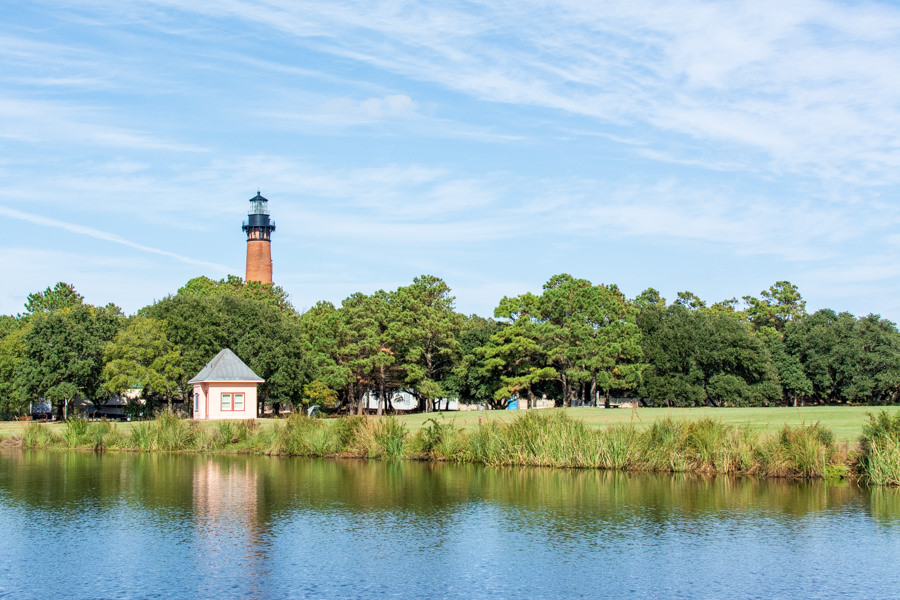
Currituck Beach Lighthouse in Corolla, Outer Banks
Where Is Currituck Beach Lighthouse Located?
The Currituck Beach Lighthouse is the northernmost lighthouse on the Outer Banks. It’s located in Historic Corolla Village.
The address is 1101 Corolla Village Rd, Corolla, NC.
History of the Currituck Beach Lighthouse
Talk began as early as the 1850s about the need for another lighthouse on the 40 miles of unlit coast. Construction, which used the same plans as the Bodie Island Lighthouse, didn’t start on the Currituck Beach Light until 1873. The light was completed in 1875, with the Keeper’s House added the following year. In 1939, the light was automated, making a permanent keeper no longer necessary. When lit, the light can be seen for 18 nautical miles.
Why the Currituck Beach Lighthouse Is Unique
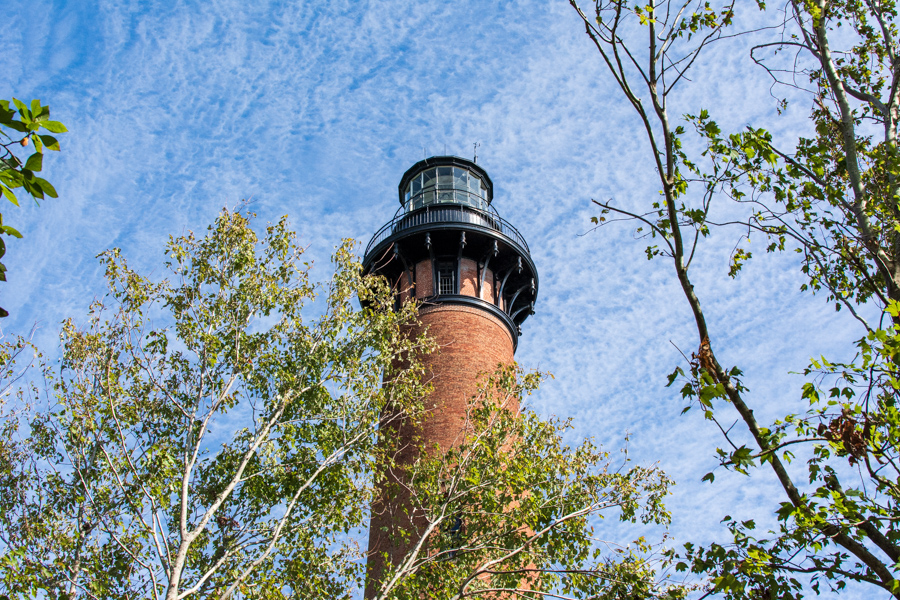
Unlike the painted exteriors of the other Outer Banks lighthouses, Currituck Beach Light remains unpainted. It’s built from roughly one million bricks, all left unpainted.
It’s also worth noting that the light is the newest of the original Outer Banks lighthouses.
Can You Climb the Currituck Beach Lighthouse?
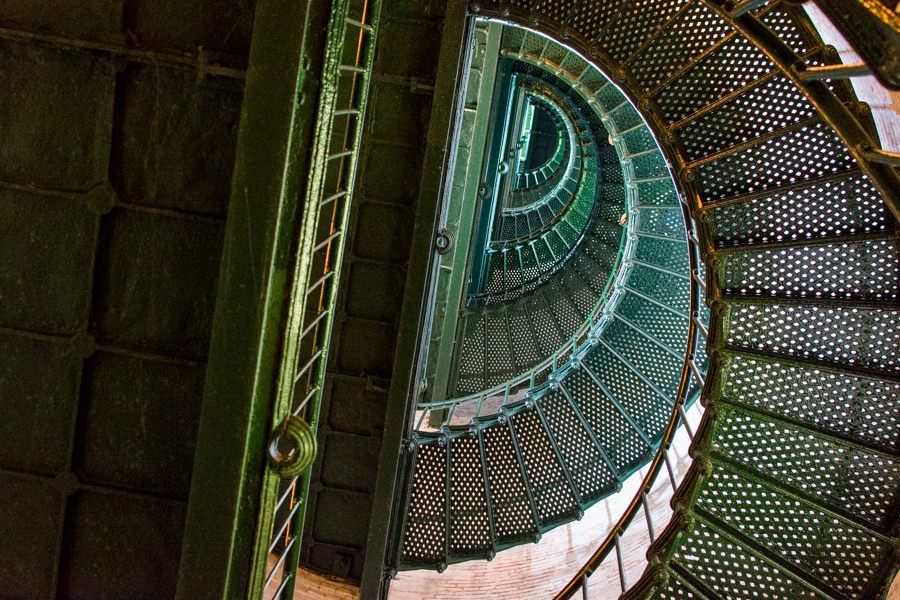
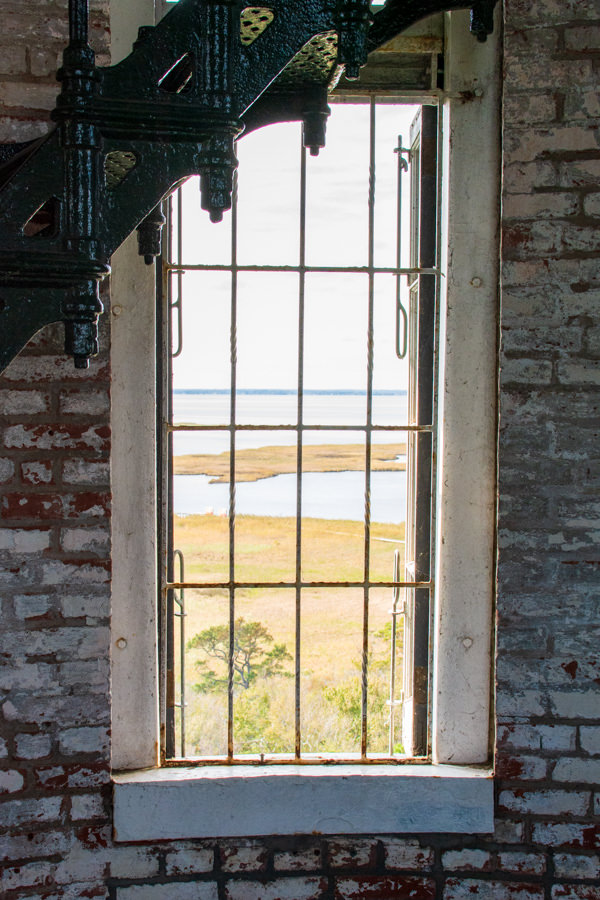
Yes, you can climb the Currituck Beach Lighthouse! Weather-permitting from mid-March until late November, the lighthouse is open. For a fee, visitors can climb the 220 steps to reach the outdoor gallery of the 162-foot lighthouse. (The light itself is not open to the public.)
The lighthouse grounds are open year-round.
Best Photo Spots at Currituck Beach Lighthouse
Photographers can get some fun photos up-close of the lighthouse, taking advantage of its extreme height.
But I recommend heading a short distance away to Historic Corolla Park. There, you can get some stunning photos of the lighthouse peeking over the evergreen trees with the Whalehead Club or the historic boathouse in the foreground.
How Much Time to Spend at Currituck Beach Lighthouse
If you plan to climb the lighthouse, plan to spend about an hour. How long it takes to climb the lighthouse is up to you. There is also a small museum and a gift shop.
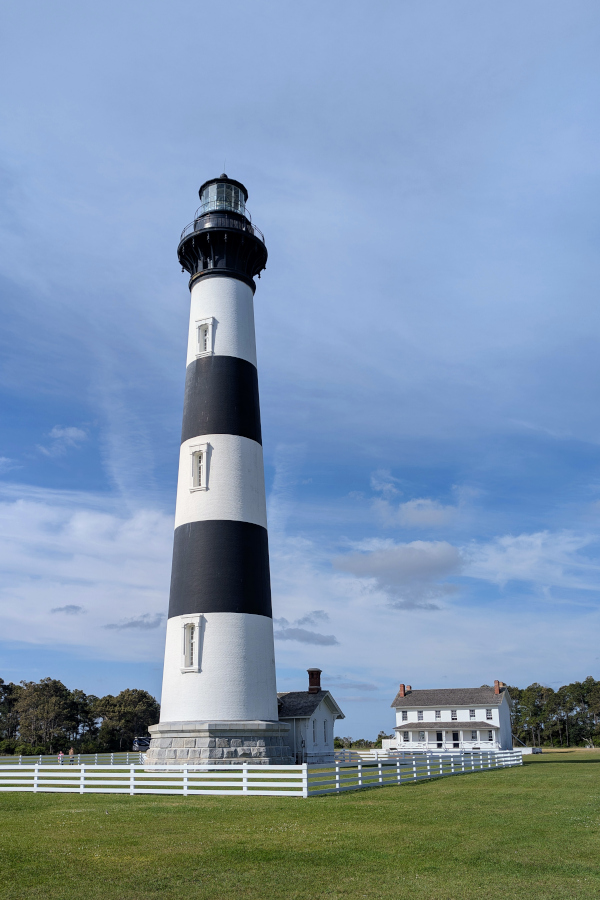
Bodie Island Lighthouse Near Nags Head
Where Is Bodie Island Lighthouse?
Bodie Island Lighthouse (pronounced “body”), in Nags Head, is in the northern portion of Cape Hatteras National Seashore.
The address is 8210 Bodie Island Lighthouse Road, Nags Head, NC.
History of Bodie Island Lighthouse
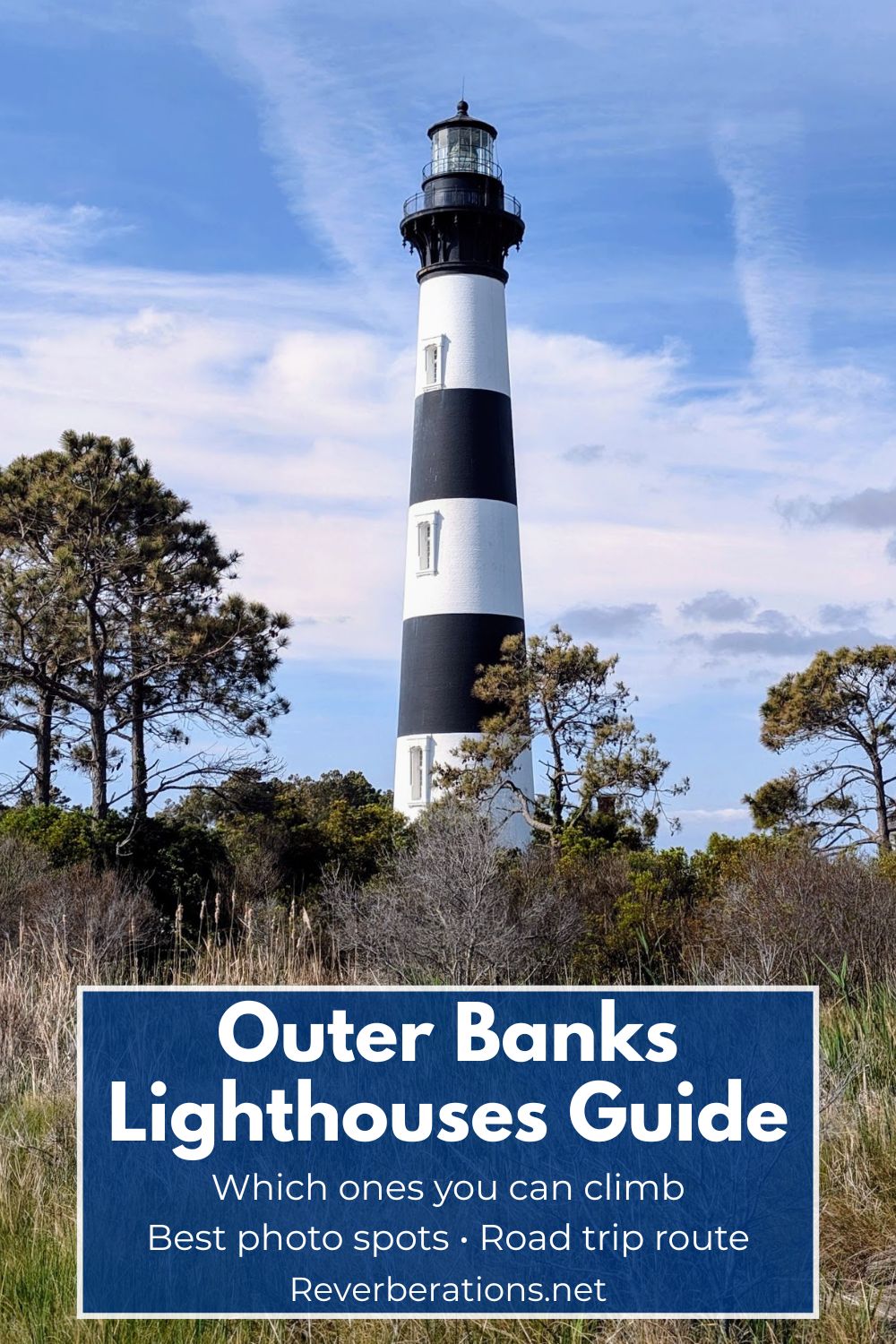
The Bodie Island Lighthouse is instantly recognizable with its thick white and black banding. The lighthouse standing today is actually the third iteration of the lighthouse.
The first one, from 1847, was on Pea Island and was poorly built. The lighthouse had a brick foundation without any supports and developed a lean. It was subsequently abandoned. A replacement was built in 1859, but that was destroyed during the Civil War by the Confederate Army in 1861, so the Union Army couldn’t use it.
In 1872, the third and currently final version was built. And a Double Keepers’ Quarters followed. The location of the current light is farther inland and north than its predecessors.
Climbing the Bodie Island Lighthouse
From April through October, Bodie Island Lighthouse can be climbed. Timed tickets are only available for purchase online. Tickets are not available in advance; tickets are only available for the current day and on a first-come, first-served basis.
The light has 219 steps to reach the outdoor gallery.
The Keepers’ Quarters is currently closed indefinitely, following a 2025 fire.
Boardwalks, Wildlife, and Marsh Views
The hidden secret of Bodie Island Light is the boardwalk just off to the side of the parking lot. The eighth-mile wooden boardwalk leads out to an observation deck on a freshwater pond surrounded by a marsh. The area is rich in wildlife and along the Atlantic Flyway, a major migratory route for birds.
The boardwalk also offers a stunning shot of Bodie Island Lighthouse over the marsh.
Best Time to Visit Bodie Island Lighthouse for Photos
Photographers will enjoy taking shots of the lighthouse in the morning or in the evenings, depending on seasonal openings at the park. Take note that the lighthouse does special climbs when there’s a full moon. The lighthouse set against a full moon will surely create some stunning photos.
Cape Hatteras Lighthouse in Buxton
Why Cape Hatteras Lighthouse Is the Most Famous OBX Lighthouse
Cape Hatteras Lighthouse is perhaps the most iconic lighthouse, not just in the Outer Banks, but also in the United States. It’s instantly recognizable with its black and white stripes. It’s also the tallest lighthouse in the US at 198 feet.
The lighthouse serves an important purpose. It’s located along the most dangerous section of the Diamond Shoals.
History and Relocation of Cape Hatteras Lighthouse
In 1802, the original octagonal Cape Hatteras Lighthouse was built from sandstone in Buxton, NC. But there were complaints about the performance of the lighthouse, especially in foggy or low visibility conditions. So in the early 1850s, the lighthouse was elevated 150 feet, and a new top-of-the-line first-order Fresnel lens was installed.
Following the Civil War, the lighthouse was in such bad shape that it was decided it would be demolished and replaced. Sparing no expense, the new Cape Hatteras Lighthouse was completed in 1870 with roughly 1.25 million bricks. The candy-stripe paint followed in 1873.
When it was built in the 19th century, the lighthouse stood about 1600 feet from the ocean; by 1930, it was about 150 feet out due to erosion. To future-proof the lighthouse, in 1999, it was relocated a further 1600 feet inland and situated away from the coast.
Both Bodie Island and Cape Hatteras are part of Cape Hatteras National Seashore, one of the three major National Park Service sites in the Outer Banks. I’ve put together a guide to the Outer Banks National Park Service sites if you’d like to see how these lighthouses fit into the larger NPS landscape.
Can You Climb Cape Hatteras Lighthouse?
Yes — usually.
As of 2026, the lighthouse is currently not open for climbing as it undergoes restoration efforts.
Once the restoration work is completed, it’s expected that the lighthouse will reopen for climbing in April through October.
Grounds remain open during restoration.
Visiting the Cape Hatteras Lighthouse Visitor Center
The Cape Hatteras Lighthouse Visitor Center sits near the lighthouse in Buxton. The Museum of the Sea is also located nearby in the lighthouse’s historic Double Keepers’ Quarters. During the off-season (October through mid-April), the visitor center is only limited hours.
Tips for Avoiding Crowds at Cape Hatteras Lighthouse
To avoid the crowds, arrive early for your visit to the lighthouse. (This will also help you beat the heat during the summer months!) Also, consider visiting during the shoulder season (April, May, September, and October).
Ocracoke Lighthouse on Ocracoke Island
Where Is Ocracoke Lighthouse Located?
Ocracoke Lighthouse is located on Ocracoke Island, an approximately 9.5-acre island southwest of Hatteras Island.
There are no bridges between the island and the mainland or the other barrier islands of the Outer Banks. It’s accessible via ferry.
History of the Ocracoke Lighthouse
The Ocracoke Lighthouse is the oldest operating lighthouse in North Carolina. It was completed in 1823, replacing a wooden tower that provided light onto the Ocracoke Inlet.
In 1862, the Confederate Army removed the lighthouse’s lens so that the Union Army couldn’t use its light. The Union subsequently replaced the lens two years later, returning the lighthouse to service.
The light is a modest 76 feet tall, built of brick and finished in stucco.
Why You Can’t Climb Ocracoke Lighthouse
Unfortunately, Ocracoke Lighthouse is not open for climbing. The light has only a simple ladder inside that isn’t safe for visitors and is used for maintenance. Additionally, the lighthouse is unusually narrow.
From mid-April through October, the base of the lighthouse is open. The public is welcome to enter and look up into the lighthouse.
Visiting Ocracoke Lighthouse as a Day Trip or Overnight
Visitors in the southern end of the Outer Banks can add Ocracoke Lighthouse to their travel plans as an easy day trip or as part of an overnight stay on the island. Ocracoke Village is known for its charm and slower pace of life.
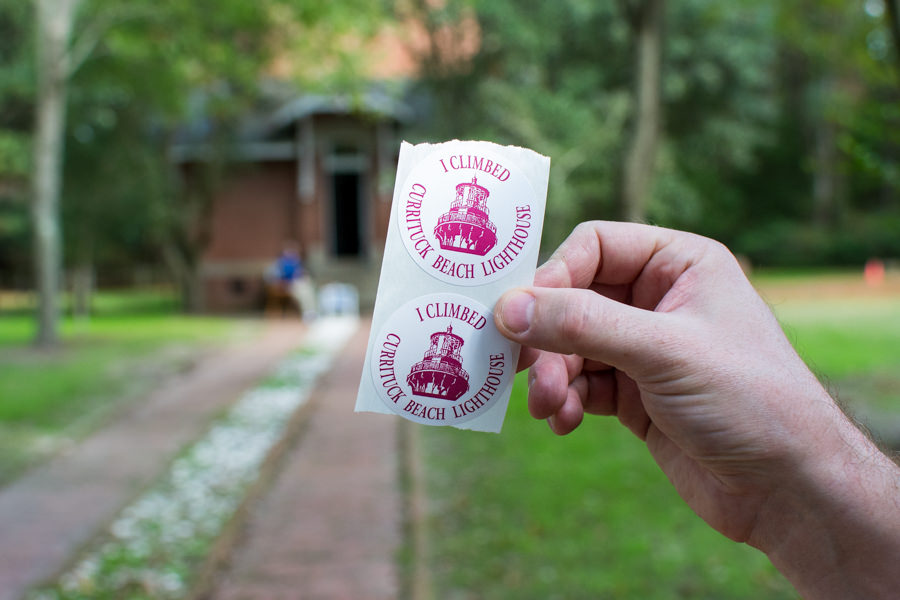
Can You Climb the Outer Banks Lighthouses?
Which Outer Banks Lighthouses Are Open for Climbing?
You can climb the following OBX lighthouses:
- Currituck Beach Lighthouse
- Bodie Island Lighthouse
Cape Hatteras Lighthouse is normally open for climbing, but is closed for 2026 due to renovations.
Climbing availability, ticketing, and restrictions vary by lighthouse and season.
The table below summarizes climbability, seasonal access, ticketing, and restrictions for each Outer Banks lighthouse.
| Lighthouse | Climbable | 2026 Season | Ticket Type | Restrictions |
|---|---|---|---|---|
| Currituck Beach Lighthouse | Yes | March 21 – November 30 9:00 AM – 5:00 PM |
Tickets available for purchase at the lighthouse | No height restrictions. Must be at least 4 years old to climb. Children ages 0–3 may climb in a carrier or backpack. |
| Bodie Island Lighthouse | Yes | April 20 – October 13 Every 20 minutes, 9:00 AM – 5:00 PMTuesdays only (Sept 2 – Oct 7) Every 30 minutes, 7:00 PM – 8:30 PM |
Timed tickets available online only |
Must be at least 42″ tall and able to climb independently. Children 11 and under must be accompanied by an adult (16+). No lifting or carrying permitted, including child carriers. |
| Cape Hatteras Lighthouse | No (2026) | Closed for climbing in 2026 due to restoration Grounds open year-round |
No tickets available during closure | Climbing unavailable during restoration period |
| Ocracoke Lighthouse | No | Base open mid-April – October Grounds open year-round |
Free to visit | Not open for climbing due to narrow interior ladder |
Best Time to Visit Outer Banks Lighthouses
Visiting OBX Lighthouses in Summer
During the summer, crowds at the OBX are at their peak.
Currituck Beach Lighthouse has limited parking (in the immediate lighthouse area), and tickets are only available for purchase in person at the lighthouse. Keep this in mind as it’s first-come, first-served.
Tickets for climbing Bodie Island Lighthouse are available online, so you can more easily plan your visit.
If you’re not looking to climb or want to visit a lighthouse that’s not climbable, keep the crowds in mind when planning your trip.
Shoulder Season Visits (Spring and Fall)
Visiting the Outer Banks during the spring or fall is the best time to visit OBX lighthouses. It’s not too hot yet, and the crowds also aren’t too big. For those who want to climb the lighthouses, it’s an easier and more enjoyable experience.
If you’re visiting outside peak beach season, lighthouse touring pairs well with many of the Outer Banks’ best non-beach activities, from wildlife refuges to historic villages.
Winter Visits to Outer Banks Lighthouses
Visits to the lighthouses during the winter are quiet. The grounds around the lighthouses are open, but the lighthouses are closed for the season.
Outer Banks Lighthouse Road Trip Itinerary
Best North-to-South Route for OBX Lighthouses
Because the lighthouses are in a north-south line, your Outer Banks lighthouse road trip can be easily accomplished by simply starting at one end and working towards the other end.
How Many Days You Need to See the Lighthouses
You technically could see all of the lighthouses in a single day. Start at Currituck Beach and end on Ocracoke Island. But this itinerary will be extremely rushed.
Allocating one lighthouse per day and taking a slower approach is recommended. This allows more than enough time to enjoy the local area — visit each lighthouse’s museum, indulge in BBQ in Corolla, and walk on the beach at Cape Hatteras National Seashore.
Where to Stay Along the Way
There are plenty of rental holiday homes and Airbnbs in the Outer Banks. There are also hotels, although perhaps not as many as in some beach areas.
Tips for Visiting and Photographing Outer Banks Lighthouses
Parking and Access Tips
All of the lighthouses have dedicated parking. During the peak summer season, parking may be limited. This is especially true at Ocracoke Lighthouse; however, it is possible to do a carless day trip to the island.
What to Bring for a Lighthouse Visit
For visiting the lighthouses, you’ll want to bring a camera to capture the moment. If you’re climbing the lighthouse, bring a bottle of water and comfortable walking shoes.
Photography Tips for Lighthouse Views
The lighthouses are extremely photogenic, so you’ll definitely want to snap some photos. Keep in mind the natural light conditions for your photography. Consider visiting when the sun isn’t at its peak.
To get some unique shots of Bodie Island Lighthouse, consider coming late. The lighthouse offers evening climbs in September and October as well as full moon climbs.
Outer Banks Lighthouses FAQ
Are Outer Banks Lighthouses Free to Visit?
Yes, you can visit the OBX lighthouses for free. There are a lot of great free things to do in the Outer Banks, and the lighthouse grounds are one of them.
The climbable lighthouses do charge a fee.
Are Outer Banks Lighthouses Good for Kids?
Yes, the lighthouses are kid-friendly!
When climbing a lighthouse with a child, consider the lighthouse’s restrictions and the child’s needs.
Are Outer Banks Lighthouses dog-friendly?
Yes, the Outer Banks lighthouse grounds are dog-friendly. Dogs can’t, however, enter the lighthouses.
Which Outer Banks Lighthouse Is the Best?
That’s a question of preference! Some visitors will value aesthetics while others will be interested in technology. Cape Hatteras is the most famous of the lighthouses, while Ocracoke Light is the oldest. Each lighthouse has its own charm.
Which Outer Banks Lighthouse Should You Visit First?
Each Outer Banks lighthouse offers a different perspective on the region’s maritime history and landscape. Some are best known for their height or distinctive design, others for their age or setting within a small coastal community.
Which one you visit first depends on what you’re looking for. Cape Hatteras is the most iconic, Bodie Island is especially rewarding for photographers, Currituck Beach offers a memorable climb, and Ocracoke Light is best appreciated as part of a slower visit to the island.
Whether you stop at one or plan a north-to-south lighthouse tour, these landmarks provide a rewarding way to experience the Outer Banks beyond the beach.
Plan Your Outer Banks Trip
Planning a visit to North Carolina’s Outer Banks? These guides cover the region’s lighthouses, nature, historic sites, and dog-friendly travel.
-
Things to Do in the Outer Banks (Besides the Beach)
Discover historic sites, nature preserves, and unique experiences beyond the shoreline. -
Fun & Free Things to Do in the Outer Banks
Budget-friendly activities including parks, historic landmarks, and scenic spots. -
Outer Banks Dog-Friendly Vacation Guide
Where to stay, play, and enjoy the OBX with your dog. -
Things to Do in Corolla, NC
Wild horses, historic sites, and highlights of the northern Outer Banks.
Save this post for later with Pinterest!
All photos and opinions are my own.


