
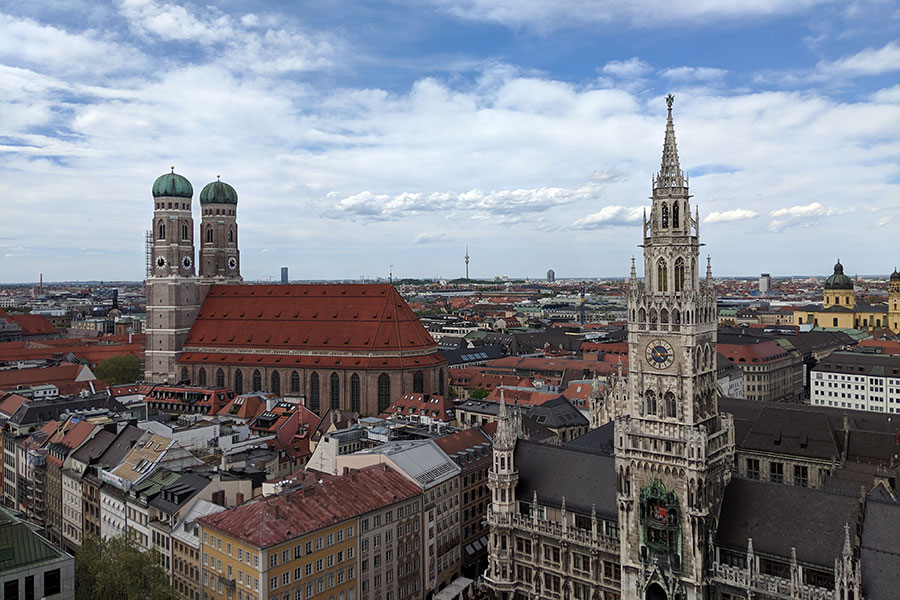
There’s something so charming about strolling through Munich’s Altstadt, or old town. The iconic onion-domed Frauenkirche stands overhead, and you may even pass a local in a Dirndl or Lederhosen. It can feel like a movie, but it’s the big city of Munich!
It didn’t take me long to fall in love with Munich, and it’s brought me back nearly a dozen times over the years. With all of that experience, I’ve learned the ins and outs of all the Munich travel tips that first-time visitors should know before they visit.
Munich is often one of the first cities travelers visit in Germany, and it’s easy to understand why. It combines grand architecture, beer gardens, museums, and easy day trips with a surprisingly relaxed atmosphere. But there are a few quirks — from transit tickets to Sunday closures — that can catch first-time visitors off guard.
Munich Quick Tips
- Carry some cash
- Validate paper transit tickets
- Most stores close on Sundays
- Stay near public transportation (see my guide on where to stay in Munich)
- Allow at least 3–4 days
Table of Contents
Why Munich Feels Different From Other Major European Cities
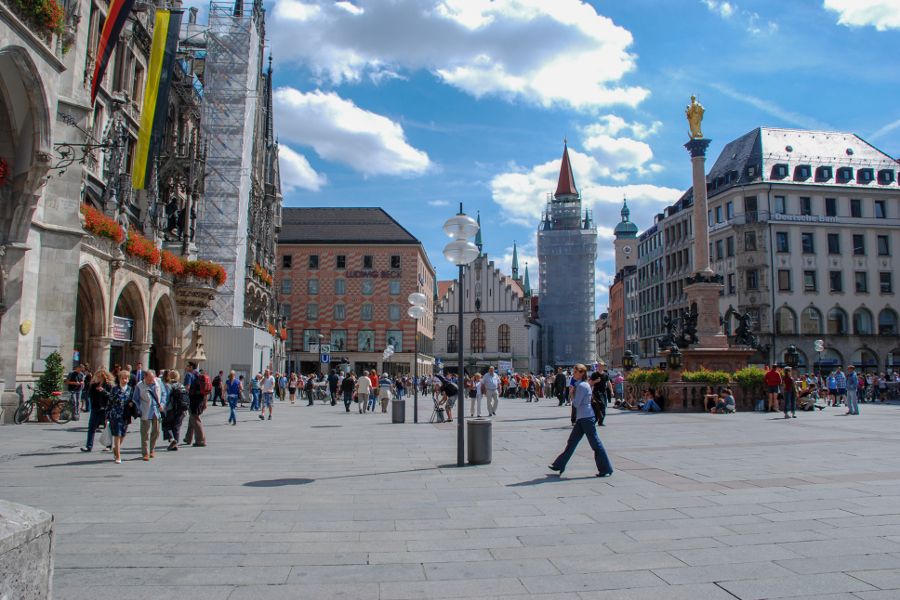
Munich is the third-largest city in Germany, but with its ample green space and lack of skyscrapers, it feels much smaller and less urban. Those aspects are my favorite things about the city, and they’re what keep me coming back.
The city is clean and runs rather smoothly. But it’s still a big city and the capital of Bavaria. So expect locals to move at a fast pace when they’re heading to and from work or school. But once they clock out, you’ll find them hanging out at the parks and in the biergartens.
Munich is often the gateway to Bavaria. If you’re planning a larger regional trip, don’t miss my Bavaria Travel Guide.
What First-Time Visitors Usually Expect vs. Reality
New visitors to Munich might expect to find beer everywhere and locals dressed in traditional clothing. You’ll definitely find beer everywhere — and generally consumed responsibly, as it’s not a novelty here!
But traditional clothes like dirndls and lederhosen aren’t everyday clothes. (Unless perhaps you work in a restaurant or souvenir shop.) Instead, you’ll likely only see the local clothes during festivals, special days, or maybe on a weekend. You may see local men wearing lederhosen or a Janker, a jacket with a short collar, at their local biergarten.
Why Slower Travel Works Better in Munich
Grab some food and relax in a biergarten. Stroll through a park. Hang out with family at a cafe. Munich is all about savoring the moments. The city rewards those who take their time, whether that’s sipping coffee over a slice of cake or peoplewatching along the Isar.
Choose the Right Area to Stay
Picking a location to stay in is all about what you’re looking for. For first-time visitors, the goal is typically to be able to walk out the door and be immersed in the city. Return visitors may be willing to sacrifice some convenience for a quieter stay with fewer tourists.
Not sure which neighborhood is right for your trip? My complete guide to where to stay in Munich compares each area, explains who it’s best for, and includes hotel recommendations to help you choose.
When picking accommodations, be sure to consider the distance to public transit.
Even if a hotel appears inexpensive, check how many transit connections you’ll need. Saving a little money on accommodations can become frustrating if you’re spending 30–40 extra minutes commuting every day.
How Many Days Do You Need in Munich?
For travelers visiting Munich for the first time, I recommend spending at least three to four days in Munich. That gives you enough time to explore the city itself, enjoy a slower pace, and add a day trip without feeling rushed.
Best Neighborhoods for First-Time Visitors
For first-time visitors, the neighborhoods immediately around the Altstadt are ideal places to stay. They’re convenient, and they offer a taste of the city.
- Altstadt-Lehel: – best for classic sightseeing
- Maxvorstadt: – best for museums and cafés
- Haidhausen: – best for a quieter local feel
These aren’t the only great places to stay. For a detailed comparison of Munich’s neighborhoods — including Schwabing, Neuhausen-Nymphenburg, Ludwigsvorstadt, and hotel recommendations — see my complete guide to Munich’s best neighborhoods.
Learn Munich’s Public Transportation Before You Arrive
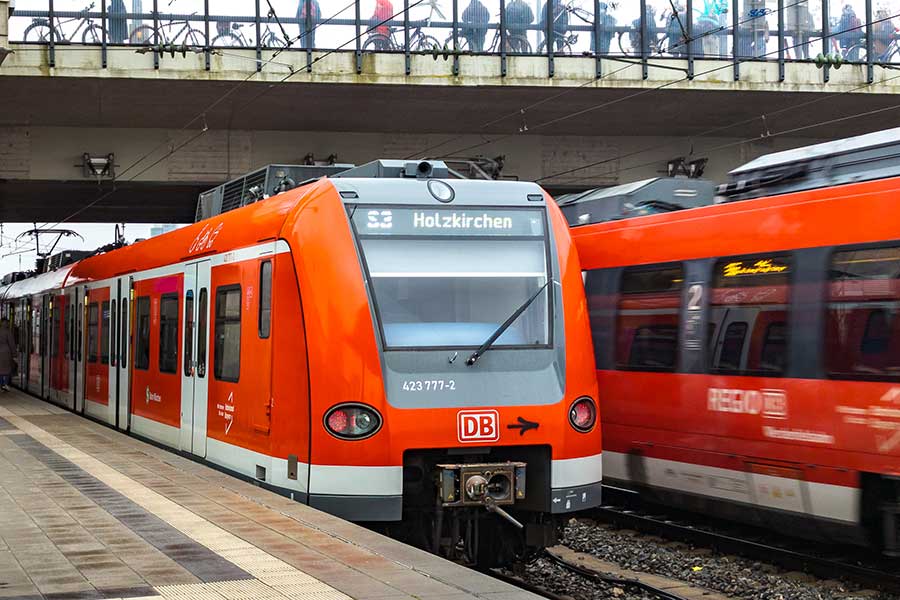
Munich’s public transport is great for getting around. It goes nearly everywhere a typical first-time tourist would want to go.
Understanding the U-Bahn, S-Bahn, Trams, and Buses
Munich’s public transit system consists of the U-Bahn (the subway), the S-Bahn (local trains), street trams, and buses.
How Tickets Work
Tickets for the public transit system apply to all modes of transport. For example, a day ticket can be used on any combination of U-Bahn, S-Bahn, trams, and buses.
Once you have a valid ticket, that’s it. Go travel!
In Munich and across Germany, tickets are not typically reviewed on public transit with each ride. To enforce riders using valid tickets, plainclothes officers may ask to see your ticket at any time. If you are found using public transit without a valid ticket, there is a 60 Euro fine.
The Biggest Mistake Visitors Make With Tickets
The most common mistake visitors make is not validating a ticket. Paper tickets purchased in person typically aren’t for a set date and time. You can buy a ride now, but not actually use it until tomorrow. To “use” a ticket, it has to be validated. Once you validate a ticket, it has a defined length of time it can be used. (For example, a single trip ticket for central Munich is valid for two hours.)
To validate a ticket, simply use one of the stamp machines. They are on station platforms (for S-Bahn and U-Bahn) and on trams and buses.
How Ticket Zones Work
Another common (and confusing) part of the transit system is the zones. The transit network is defined into several fare zones. Tickets are purchased for a specific range of zones.
If you have a ticket for a specific zone, but want to travel outside of that zone, you must use Streifenkarte.
For most first-time visitors, the M Zone for central Munich should be sufficient. But be sure to confirm before venturing too far from the city center.
Is a Day Pass Worth It?
Munich is a very walkable city with a fairly compact city center with a lot to see and do. A day pass may not make sense if you are exploring the Altstadt and your hotel is nearby.
A day pass makes more sense if you are in the city center and want to venture out a bit, say to the Wiesn for Oktoberfest or Nymphenburg Palace.
Airport Transportation: S1 vs. S8
Reaching the city from the airport is extremely easy with the S-Bahn. The S1 and the S8 lines both pass through the airport and the city center.
The only difference between the lines is the direction they go in: the S1 goes counterclockwise while the S8 goes clockwise.
Both routes take roughly 40–45 minutes to reach the city center. The S8 is typically a bit faster to Marienplatz and eastern areas of Munich, while the S1 can be more convenient depending on where you’re staying.
Cash Still Matters More Than You Expect
In Munich, cash is still king. While this is less true in Berlin, across Bavaria, there’s a preference for cash in hand.
In recent years, many shops and restaurants have become more open about accepting credit cards. And it’s not as frowned upon as it once was. But it’s not uncommon to find cash-only or cash-preferred spots. Festivals, like Oktoberfest, typically prefer cash over credit card transactions.
Bottom line: always have cash in your wallet.
Why Munich Isn’t Fully Cashless
So why is cash so preferred over credit cards? Partially, due to Germany’s history. Cash provides a layer of privacy that credit card transactions don’t. Additionally, it can be easier to budget and manage money by only spending cash you have in hand.
Best Ways to Get Euros
Because cash is still so common, there is no shortage of ATMs around the city. Using an ATM is, typically, the best and most cost-effective way to get the local currency. But be aware of any charges that your bank or the ATM’s bank may levy on the transaction.
Tipping Etiquette in Germany
Tipping in Germany tends to be more modest than in the United States. Many locals simply round up the bill and leave around 5–10% for good service.
Unlike in the U.S., you typically tell the server the total amount you want to pay when settling the bill. For example, if your bill is 45.25 Euros, you might simply say “50” when paying.
Timing Your Visit Can Completely Change the Experience
It can be a tale of two Munichs: one outdoors and one indoors. But each season offers something unique and special.
Munich in Spring
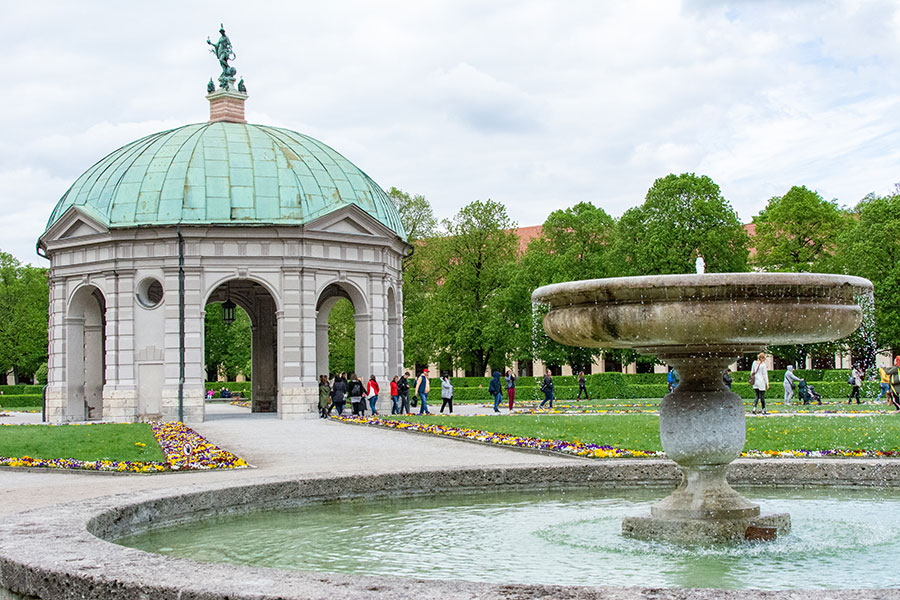
In the spring, locals are eager to get back outdoors, whether that’s to hike or relax in a biergarten. The festival season is busy, with Auer Dult and Frühlingsfest, among others. Early in the season, the weather can be unpredictable. But once it warms up, the city is at its best and without the peak crowds.
Munich in Summer
Summer in Munich is all about embracing Mother Nature. Whether that’s walking along the Isar or exploring nearby parks and palaces. Late summer and early autumn tend to be among Munich’s busiest periods as Oktoberfest approaches.
Munich in Fall
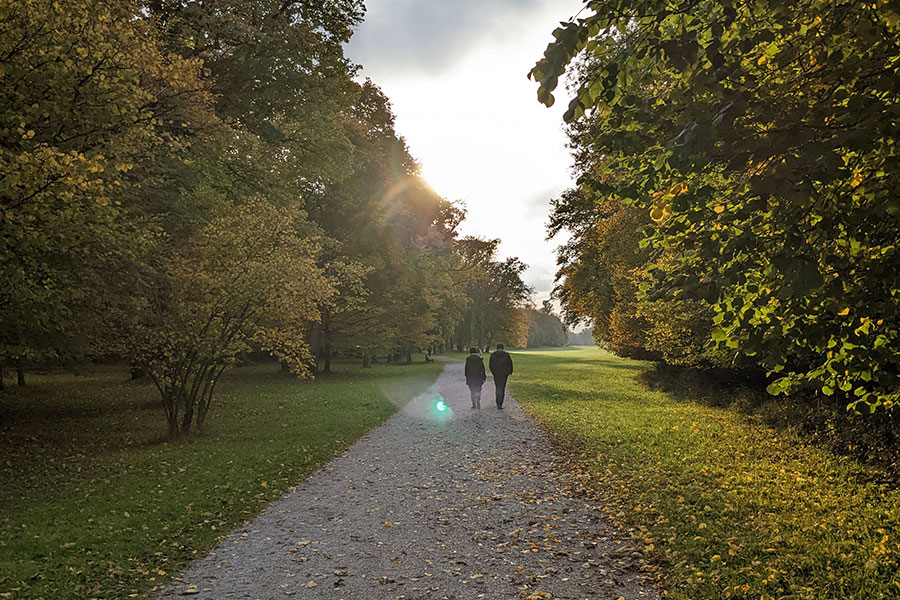
As the leaves change colors, Munich in fall takes on a wholly different look. There are fewer crowds as tourists and locals alike head back to work and school. The weather is still usually accommodating, but outdoor dining and biergartens may have limited hours.
Munich in Winter
Munich in winter is all about coziness, or Gemütlichkeit. Unwind in charming local pubs or enjoy a fresh coating of snow. While the Christmas markets do tend to bring the crowds, the rest of the season is relatively quiet.
Beer Gardens Are a Cultural Experience, Not Just a Drinking Activity
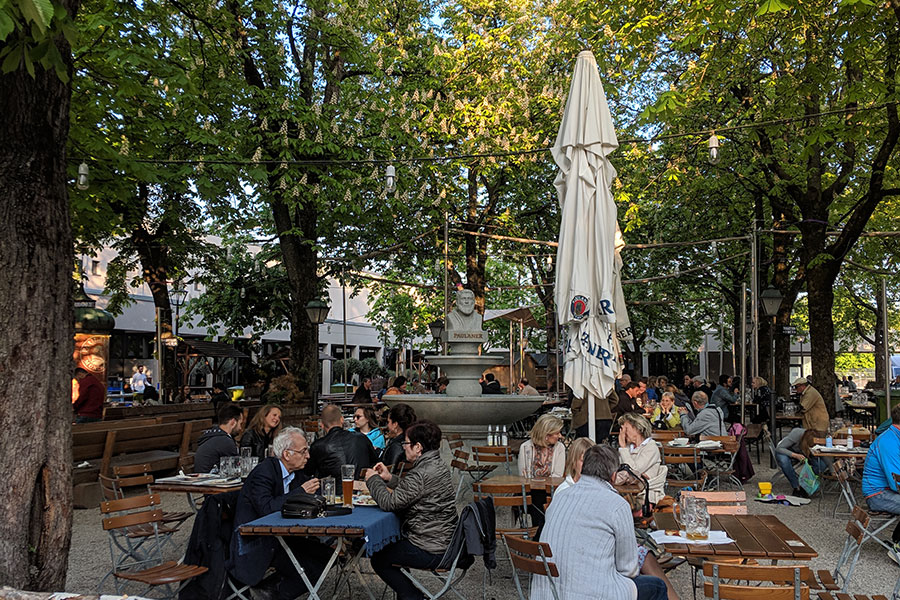
Biergartens in Munich and across Bavaria are a special and important part of the culture. They’re where friends and families gather to share a drink, maybe some food, and catch up. Assuming that the weather permits, a trip to Munich absolutely must include a biergarten.
Biergartens are typically family-friendly and aren’t solely focused on alcohol. You’ll find plenty of soft drinks, and often there are nearby playgrounds for children.
Shared Table Etiquette Explained
At popular large biergartens and beer halls like Hofbräuhaus and Chinesischer Turm at Englischer Garten, tables are first-come, first-served. And it’s a communal affair. If you’re looking for a seat and happen to see a table with some empty spots, simply ask the table if the spots are free. If they are, you’ll be welcomed.
Chinesischer Turm is just one part of this enormous park, though. My English Garden guide covers the best sights, walking route, beer gardens, and tips for exploring beyond the southern entrance.
Bringing Your Own Food: The Surprise Most Visitors Don’t Expect
You may see signs at Chinesischer Turm or Hirschgarten about the rules of the biergarten. One of the most important things is that you’re welcome to bring your own food, but you should buy your drinks from the biergarten.
As such, you’ll likely see groups with picnic baskets of homemade or purchased goodies that they brought to enjoy alongside a Maß of beer.
Best Beer Gardens for First-Time Visitors
The most popular biergartens are popular for a reason. Chinesischer Turm and Hirschgarten are great for first-timers or experienced visitors. There are plenty of seats, it’s very casual, and the atmosphere is great.
Is Hofbräuhaus Worth Visiting?
Technically a beer hall, Hofbräuhaus is a tourist magnet. It has its pluses and its minuses. If you want to visit, I recommend going earlier in the day, before it gets too crowded. In afternoons and evenings, it can be very loud and busy — but that’s part of the atmosphere.
Sundays in Munich Are Extremely Quiet
Like much of Europe, Sundays are quiet in Munich. Grocery stores and shops will be closed. Restaurants, cafes, and most museums will be open. With shops being closed, expect open spots (restaurants, museums, parks, etc.) to be more crowded than usual.
If you’re arriving on a Sunday, grab snacks, water, or anything essential before stores close on Saturday evening. Train stations and airports may have some grocery options available, but choices are much more limited.
Use Munich as a Base for Day Trips
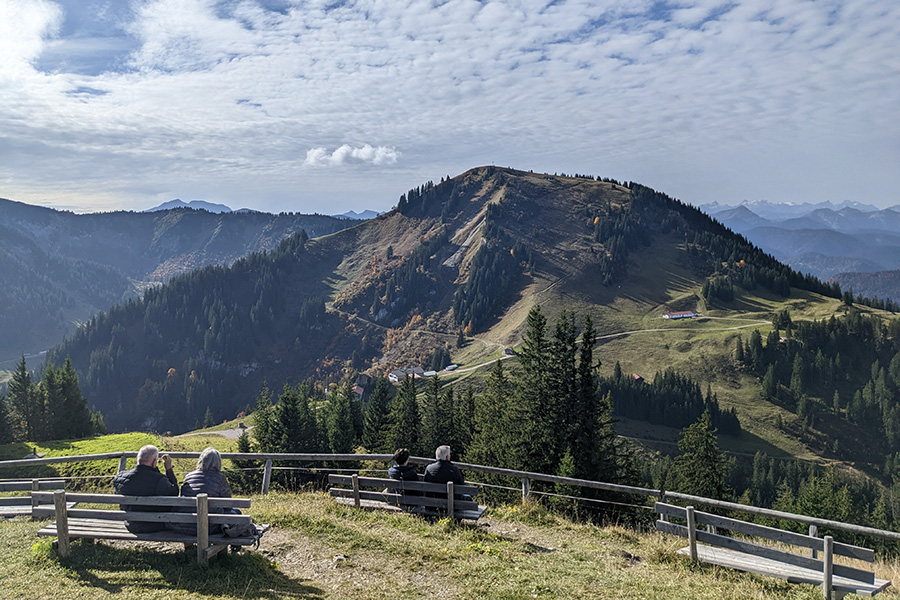
Munich is a great central location for day trips as the city has excellent train connections (or roadways, if you’re eager to rent a car and drive on the Autobahn). You can easily access northern Bavarian cities like Nuremberg or Regensburg. Or, you can head south to Neuschwanstein or even into Austria. The local region immediately around Munich is also rich in day trips, making for easy excursions without too much stress.
Castle enthusiasts looking to beat the crowds can read my guide to visiting Neuschwanstein Castle from Munich.
What to Know Before Planning Day Trips
The most important tip for planning day trips is to look at scheduling. How long does it take to get there and back? Is the destination crowded, and do you need to arrive early?
Once you evaluate those aspects and how much time you’re willing to spend traveling, you can determine the best day trips for your itinerary.
Popular Day Trips From Munich
Undoubtedly, the most popular day trip from Munich is to see Neuschwanstein Castle. Castle enthusiasts looking to beat the crowds can stay closer to home base with a visit to Lake Chiemsee to see King Ludwig’s Herrenchiemsee Palace and the Fraueninsel. With convenient train connections, it’s also roughly an hour to Salzburg to soak in the Austrian atmosphere.
Train Planning Tips for Day Trips
The train is highly recommended for day trips from Munich due to its convenience and ease. But, as always, it’s important to do your research. Consider open-ended tickets for travel to avoid setting hard deadlines on return times. For most visitors taking day trips, the Bayern-Ticket often makes more sense than the Deutschland Ticket. (Note that these passes do not allow for travel on faster trains like ICE. This may not matter, depending on your destination and route.)
Also, be sure to have backup options on hand if delays or cancellations occur.
Basic German Phrases That Actually Help
It can be helpful to know some easy German phrases for travel. Here are a few to know:
| Helpful German Words & Phrases | English Meaning |
|---|---|
| Guten Tag | Hello or Good day |
| Danke | Thank you |
| Bitte | Please / You’re welcome |
| Entschuldigung | Excuse me |
| Wo ist…? | Where is…? |
| Was ist das? | What is that? |
| Was kostet das? | How much does that cost? |
| Ich möchte… | I would like… |
| Wo ist die Toilette? | Where is the bathroom? |
| Bezahlen bitte! | Check, please! |
Common Mistakes First-Time Visitors Make
Only Spending Time Around Marienplatz
The Altstadt is rich in sights to see, from the Frauenkirche to Viktualienmarkt. But there are other spots worth your time, such as Nymphenburg Palace and the Olympic Park. A short subway ride can take you to a completely different part of the city for a new experience.
Not Validating Public Transit Tickets
Paper tickets for public transit typically need to be validated. During a random ticket check, if you’re found to be riding without a valid ticket, you could be fined. Always review your ticket and ensure it is active before riding. If in doubt, ask at a customer service desk.
Assuming Everywhere Accepts Credit Cards
In Germany, cash is still the preferred payment method. Credit cards are accepted, but not as widely as in some countries. It’s always important to have cash on hand.
Trying to Fit Too Much Into One Day
Munich is best enjoyed at a relaxed pace. A meal at a biergarten or cafe is meant to be casual and unhurried. Take your time and focus on enjoying the experience as opposed to checking off sights.
Forgetting That Most Shops Close on Sundays
Across Germany, Sunday is a day of rest. Shops – including grocery stores and shopping malls – are closed. While it can be difficult to predict future needs, try to anticipate anything you’ll need ahead of time.
Underestimating Travel Time From the Airport
Munich Airport sits outside the city center. Even though public transportation is easy, reaching central Munich usually takes around 40 to 45 minutes.
Final Thoughts on Visiting Munich for the First Time
While many visitors come to Munich expecting beer halls and fairy-tale castles, they often leave remembering slower moments: relaxing beneath chestnut trees at a biergarten, walking through the Englischer Garten, or wandering through quiet side streets beyond Marienplatz.
Munich rewards travelers who slow down a bit. Give yourself enough time, stay curious, and don’t be afraid to explore beyond the obvious attractions.
If you’re planning a trip through Bavaria, I’ve included some of my favorite guides below.
Explore More Bavaria Travel Guides
FAQ: Munich Travel Tips for First-Time Visitors
Is Munich easy for English speakers?
Yes, Munich is one of the easiest cities in Germany for English-speaking travelers. Hotels, restaurants, museums, and tourist attractions commonly have English-speaking staff, and many menus are available in multiple languages.
How many days do you need in Munich?
I would recommend at least four days for a visit to Munich. This gives you extra time to take a day trip and explore the surrounding region.
What is the best area to stay in Munich?
If this is your first time in Munich, the Altstadt-Lehel and Maxvorstadt neighborhoods are the best bet.
Is Munich expensive for tourists?
Munich is one of Germany’s most expensive cities, so it can be pricey. However, it is less expensive than other European cities like Stockholm or London.
Do you need cash in Munich?
Yes! Always keep cash on hand when traveling in Munich and across Germany. While credit cards are becoming more widely accepted across the country, it isn’t unusual to encounter restaurants and shops that prefer or only accept cash.
Is Munich safe for tourists?
Yes, Munich is safe for tourists. But, as with any major city, it’s important to use common sense and be aware of your surroundings.
What is the best month to visit Munich?
May and June are typically the best months to visit Munich. But each month has something different to offer, whether it be the weather or festivals.
Is public transportation easy to use in Munich?
Munich’s public transportation is fairly easy to use. The network is conveniently large but not overwhelming to learn. The most important tip is to make sure you have a valid ticket before riding in order to avoid any penalties.
Save this post for later on Pinterest!
All photos and opinions are my own.


