
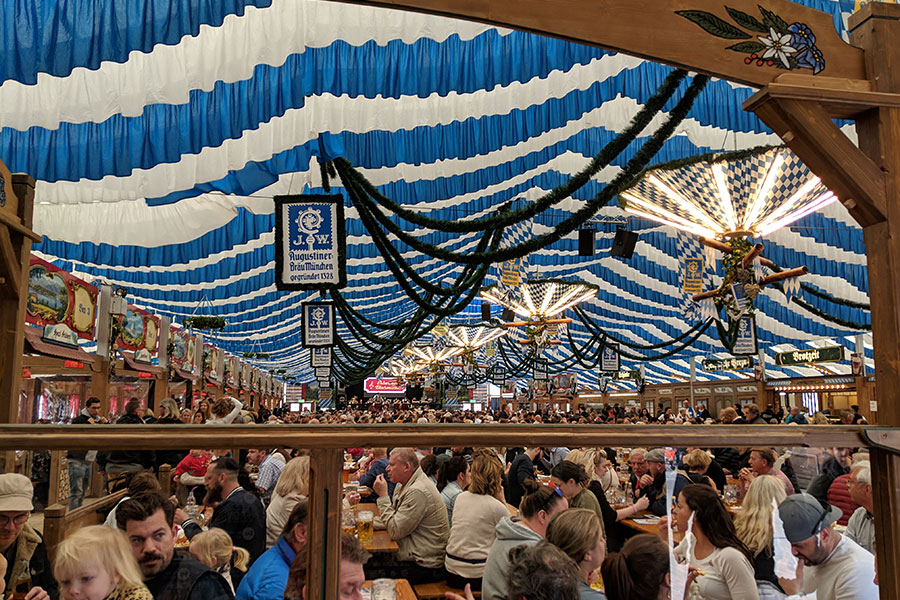
Munich is famous worldwide for its beer, thanks in part to the Reinheitsgebot, the Bavarian Beer Purity Law of 1516, which originally limited beer ingredients to water, barley, and hops.
Each year, Munich hosts its three main beer festivals—Oktoberfest, Frühlingsfest, and Starkbierfest. Whether you’re visiting for a weekend or following a longer Munich travel guide, these festivals are among the city’s most memorable experiences.
But these aren’t just drinking events. These Bavarian beer festivals are folk festivals that are family-friendly and enjoyable for non-beer drinkers alike. While Oktoberfest gets most of the attention, many locals consider Frühlingsfest and Starkbierfest equally rewarding experiences, especially for visitors looking for fewer crowds.
If you’re planning your trip, these festivals fit perfectly into a 3-day Munich itinerary, especially if you’re visiting during festival season.
Each festival offers a different experience. Starkbierfest is rooted in local tradition, Frühlingsfest offers a relaxed version of Oktoberfest, and Oktoberfest delivers Munich’s biggest celebration. Here’s how they compare.
The Main Beer Festivals in Munich at a Glance
| Festival | When It Happens | Location | Atmosphere | Best For |
|---|---|---|---|---|
| Starkbierfest | March (during Lent) | Various Munich breweries, especially Paulaner Nockherberg | Traditional, local-focused, and less crowded | Visitors looking for an authentic Bavarian experience and fewer tourists |
| Frühlingsfest | Late April to early May | Theresienwiese | Relaxed, family-friendly, and often called the “Little Oktoberfest” | Travelers who want the Oktoberfest atmosphere without the massive crowds |
| Oktoberfest | Late September to early October | Theresienwiese | World-famous, energetic, and extremely busy | First-time visitors and those seeking Munich’s most iconic festival |
What to Expect at Beer Festivals in Munich
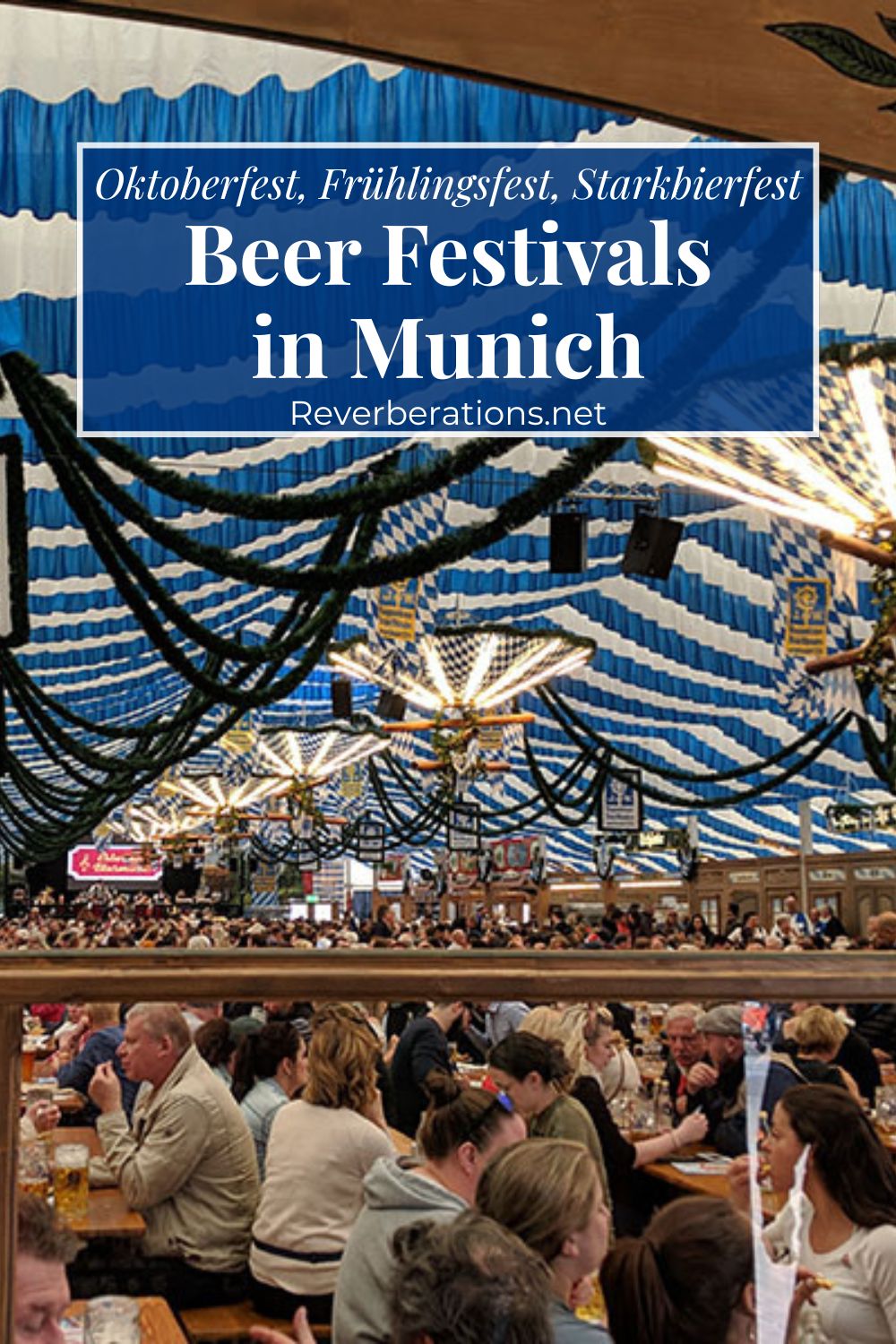
While each festival has its own personality, you’ll find many of the same traditions at all three. Expect lively beer tents, traditional music, hearty Bavarian food, carnival rides (at Frühlingsfest and Oktoberfest), and plenty of local customs.
Typically, in the evenings, these tents turn into a party with dancing and more drinking. Outside of the tents on the festival grounds, there are usually carnival rides and games as well as more food and drinks.
Beer Tents and Brewery Traditions
Many of the breweries serving at these festivals also operate some of Munich’s best traditional beer halls and biergartens throughout the year.
The festivities officially begin with the tapping of the first keg and the announcement of “O’zapft is!” (“It’s tapped!” in the Bavarian dialect.)
Once the festival officially opens, servers begin delivering food and beer directly to your table.
Unlike at a restaurant, payment is expected when you get what you ordered, not at the end of your meal. When drinks or food arrive, have payment, including a tip, ready. Most beer tents prefer cash, although some now accept cards. Carrying cash is still the safest option.
Bavarian Food and Music
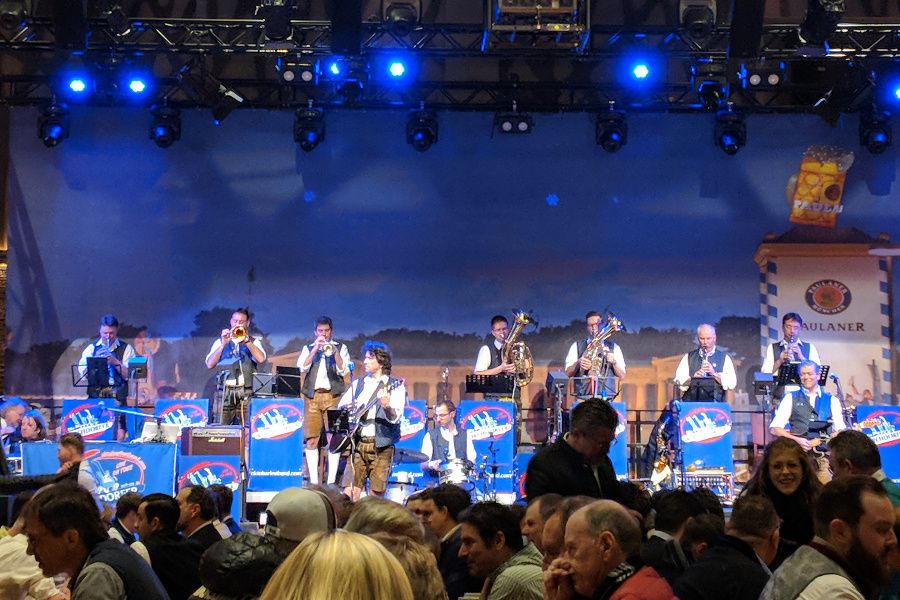
There’s plenty of food and live music! Expect brass bands playing traditional Bavarian music, as well as, later in the evening, bands playing cover hits and DJs.
Inside the tents at the festival, the sheer scale of the temporary kitchens is impressive. These large professional kitchens have sprung up on a parking lot or in a field and serve hundreds, or maybe even thousands, of visitors.
At larger festivals, the menus have more hearty options, while smaller festivals will generally have quicker meals. The menus are typically traditional Bavarian dishes like Schweinshaxe (pork knuckle) or Käsespätzle (egg noodles and cheese similar to macaroni and cheese). But you’ll also likely find lighter bites like Currywurst.
At the food stands outside of the tent, you’ll find carnival favorites like chocolate-covered fruit and candy apples. There are also typically sausages and other hand-held food to enjoy.
Traditional Clothing and Local Customs
Anytime you walk around Munich or take public transit and see young people in traditional clothing, you know there’s a festival nearby.
Lederhosen, typically but not exclusively for men, and Dirndls for women, are common sights at festivals in Bavaria.
Traditional clothing isn’t required, and you’ll also see many locals in street clothes. But many tourists like to partake in the fun, and there is no shortage of shops selling traditional clothing at a range of prices. If you decide to go the traditional route, be sure to show respect for the local tradition and avoid inexpensive costume-quality clothing.
Are Munich Beer Festivals Family-Friendly?
It may be surprising to some, but Munich beer festivals are extremely family-friendly.
Many of the large festivals will have family days with special pricing and events. Those with children or looking to avoid the peak of the party should visit during the day or early evening. By late evening, many of the tents become more similar to nightclubs, with the focus on drinking and dancing.
Reservations, Seating, and Etiquette
Every year, as Oktoberfest approaches, reservations are the hot topic. Whether you need reservations depends on several things. If you’re a party of fewer than eight or ten, reservations typically aren’t offered. If you’re looking to visit during the day or on a weekday, reservations typically aren’t needed.
But if you want to visit with eight to ten people on the opening day, during a weekend, or in the evening, reservations may be required. Each tent manages its own reservations. For Oktoberfest, the city’s website offers a portal to each of the tents for reservations.
If you don’t have a reservation, you’ll be able to sit wherever there are enough seats for your group. Some tents will let you sit yourself, others will seat you. You’ll often see long lines outside of tents for those without reservations hoping to get a place. If you seat yourself, typical Biergarten etiquette applies: if you see empty places at a table, simply ask those sitting there if the seats are free. (Ist hier frei?) If the seats are open, you’ll be welcomed.
Starkbierfest (Strong Beer Festival)
The History of Starkbierfest
In Germany, Starkbierfest traditionally takes place during Lent, following Carnival. It is said that Bavarian monks who were fasting in the lead-up to Easter would only consume Starkbier, which is very calorific.
Doppelbock-style strong beers trace their origins to monastic brewing traditions before becoming closely associated with Bavaria. The brew was so special that the monks weren’t supposed to serve it to anyone outside of the monastery. Today, those strong seasonal beers remain one of Bavaria’s most distinctive brewing traditions.
What Makes Starkbier Different?
While the “strong beer” does generally have a higher alcohol content, the “strong” refers more to the beer’s rich body than simply its alcohol content.
Each of the breweries in Munich and the surrounding area have their own Starkbier. For example, Paulaner’s is called Salvator and Augustiner’s is Maximator.
If you’re interested in visiting one of Bavaria’s best-known independent breweries, I highly recommend spending a day in Aying’s Ayinger Brewery.
What Makes Starkbierfest Unique?
Frühlingsfest and Oktoberfest are large festivals with carnival rides. Starkbierfest is less well known outside of Bavaria. It’s more about locals coming together after work or on a weekend at a beer hall for good company, a lively atmosphere, and beer. As the night wears on, you can expect the same party as at Oktoberfest, but with a smaller crowd.
Best Starkbierfest Tents and Breweries
Starkbierfest is a bit different than other traditional beer festivals. For Starkbierfest, each brewery holds its own celebrations on select dates. Tickets are required for these festivals.
Many of the breweries and Wirtshaus that host a Starkbierfest wait until closer to the event to post information. Here are a few links to Starkbierfest information, but check individual spots for information.
Tips for Visiting Starkbierfest
- Plan ahead: Each brewery publishes its own Starkbierfest schedule and ticket information. Advance tickets may be required for some festivals.
- Arrive early: Popular events like Nockherberg fill up quickly, so arrive early for a good seat.
- Drink responsibly: Starkbier has a higher alcohol content than the standard beer in Munich. Pace yourself.
- Starkbierfest isn’t Oktoberfest: This festival is a beer hall celebration. There are no carnival rides.
- Expect shared seating: Most events use large communal tables, so don’t be surprised if you’re sitting with locals.
Frühlingsfest (Munich Spring Festival)
Why Frühlingsfest Is Called the “Little Oktoberfest”
Taking place in late April, Frühlingsfest is one of the highlights of spring in Munich. The event is similar to Oktoberfest, but much smaller. And, because it’s not quite as famous, the crowds are smaller, too.
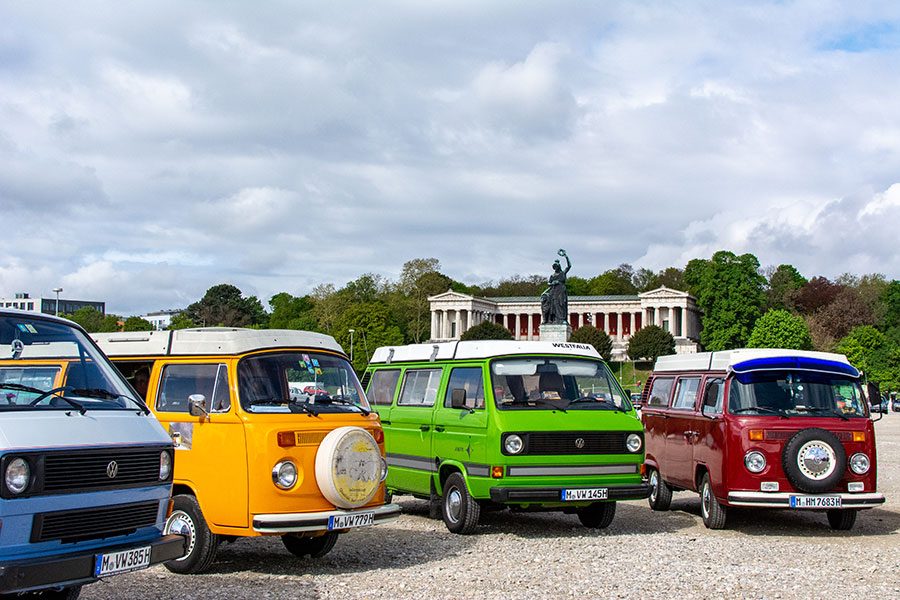
Frühlingsfest is often called “Munich’s Little Oktoberfest” (“kleine Wiesn”) because it is largely the same as the autumn festival but on a smaller scale. You can expect beer tents, carnival rides, traditional parades, and Bavarian food on the Wiesn, but with fewer crowds.
What to Expect at Frühlingsfest
At Frühlingsfest, most of the same Munich breweries represented at Oktoberfest also serve beer here. There are also carnival rides and games, as well as lots of food.
Best Things to Do Beyond the Beer Tents
Frühlingsfest has several special events each year. On opening day, there’s a free beer giveaway before the traditional parade to the festival site. There’s a car show of antique and vintage cars (known as Oldtimers in German). One of the largest flea markets in Bavaria also takes place. There is also a special fireworks show.
Between the smaller crowds and the special events, Frühlingsfest is one of my favorite events in Munich.
Tips for Visiting Frühlingsfest
- Consider the Weather – Spring weather in Munich can be temperamental. Be prepared for rain and cold weather.
- Visit on opening weekend: The traditional parade and vintage car show make opening weekend especially memorable.
- Ride the Ferris wheel: It offers one of the best views across the festival grounds.
Oktoberfest
The History of Oktoberfest
In mid-October 1810, the city of Munich held a festival in a meadow to celebrate the wedding of Crown Prince Ludwig and Princess Therese of Saxony-Hildburghausen. It featured horse races and a performance by a local children’s choir.
The following year, they held the celebration again and added an agricultural show. Then, a couple of years later, it was held again, but small amusements were added. In 1819, the city announced the festival would be held every year. Over time, it became the festival we recognize today.
The meadow was renamed Theresienwiese (Therese’s meadow) after Ludwig’s bride. While known today mostly as the Wiesn, it’s still where most of the city’s largest festivals and events take place.
What Makes Oktoberfest Unique
Typically held between mid-September and early October, Oktoberfest attracts more than six million visitors each year, making it one of the world’s largest public festivals. Visitors celebrate beneath the watchful gaze of the Bavaria statue.
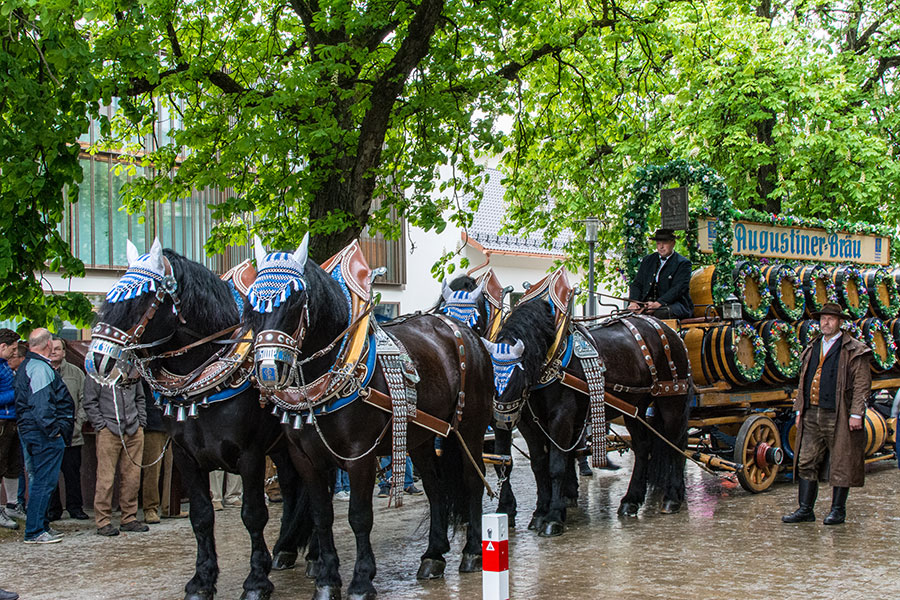
Only beer from Munich’s six traditional breweries – Augustiner, Hacker-Pschorr, Hofbräu, Löwenbräu, Paulaner, and Spaten – may be served at Oktoberfest, and many visitors enjoy trying the special Oktoberfest beers brewed specifically for the festival.
And while it may seem like the festival is just a huge party, locals take it seriously. A parade of traditional clubs and bands kick the festival off before the first official keg is tapped. There are other traditional events throughout the festival.
Oktoberfest Tents Explained
In addition to all of the carnival rides and amusements, there are 14 large and 21 small tents on the Wiesn for Oktoberfest. Each tent offers different beers and food as well as a different atmosphere. You can find a full list of the tents on the official Oktoberfest website.
For example, at local bakery Rischart’s small tent Cafe Kaiserschmarrn, they serve breakfast and sweets along with coffee and alcohol in a more family-friendly atmosphere. Käfer Wiesn-Schänke, a large tent, is famous for its celebrity guests.
Getting into a tent is usually the hardest part! Reservations are tent-specific and recommended for large groups. (Reservations are typically only given for groups of 6 to 8 or more.) Then, once you’re inside, you can only order beer while seated at your table.
Tips for Attending Oktoberfest
- Visit early and on weekdays: It’s easier to get a seat in a tent earlier in the day and especially on weekdays (Monday through Thursday).
- Do your research: To avoid confusion in the crowds, know which tent you want to visit before arriving.
- Cash is king: Some tents and vendors are cash-only. So be sure to carry some cash.
- Book hotels in advance: Oktoberfest is extremely popular, so hotels often begin selling out months in advance, especially around the festival grounds.
How Far in Advance to Book Hotels
Oktoberfest is most crowded on weekends. For that reason, I recommend booking a hotel at least six to nine months in advance. Expect higher than normal rates during the Oktoberfest season. Budget accommodations near the Wiesn often sell out first, while it’s not unusual for hotels near the festival grounds and in central Munich to be double or triple in price.
If you’re still deciding where to stay, check out my guide to the best neighborhoods and hotels in Munich before booking.
Which Munich Beer Festival Should You Attend?
So which beer festival is right for you? It depends on what you’re looking for.
Best for First-Time Visitors
If you’ve always dreamed of experiencing Oktoberfest, go for it. But if you’re looking for a more relaxed introduction to Munich’s festival culture, I recommend Frühlingsfest.
Best for Avoiding Crowds
Starkbierfest typically has smaller crowds because each brewery holds its own event. There’s no fairground. Instead, visitors are seated at tables. It sounds docile, but as the evening progresses, the party gets going!
Best for Families
Families can have a great time at any of the three major beer festivals in Munich. Oktoberfest and Frühlingsfest are likely the most family-friendly events. Look for special family days or attend earlier in the day for the best family-friendly atmosphere.
Best for Bavarian Tradition
Oktoberfest is the ultimate Bavarian tradition. It really doesn’t get any more iconic.
But Starkbierfest often feels more local, with fewer tourists. The celebrations are individual to each brewery, which also makes it unique.
Other Beer Festivals Near Munich
Smaller Bavarian Volksfeste
You don’t need to visit Munich to go to a beer festival. There is no shortage of folk festivals across Bavaria. The festival season unofficially starts around February and March with Starkbierfest and runs through about October.
While each has its own individual spirit and feeling, there are some similarities. In many cases, the vendors who run the amusements and food stalls travel from festival to festival.
One of my favorite festivals near Munich is the Ayinger Bräu-Kirta. Each autumn, the Ayinger brewery holds a festival in the meadow outside the brewery. There is a festival tent, rides for children, and a flea market. For entertainment, there are musical performances and dances. But the big event is an ox race.
Bavaria is full of festivals like this, making it worth exploring beyond the city on one of these day trips from Munich.
Why Smaller Festivals Can Be More Authentic
Small festivals let you get a taste of local life. They’re more intimate, and you’ll usually be able to take your time. I highly recommend experiencing both “the big city” and the local town festival to really understand life in Bavaria.
If you’re planning to explore more of southern Germany, don’t miss my complete Bavaria Travel Guide.
Tips for Visiting Beer Festivals in Munich
| Tip | Advice |
|---|---|
| When to Arrive | For a quieter experience, arrive earlier in the day. For a livelier party atmosphere, arrive later, but be aware that tables in the beer tents may be unavailable without a reservation. |
| What to Wear | Traditional Bavarian clothing, such as a Dirndl or Lederhosen, is popular but not required. Comfortable shoes are recommended, especially if you plan to spend several hours exploring the festival grounds. |
| Paying for Food & Beer | Inside the beer tents, payment is typically cash-only and due when your food or drink is delivered. Some individual vendors may accept credit cards, but it’s best to carry sufficient cash. |
| Transportation Tips | Public transportation is the easiest way to reach Munich’s beer festivals. U-Bahn, S-Bahn, and trams become crowded during peak times, so allow extra travel time on weekends and special event days. |
| Hotel Booking Advice | If you’re visiting for Oktoberfest, book accommodations as far in advance as possible. Hotels throughout Munich often sell out months ahead, and prices increase significantly during the festival. |
Experience Munich’s Beer Festivals
Whether you choose the global spectacle of Oktoberfest, the relaxed atmosphere of Frühlingsfest, or the local traditions of Starkbierfest, Munich’s beer festivals offer far more than great beer. They’re a chance to experience Bavarian culture, music, food, and hospitality firsthand. No matter when you visit, attending a Volksfest is one of the most memorable experiences you can have in Munich.
FAQ About Munich Beer Festivals
What is the best beer festival in Munich?
If you want to go big, Oktoberfest is the best beer festival in Munich for you.
If you prefer a more relaxed atmosphere with fewer crowds, Frühlingsfest may be the right festival.
If you prefer to rub elbows with locals and celebrate without some of the fuss, Starkbierfest is the best beer festival in Munich for you.
Is Frühlingsfest less crowded than Oktoberfest?
Yes, Frühlingsfest is less crowded than Oktoberfest. While Oktoberfest draws more than six million visitors during the festival period, Frühlingsfest attendance is less than half a million.
Do you need reservations for Munich beer festivals?
For Starkbierfest, tickets are typically required and can be purchased in advance or at the door, depending on demand. There are usually no formal reservations.
For Frühlingsfest and Oktoberfest, reservations will generally be needed for large groups and when attending at peak times (weekends and evenings).
Are Munich beer festivals family-friendly?
Yes, Munich beer festivals are family-friendly. However, I would focus on attending on weekdays or in the morning or early afternoon. The tents get livelier as the evening wears on. Also, keep an eye out for special family days.
When is Starkbierfest held?
Starkbierfest is typically held in March, during Lent.
Can non-drinkers enjoy Munich beer festivals?
Absolutely, and I’m speaking from experience! Munich, and Bavaria in general, is very friendly to those who don’t drink alcohol. You can usually find Schorle, a mix of fruit juice and sparkling water, or Spezi, cola with a touch of orange, on menus.
If you’re looking for even more ideas beyond the festivals, check out my collection of things to do in Munich.
Which Munich beer festival is best for first-time visitors?
If the crowds of Oktoberfest seem overwhelming, consider Frühlingsfest. If you’re not looking for a carnival atmosphere, consider Starkbierfest. If you’re looking for the boldest experience, Oktoberfest is probably for you.
Is Oktoberfest worth visiting?
Yes, especially for first-time visitors to Munich. However, travelers who prefer fewer crowds may enjoy Frühlingsfest or Starkbierfest more.
Save this post for later with Pinterest!
All photos and opinions are my own.


