
Looking for the best things to do in the Outer Banks besides the beach? Whether you’re visiting on a rainy day, traveling in the off-season, or simply want more than sand and surf, the Outer Banks offers historic sites, scenic nature spots, museums, gardens, and charming coastal towns.
From climbing historic lighthouses and exploring sand dunes to visiting museums, gardens, and charming coastal towns, this guide covers the best non-beach activities in the Outer Banks—including plenty of ideas for rainy days, off-season visits, and travelers looking for things to do beyond the beach.
If you’re wondering what to do in OBX besides the beach, this list pulls together the best options for a variety of travel styles—from quick stops to half-day adventures.
These ideas are perfect for:
- Rainy day itineraries
- Shoulder-season visits
- Mixing up your OBX vacation
The Outer Banks stretches more than 100 miles from Corolla in the north to Ocracoke in the south, so these activities are spread across multiple towns and islands.
Best Things to Do in the Outer Banks Besides the Beach (Non-Beach Activities Quick List)
- Climb the iconic Outer Banks lighthouses
- Explore the sand dunes at Jockey’s Ridge State Park
- Kayak or paddleboard on the OBX sound
- Hike through Nags Head Woods Nature Preserve
- Visit Elizabethan Gardens in Manteo
- Walk or fish from OBX fishing piers
- Visit the Wright Brothers National Memorial
- Explore Fort Raleigh National Historic Site
- Visit Roanoke Island Festival Park
- Explore the North Carolina Aquarium
- Walk the Duck Town Park Boardwalk
- Explore historic Manteo
- Visit Historic Corolla Village
- Visit the Graveyard of the Atlantic Museum
- Drive the Outer Banks Scenic Byway
1. Climb the Outer Banks’ Iconic Lighthouses
There are five lighthouses along the Outer Banks’ coast.
- Currituck Beach Lighthouse in the north
- Ocracoke Island Lighthouse in the south
- Roanoke Marshes Lighthouse in Manteo on Roanoke Island
- Bodie Island Lighthouse in South Nags Head
- Cape Hatteras Lighthouse in Buxton
Depending on the time of year (and barring construction), Currituck Beach, Bodie, and Cape Hatteras are open to the public and can be climbed. But you don’t need to go to the top of the lighthouses to enjoy them. Visitors can explore the grounds, marvel at their height, and learn about the important job they have, even today.
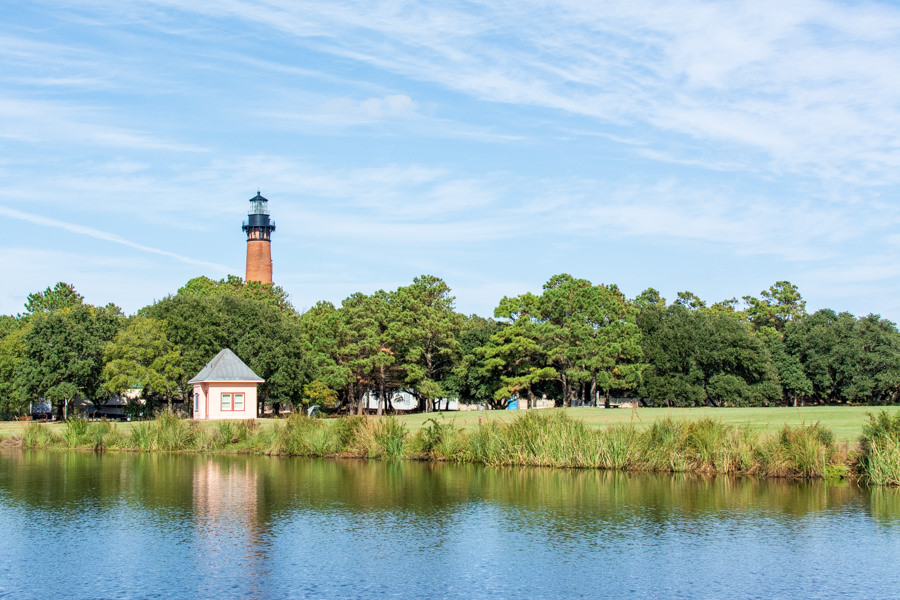
Currituck Beach Lighthouse in Corolla stands out with its unpainted red brick exterior nestled amongst the evergreens in charming Historic Corolla Village. Bodie Island is particularly captivating, surrounded by a marsh with a boardwalk that offers excellent opportunities for nature viewing. Cape Hatteras, perhaps the most famous of the bunch with its black and white candy swirl, is the tallest brick lighthouse in North America and offers stunning views over the Atlantic Ocean.
My complete guide to the Outer Banks lighthouses walks through each one, including which are climbable, the best times to visit, and an easy road trip route between them.
Best For: First-time visitors, scenic views, history
Location: Throughout the Outer Banks
Time: 30 minutes–1 hour per lighthouse
Cost: Free to visit grounds; fee to climb select lighthouses
Tip: Cape Hatteras is currently closed for renovation. Check the status before visiting.
2. Explore Jockey’s Ridge State Park (Nags Head)

It’s difficult to miss Jockey’s Ridge State Park. The 427-acre park in Nags Head is the tallest living sand dune system on the Atlantic Coast. It’s a popular spot for hang gliding, kite flying, and simply exploring. Some trails through the park are sure to give you a workout, as you climb the often steep, loosely packed sand dunes. It’s also dog-friendly, although it’s important to be mindful of the temperature of the sand on delicate paws.
This is one of my favorite spots in the Outer Banks, especially at sunset when the dunes glow and the crowds thin out. It’s a great place for an unexpected hike.
Best For: Outdoor adventure, sunset views, families
Location: Nags Head
Time: 1–2 hours
Cost: Free
Tip: Visit at sunset for cooler temperatures and sweeping views over the sound.
3. Kayak or Paddleboard on the Sound
While everyone is clamoring for the crash of the waves, on the sound side of the Outer Banks, everything is just a bit calmer. The shallow waters are perfect for just getting your toes wet, with patches only ankle-deep. Or, elsewhere, you can kayak or paddleboard on the smooth waters while enjoying the frequent sight of herons and other wildlife.
Best For: Water activities, wildlife spotting, calm conditions
Location: Sound-side access points throughout the Outer Banks
Time: 1–2 hours
Cost: Free (rentals extra if needed)
Tip: Head out in the morning for calmer waters and better wildlife sightings.
4. Hike Nags Head Wood Nature Preserve
Tucked away behind a local neighborhood is Nags Head Wood Nature Preserve. The preserve is a hotbed of wildlife with more than 100 different varieties of birds passing through, in addition to turtles, lizards, and other mammals and reptiles.
The site offers more than eight miles of walking trails, many through wooded areas, past marshes, across dune ridges, and around ponds.
If hiking isn’t your thing, enjoy the boardwalk area at the visitor center overlooking a marsh. The site offers a special serenity that will make you forget you’re at the beach!
The trail is one of my favorite off-the-beach things to do in the Outer Banks. It’s a great way to escape the tourists and the beach town life.
Best For: Hiking, birdwatching, quiet nature escapes
Location: Nags Head
Time: 1–2 hours
Cost: Free
Tip: Bring bug spray, especially in warmer months.
5. Visit Elizabethan Gardens

Mother Nature has something different to offer with each season at the Elizabethan Gardens on Roanoke Island. The botanical garden is open year-round (from February through December). The collection features a rose garden, camellias, a butterfly garden, and an ancient oak.
Best For: Gardens, photography, seasonal blooms
Location: Manteo
Time: 1–2 hours
Cost: $12 adults, $8 children; free under 3; $5 dogs
Tip: Check what’s in bloom before visiting for the best experience.
6. Enjoy the Fishing Piers
There are more than a half-dozen fishing piers on the Atlantic Ocean. Popular spots include Jennette’s in Nags Head and Rodanthe Pier. Relax and cast off without getting your feet wet.
Best For: Ocean views, relaxing, sunrise/sunset photography
Location: Nags Head, Rodanthe, and other coastal towns
Time: 30 minutes–1 hour
Cost: Free to walk; small fee for fishing
Tip: Even if you don’t fish, piers are some of the best spots for coastal views.
7. Wright Brothers National Memorial
The Wright Brothers may have been the most famous tourists in OBX. But it didn’t start that way. Over the course of years, Orville and Wilbur Wright traveled to Kitty Hawk to conduct experiments for their flying machine. In 1903, they succeeded when Orville flew 120 feet in a flight that lasted a mere 12 seconds. The world was changed forever.
Visitors can visit the Wright Brothers National Memorial, one of the best non-beach activities in the Outer Banks, and walk the grounds where the pair worked on their invention and finally took flight. As part of the national memorial, there’s a small but informative museum that includes a replica 1903 flyer. The park rangers also give free half-hour-long talks on the brothers.
Wright Brothers National Memorial is one of three major National Park Service sites in the Outer Banks. My guide to the Outer Banks National Park Service sites has more information about visiting all three, including how much time to allow and how they compare.
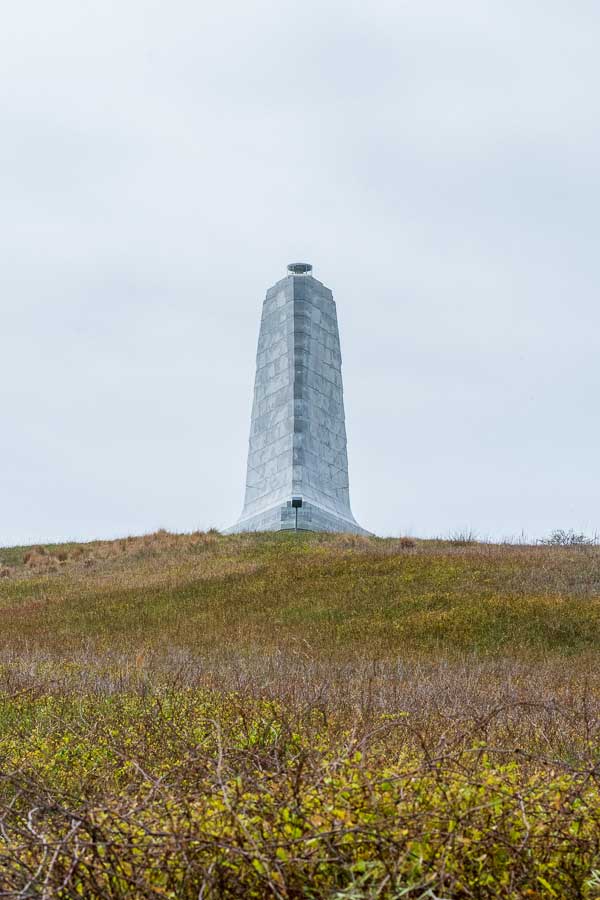
The Wright Brothers monument, a 60-foot-tall granite tower with Art Deco details, sits atop a nearby hill and is worth a look at.
I always recommend this stop to first-time visitors because it adds so much historical context to the OBX.
Best For: History, aviation enthusiasts, educational stops
Location: Kitty Hawk
Time: 1–2 hours
Cost: $10 per person
Tip: Time your visit with a ranger talk for deeper insight into the first flight.
8. Explore Fort Raleigh
In the late 16th century, the Roanoke Colony was England’s first established settlement in the New World. When the colony’s governor, John White, returned from England, the settlement (now known infamously as the Lost Colony) was abandoned within five years of its establishment.
About two centuries later, the Union Army occupied the site during the Civil War and established a Freedmen’s Colony.
Today, the area is Fort Raleigh National Historic Site, where visitors can walk in the footsteps of those prior settlements and see the archaeology that has been preserved.
Best For: History, walking trails, cultural sites
Location: Manteo
Time: 1–2 hours
Cost: Free
Tip: Visit in summer to pair with The Lost Colony outdoor drama.
9. Roanoke Island Festival Park
Nearby to Fort Raleigh is the Roanoke Island Festival Park. It’s part park, part museum, and part performance venue. In addition to a large lawn for picnics and hanging out, there is a stage that hosts shows from major musicians from around the country.
The Festival Park is also home to a museum about Roanoke Island and the region. Living history reenactors show visitors what life was like for the colonists before their settlement mysteriously vanished. The local indigenous population is also represented. On the sound, there’s also a full-size reproduction of a 16th-century sailing ship that visitors can board and explore.
Best For: Families, interactive history, hands-on exhibits
Location: Manteo
Time: 1–2 hours
Cost: $15 adults, $13 children; free under 3
Tip: Don’t miss boarding the replica sailing ship—it’s a highlight.
10. North Carolina Aquarium on Roanoke Island
The North Carolina Aquarium on Roanoke Island is a classic spot to visit, no matter the weather and one of the best Outer Banks rainy day activities. The museum has an impressive collection of wildlife and is popular for its sea turtle rescue center. There are plenty of hands-on and immersive exhibits to engage kids as well as adults.
Best For: Rainy days, families, indoor activities
Location: Manteo
Time: 1–2 hours
Cost: $15 adults, $13 children; free under 3
Tip: Arrive early on rainy days—it’s one of the most popular indoor attractions.
11. Walk the Duck Town Park Boardwalk
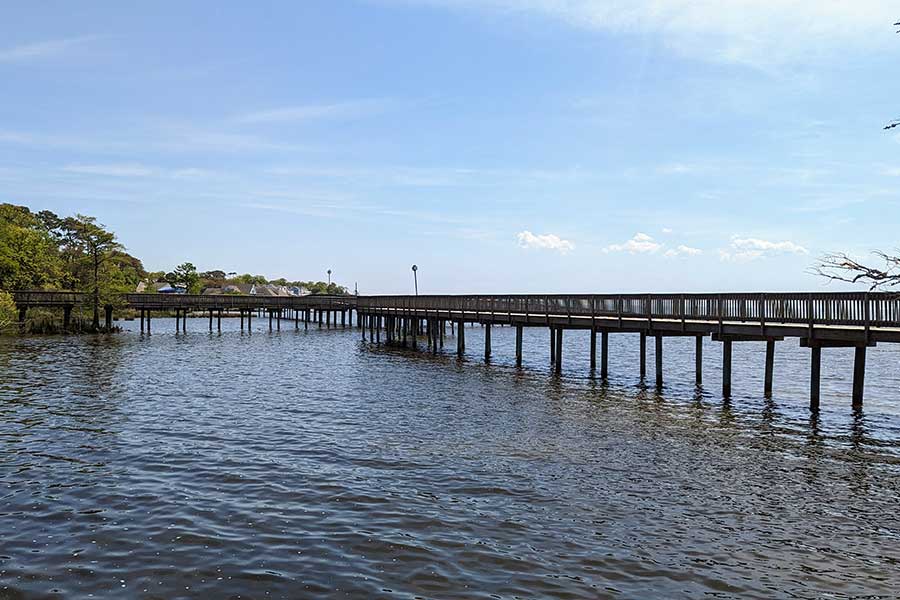
Instead of going for a walk on the beach, go for a stroll on the sound. The Duck Town Park Boardwalk is a one-mile-long boardwalk along the Currituck Sound that sneaks around and behind shops and restaurants. The waterfront area is full of wildlife with a range of birds stopping by to check out the tall grasses or for a bite of seafood.
The trail also offers access to fishing/crabbing points and kayak launches.
Best For: Scenic walks, wildlife spotting, casual exploring
Location: Duck
Time: Under an hour
Cost: Free
Tip: Go early morning or evening for fewer crowds and better light.
12. Explore Historic Manteo
Experience a true Southern small town in Historic Manteo. Set along the waterfront, the area is a mixture of historic buildings, a marina, and a collection of charming local boutiques and art galleries. Stroll the sidewalks, take in the atmosphere, and stop off for some lunch and shopping.
Best For: Shopping, dining, small-town charm
Location: Manteo
Time: 1–2 hours
Cost: Free (shopping/dining extra)
Tip: Plan a lunch stop here—it’s one of the most charming areas in the OBX.
13. Historic Corolla Village

When it comes to non-beach activities in the Outer Banks, Historic Corolla Village, around the Currituck Beach Lighthouse, has plenty to offer. The landmark Art Deco mansion, the Whalehead Club, sits along the waterfront in Historic Corolla Park near a charming arched wooden bridge and a wildlife museum.
Closer to the lighthouse are a collection of small shops and restaurants, including Corolla Village BBQ (a favorite of mine), and the Currituck Maritime Museum, a small but impressive free attraction highlighting the local seafaring lifestyle that has survived for generations.
You can find more ideas in my Corolla guide.
Best For: History, architecture, relaxed exploring
Location: Corolla
Time: 1–2 hours
Cost: Free
Tip: Don’t miss the free Currituck Maritime Museum nearby.
14. Graveyard of the Atlantic Museum
Located in Hatteras, the Graveyard of the Atlantic Museum educates on the region’s maritime history and culture. In particular, the exhibits detail the Outer Banks coast’s history of shipwrecks.
Best For: Maritime history, rainy days, educational stops
Location: Hatteras
Time: 1–2 hours
Cost: Free
Tip: Pair this with a ferry trip or lighthouse visit for a full day in Hatteras.
15. Outer Banks Scenic Byway
Not sure where to go? Take a drive on the Outer Banks Scenic Byway. The nearly 140-mile route includes two ferries and highlights some of the region’s most impressive natural landscapes. The simplest way to experience it is to start in the north and drive south, using ferries to connect the islands along the route.
Consider adding stops at the Outer Banks lighthouses and scenic nature preserves along the route.
Best For: Road trips, first-time visitors, scenic drives
Location: Corolla to Ocracoke (via NC Highway 12)
Time: Half day to full day
Cost: Free (ferry fees may apply)
Tip: Drive north to south and include a ferry crossing for a classic OBX experience.
Things to Do in the Outer Banks Besides the Beach on a Rainy Day
If you’re visiting the Outer Banks on a rainy day, you still have plenty of great options. These indoor and all-weather activities will help you make the most of your trip even when the weather doesn’t cooperate.
- Visit the North Carolina Aquarium on Roanoke Island
- Explore the Graveyard of the Atlantic Museum
- Browse shops and galleries in Historic Manteo
- Visit Roanoke Island Festival Park
Things to Do in the Outer Banks in the Off-Season
- Climb lighthouses (when open)
- Walk the Duck Boardwalk
- Visit Jockey’s Ridge without the crowds
- Explore nature preserves and historic sites
Things to Do in the Outer Banks for Adults Beyond the Beach
- Take a scenic byway drive
- Visit Manteo for shopping and dining
- Go kayaking on the sound
- Enjoy a romantic sunset at Jockey’s Ridge
- Explore Corolla Village
Know Before You Go: Tips for Your OBX Adventure
The Outer Banks is an increasingly popular destination, and a little planning goes a long way, especially when you’re exploring beyond the beach. Here are a few essential tips to help you make the most of your trip.
Check the Season and Hours
Many attractions in the Outer Banks are seasonal. The ability to climb lighthouses, for example, is generally available from spring through fall and is subject to weather conditions. In the off-season, some sites may have reduced hours or be closed entirely. It’s always a good idea to check the official website for an attraction before you drive there.
You’ll Need a Car
The Outer Banks are a series of long, narrow barrier islands. The attractions listed here are spread out from Corolla in the north to Roanoke Island and beyond. Public transportation is very limited, so having a car is the most practical and necessary way to explore the region.
Budget for Entrance Fees
While exploring the grounds of many parks is free, several key destinations require a paid ticket for entry. This includes the Wright Brothers National Memorial, the North Carolina Aquarium on Roanoke Island, and the Elizabethan Gardens. Climbing the lighthouses that are open to the public also requires a small fee.
Looking to save money? Many of the best non-beach activities in the Outer Banks are completely free, including Jockey’s Ridge, Nags Head Woods, and the Duck Boardwalk. For a full list, check out my guide to free things to do in the Outer Banks.
Be Prepared for the Weather
OBX weather can be unpredictable. Even on a sunny day, a rain shower can pop up. It’s wise to bring a rain jacket. For outdoor sites like Jockey’s Ridge State Park or Fort Raleigh, sunscreen and a hat are a must. If you plan on hiking in places like Nags Head Wood Nature Preserve, bug spray is highly recommended, especially in the warmer months. During Hurricane season, it’s important to have an evacuation plan and follow directions from officials.
Book Ahead for Popular Events
For seasonal performances like The Lost Colony stage production, it’s smart to book your tickets in advance, especially if you’re visiting during the peak summer season.
1-Day Outer Banks Itinerary (No Beach Required)
If you’re planning a day in the Outer Banks without spending time on the beach, here’s an easy itinerary.
This itinerary works especially well for a first-time visit or a cloudy day when you want to see a mix of history, nature, and small-town charm.
- Morning: Visit the Wright Brothers National Memorial
- Midday: Explore Jockey’s Ridge State Park
- Lunch: Head to Manteo for dining and shopping
- Afternoon: Visit the North Carolina Aquarium or Elizabethan Gardens
- Evening: Walk the Duck Boardwalk at sunset
FAQs
What is there to do in the Outer Banks besides the beach?
There are plenty of things to do in the Outer Banks besides the beach, including visiting historic lighthouses, exploring nature preserves, touring museums, kayaking on the sound, and walking through charming towns like Manteo and Duck.
What can you do in OBX when it rains?
Popular Outer Banks rainy day activities include visiting the North Carolina Aquarium, exploring museums like the Graveyard of the Atlantic, shopping in Manteo, and touring historic sites like Fort Raleigh.
Is the Outer Banks worth visiting if you don’t like the beach?
Yes! There’s a wide range of activities, including hiking, history, wildlife, and small-town exploring.
Are Outer Banks lighthouses open year-round?
Most Outer Banks lighthouses are only open for climbing from spring through fall, and hours vary by location. However, the grounds are typically open year-round, making them a worthwhile stop even in the off-season.
What to do in OBX besides the beach? Plenty!
The Outer Banks may be known for its beaches, but as you can see, there’s no shortage of incredible things to do beyond the shoreline. Whether you’re climbing a lighthouse, spotting wildlife, or exploring historic towns, these experiences add plenty of variety to any OBX itinerary.
Whether you’re planning a full OBX trip or just looking for a few non-beach activities to mix into your itinerary, these options show just how much there is to do beyond the shoreline.
If you’re planning an OBX trip, I’d start with Jockey’s Ridge, the Wright Brothers Memorial, and a walk through Duck or Manteo—these are some of my favorite ways to experience the Outer Banks beyond the shoreline.
Plan Your Outer Banks Trip
Planning your trip? Don’t miss my guides to OBX lighthouses, free activities, and dog-friendly travel to build the perfect itinerary—and make the most of your time beyond the beach.
- Outer Banks Lighthouses: Which You Can Climb + Best Times to Visit
A complete guide to the OBX lighthouses, including climbing information and travel tips. - Fun & Free Things to Do in the Outer Banks
Budget-friendly activities including parks, historic landmarks, and scenic spots. - Outer Banks Dog-Friendly Vacation Guide
Where to stay, play, and enjoy the OBX with your dog. - Things to Do in Corolla, NC
Wild horses, historic sites, and highlights of the northern Outer Banks.
Save this post for later with Pinterest!
All photos and opinions are my own.


