
The Outer Banks doesn’t have three national parks in the traditional sense. Instead, the National Park Service manages three major sites here: Cape Hatteras National Seashore, Wright Brothers National Memorial, and Fort Raleigh National Historic Site. Each site is remarkably different. Cape Hatteras is a sprawling seashore with beaches, lighthouses, and coastal wildlife, while the Wright Brothers focuses on aviation history and Fort Raleigh explores the Lost Colony and the area’s complex colonial and Civil War history.
This guide breaks down each of the three National Park Service sites, including what to see, how much time you’ll need, which one is best for different types of travelers, and tips for planning your visit.
Table of Contents
Quick Guide to the Outer Banks National Park Service Sites
Outer Banks National Park Service Sites at a Glance
| National Park Service Site | Best For | Time Needed | Entrance Fee | Location |
|---|---|---|---|---|
| Cape Hatteras National Seashore | Beaches, lighthouses, wildlife, outdoor activities | A few hours to several days | Free | Bodie Island to Ocracoke Island |
| Wright Brothers National Memorial | History and aviation | 1.5–2 hours | $10 per person (Ages 15 and under are free) | Kill Devil Hills |
| Fort Raleigh National Historic Site | History, archaeology, trails | 1–2 hours | Free | Roanoke Island |
Which Outer Banks National Park Service Site Should You Visit?
If you only have time to visit one of the Outer Banks’ National Park Service sites, your choice will depend on what you want to see.
For first-time visitors: Cape Hatteras National Seashore gives you the quintessential Outer Banks experience, with beaches, lighthouses, wildlife, and plenty of opportunities to get outside.
For families: Wright Brothers National Memorial is a good choice if you’re looking for a relatively compact visit with plenty of history and things to see. Fort Raleigh is another good option, particularly for families interested in the story of the Lost Colony.
For history buffs: Both Wright Brothers and Fort Raleigh are fascinating, but they tell very different stories. Wright Brothers focuses on the history of aviation, while Fort Raleigh encompasses the Lost Colony, Indigenous history, and the Freedmen’s Colony.
For beach lovers: Cape Hatteras is the clear choice, with miles of protected coastline.
If you only have one day: Choose based on your interests: Cape Hatteras for beaches and scenery, Wright Brothers for aviation history, or Fort Raleigh for early American history and the Lost Colony.
Where Are the Outer Banks National Park Service Sites?
Map of the Outer Banks National Park Service Sites
Driving Distances Between the Sites
| Route | Approx. Distance | Approx. Driving Time |
|---|---|---|
| Fort Raleigh National Historic Site → Wright Brothers National Memorial | 8 miles | 15–20 minutes |
| Wright Brothers National Memorial → Bodie Island Lighthouse | 14 miles | 20–25 minutes |
| Bodie Island Lighthouse → Cape Hatteras Lighthouse | 48 miles | 1–1.5 hours |
One important thing to know: Cape Hatteras National Seashore isn’t a single attraction. It stretches for more than 70 miles, so the time needed to visit depends heavily on which part of the Seashore you’re visiting.
The three National Park Service sites are spread across a large portion of the Outer Banks, so don’t expect to hop quickly from one to another. Fort Raleigh and Wright Brothers National Memorial are relatively close to one another, while Cape Hatteras National Seashore extends much farther south along the barrier islands.
Fort Raleigh and Wright Brothers National Memorial are both convenient to visit when you’re staying around Manteo, Nags Head, Kill Devil Hills, or Kitty Hawk. From there, you can continue south toward Bodie Island and the Cape Hatteras section of the National Seashore.
If you’re traveling all the way to Ocracoke, plan significantly more time. The island is accessible by ferry, and the ferry schedule should be considered when planning your itinerary.
Cape Hatteras National Seashore
What Is Cape Hatteras National Seashore?
Cape Hatteras National Seashore was established in 1953 as the country’s first national seashore, protecting a long stretch of barrier islands along the Outer Banks. Today, the Seashore encompasses 24,470 acres and stretches for more than 70 miles along the coast.
Unlike the other two National Park Service sites in the Outer Banks, Cape Hatteras isn’t a single historic attraction. It’s a huge protected coastal landscape, with beaches, marshes, maritime forests, lighthouses, historic sites, and villages spread across several islands.
Top Things to Do at Cape Hatteras National Seashore
Cape Hatteras National Seashore has miles of coastline to explore. You could spend an afternoon swimming and walking along the beach, stop at one of the area’s historic lighthouses, go fishing, or spend the day exploring the site’s trails and wildlife habitats. If you’re visiting several areas of the Seashore, it’s easy to fill an entire day – or more.
Farther south on Ocracoke Island, you’ll also find Ocracoke Lighthouse, which has guided ships along the Outer Banks since 1823. Because reaching Ocracoke requires a ferry, it’s best treated as part of a separate Ocracoke itinerary rather than a quick stop while exploring the rest of the National Seashore.
- Relax on the beach
- Swim and surf
- Fish
- Observe wildlife
- Hike
- Visit historic lighthouses
- Drive designated ORV areas
Cape Hatteras Lighthouse
The Cape Hatteras Lighthouse is perhaps the most recognizable landmark in the Outer Banks. Its distinctive black-and-white spiral pattern makes it one of the region’s most photographed attractions.
The lighthouse is closed for climbing during the 2026 restoration project, although the grounds remain open to visitors.
Want to visit the Outer Banks lighthouses? My complete guide to Outer Banks lighthouses covers Cape Hatteras, Bodie Island, Currituck Beach, and Ocracoke lighthouses, including which ones you can climb and the best times to visit.
Bodie Island Lighthouse
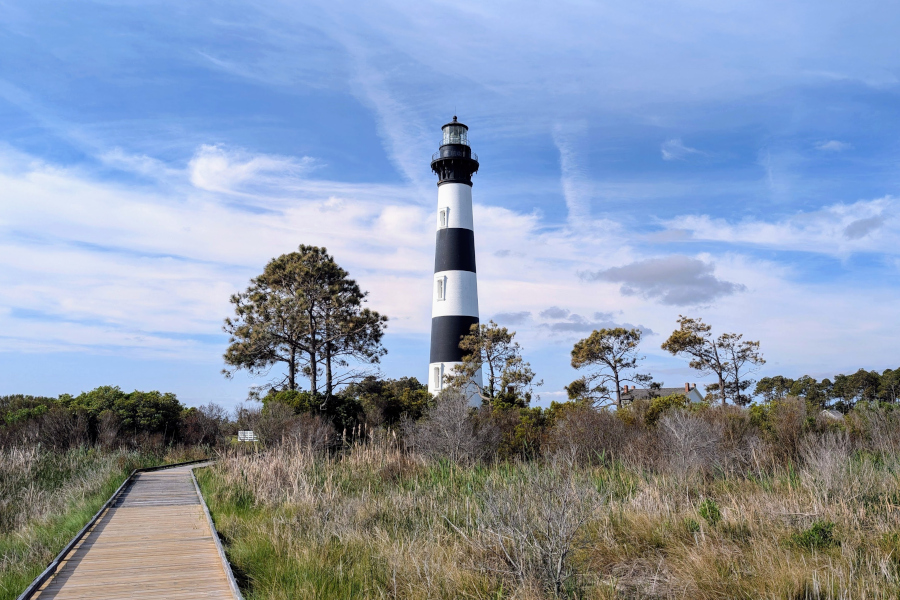
Located near the northern end of Cape Hatteras National Seashore, Bodie Island Lighthouse is instantly recognizable for its distinctive black-and-white stripes. It’s also one of my favorite Outer Banks lighthouses for photography, thanks to its setting alongside the surrounding marshland.
The lighthouse is normally open for climbing seasonally, and a nearby boardwalk provides views of the lighthouse as well as opportunities for wildlife watching.
Best Beaches Within the National Seashore
One of the best things about Cape Hatteras National Seashore is having so much coastline to explore. The best beach area for you will depend on whether you’re looking for swimming, fishing, surfing, wildlife watching, or a quieter stretch of sand.
- Coquina Beach: convenient northern option for swimming and beach access
- Cape Point: fishing and dramatic scenery
- Frisco Beach: beach access farther south
- Ocracoke: quieter island beaches
Looking for more ways to enjoy the Outer Banks without spending a lot? I’ve rounded up free things to do in the Outer Banks, from beaches and hiking trails to historic sites and lighthouses.
Wildlife and Nature
Cape Hatteras is much more than its beaches. The Seashore protects a variety of coastal habitats, including beaches, dunes, marshes, and maritime forests.
Birdwatchers will find plenty to look for, while dolphins can sometimes be spotted offshore. Sea turtles also nest along the beaches, particularly during the warmer months.
Remember that wildlife is wild. Give animals plenty of space and follow any posted closures or seasonal restrictions. During nesting season, some areas of the beach may be closed or restricted to protect nesting sea turtles and other wildlife.
Visitor Tips
- Parking: Most major attractions and beach access areas have parking, but lots can fill during summer.
- Restrooms: Facilities vary considerably along the Seashore, so don’t assume one will be available at every beach access.
- Beach driving: ORV access is permitted in designated areas under certain conditions, but you’ll need to follow current NPS rules and closures.
- Cell service: Don’t assume you’ll have a strong signal everywhere, particularly farther south.
- Weather: Conditions can change quickly along the coast. Wind, storms, and extreme heat can all affect your plans.
Wright Brothers National Memorial
Why Visit Wright Brothers National Memorial?
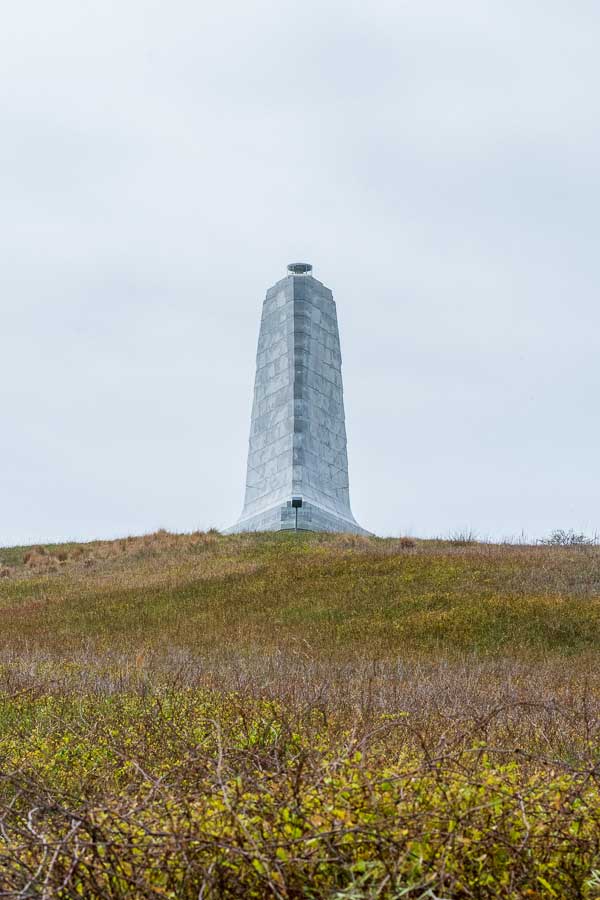
The Ohio-born Wright brothers spent several years traveling to the Outer Banks to conduct experiments with their flying machine. On December 17, 1903, they made the first successful controlled, powered flight at what is now Kill Devil Hills.
The memorial was established in 1927 to commemorate the Wright brothers’ achievement. Today, Wright Brothers National Memorial is a 428-acre site in Kill Devil Hills, on the site of their first successful flights.
Highlights of the Memorial
Highlights include:
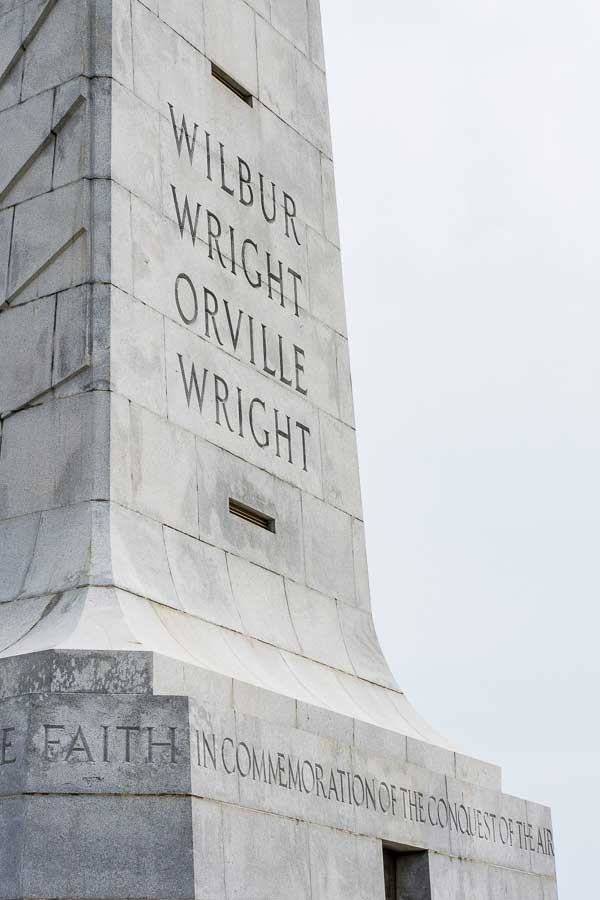
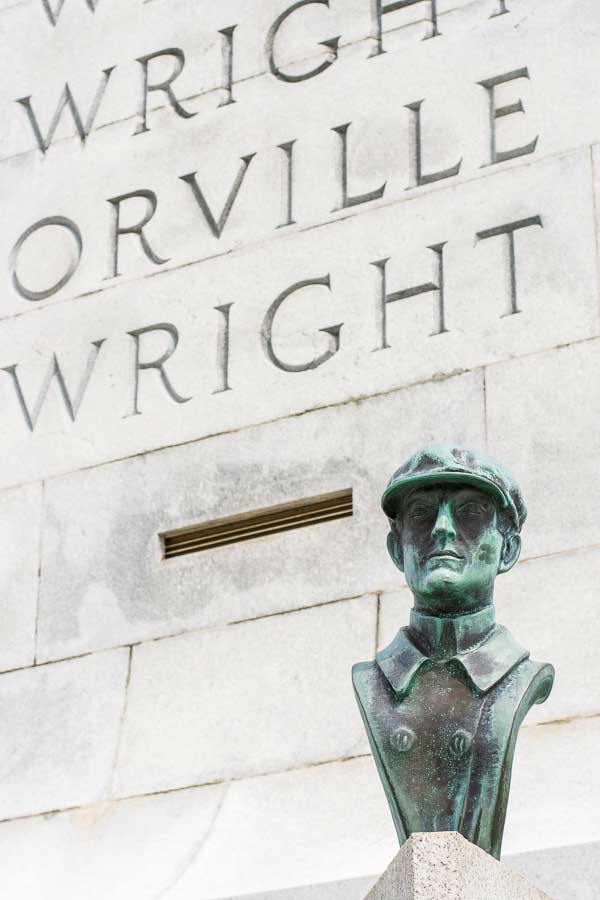
- Wright Brothers Monument: The 60-foot-tall granite monument sits atop Kill Devil Hill.
- Visitor center and museum: Learn how the brothers developed their aircraft and see a life-size replica of the Wright Flyer.
- Reconstructed camp: See the simple buildings where the brothers lived and worked.
- First flight markers: Walk along the flight line and see the distances of their four historic flights.
How Long to Plan for Your Visit
Plan on about 1.5–2 hours for a typical visit. Allow more time if you want to attend a ranger program or spend extra time exploring the grounds.
For more, check out my guide to visiting the Wright Brothers National Memorial.
Visitor Tips
- Tickets: Tickets can be purchased ahead of time online or at the site.
- Parking: There is ample free parking available at the site.
- Best Time of Day to Visit: Arrive early to beat the crowds and the heat during the peak summer travel season. If you’re looking to snap some photographs, target Golden Hour for the best light.
Fort Raleigh National Historic Site
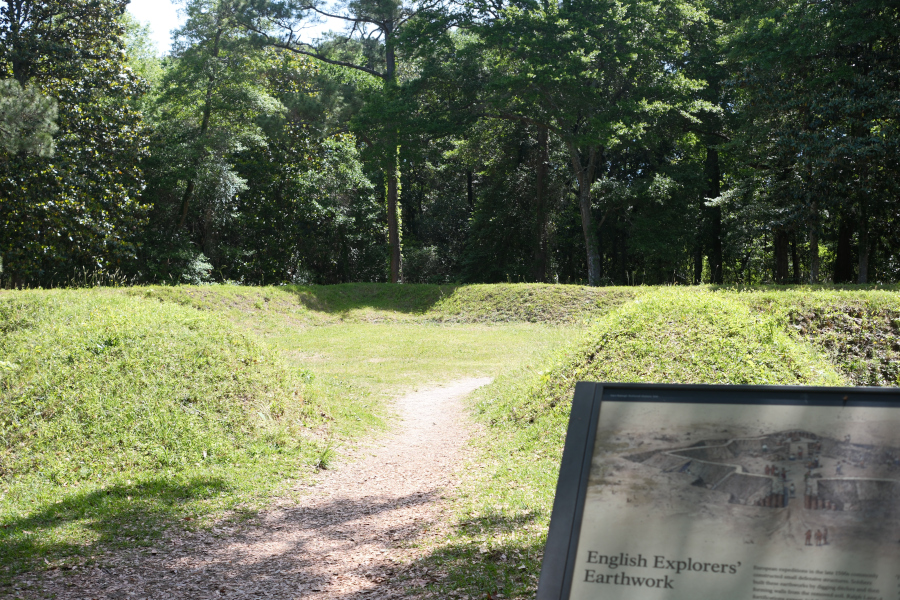
Fort Raleigh National Historic Site is one of the most interesting historical sites in the Outer Banks. Located on Roanoke Island, the site tells several different stories, including those of the Indigenous people who lived here, the English colonists who established the Roanoke Colony, and the formerly enslaved people who established a Freedmen’s Colony here during the Civil War.
Of course, Fort Raleigh is best known for the Lost Colony, one of the biggest mysteries in American history. But there’s more to the site than the story of the missing colonists, making it worth a visit even if you’ve heard the Lost Colony story before.
The History of Fort Raleigh
Long before the English arrived, Roanoke Island was home to Indigenous people, including the Roanoke Tribe, who were part of the Algonquian-speaking peoples of the region.
In 1585, the English established a colony on Roanoke Island. A second group arrived in 1587 under Governor John White, this time including women and children. White’s granddaughter, Virginia Dare, was born there and became the first English child born in the colony.
White eventually returned to England for supplies, intending to come back to Roanoke. However, war between England and Spain delayed his return for several years. When he finally made it back to Roanoke Island in 1590, the settlement was gone.
The colonists’ houses had been dismantled and their boats were missing. The only significant clue was the word “CROATOAN” carved into a post. White believed the colonists may have relocated to Croatoan Island, but he was unable to find them. Exactly what happened to the colonists remains a mystery.
More than 250 years later, the site took on a very different role. During the Civil War, the Union Army established a settlement on Roanoke Island for formerly enslaved people who had escaped to Union-controlled territory. Known as the Freedmen’s Colony, it became home to thousands of people seeking freedom and a new life.
Today, Fort Raleigh preserves and interprets all of these stories, from the Indigenous history of Roanoke Island to the Lost Colony and the Freedmen’s Colony.
The Lost Colony
The Lost Colony is the story that draws many visitors to Fort Raleigh. When Governor John White returned to Roanoke Island in 1590, he found that the settlement had disappeared. The houses were gone, and the word “CROATOAN” had been carved into a post.
White believed the colonists may have moved to Croatoan Island, but he wasn’t able to conduct a thorough search before returning to England. No one knows for certain what happened to the settlers.
Over the years, historians and archaeologists have proposed several possibilities. Some evidence suggests that groups of colonists may have dispersed and joined neighboring Indigenous communities. But there is still no definitive answer to the mystery.
The Lost Colony has also become an important part of the Outer Banks’ cultural history. In 1937, playwright Paul Green debuted The Lost Colony, a dramatic retelling of the colonists’ experience. The outdoor production has run during summer seasons for generations at a theater just a short distance from the historic site.
What to See at Fort Raleigh
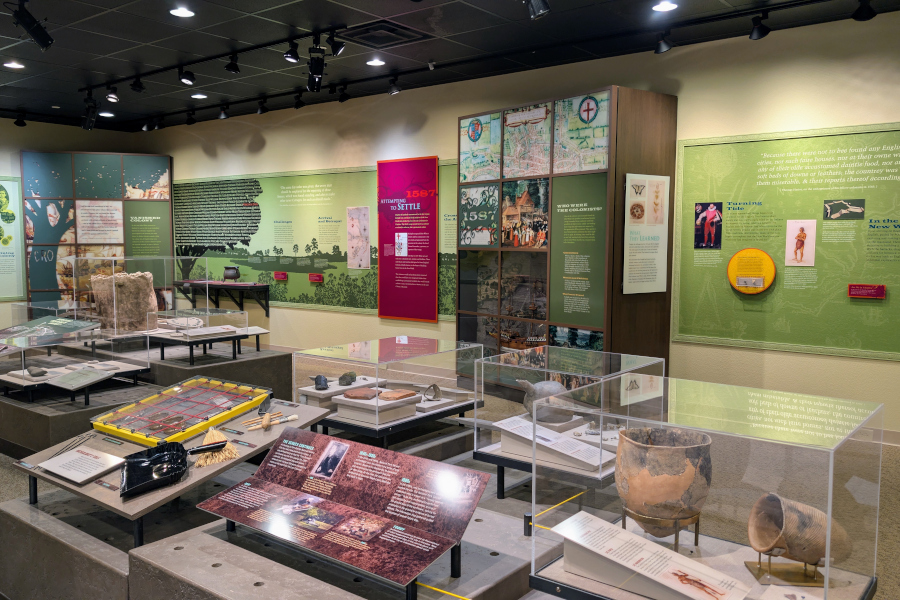
Fort Raleigh is relatively compact, so you don’t need an entire day to see the main historic site. Start at the visitor center, where a small museum provides information about the Roanoke Colony, the Lost Colony, and the site’s later history.
Outside, you can see reconstructed earthworks that give you an idea of what the fort may have looked like. Park rangers also lead talks and programs about the site’s history.
There are also trails if you want to spend a little more time exploring. The Freedom Trail is a 1.25-mile, one-way trail through the maritime forest to Freedmen’s Point, with interpretive signs about the Freedmen’s Colony.
Elizabethan Gardens

Adjacent to Fort Raleigh National Historic Site, but separately operated, are the Elizabethan Gardens. The 10-acre gardens contain hundreds of varieties of plants, including roses and camellias, as well as a conservatory, butterfly garden, and an ancient live oak.
The gardens are an easy addition to a visit to Fort Raleigh since they’re right next door. Keep in mind, however, that they have their own admission fee and aren’t part of the National Park Service site.
Check out my guide to the Elizabethan Gardens to plan your visit.
Visitor Tips
- Admission: Fort Raleigh National Historic Site is free to visit.
- Parking: The site offers free parking in its large parking lot. However, during the peak tourist season, parking can be difficult.
- How Long to Visit: For the historic site itself, allow about 1–2 hours. Add more time if you want to walk the Freedom Trail or visit the Elizabethan Gardens next door.
- Best for: History lovers, families, and anyone interested in the Lost Colony or the early history of the Outer Banks.
Comparing the Outer Banks National Park Service Sites
Best for History Lovers
Both Wright Brothers National Memorial and Fort Raleigh National Historic Site are excellent choices for history lovers, but they tell very different stories. Wright Brothers is the better choice if you’re interested in aviation and the history of flight, with a museum, reconstructed camp, flight markers, and ranger programs. Fort Raleigh is the better choice if you’re interested in early English colonization, Indigenous history, the Lost Colony, and the Freedmen’s Colony.
Best for Beaches and Nature
Cape Hatteras National Seashore stands out for its miles of unspoiled beaches and diverse wildlife, both plants and animals. You can spend the day swimming, fishing, hiking, birdwatching, or simply relaxing on the beach.
Best for Families
All three sites offer something for families, but Wright Brothers and Fort Raleigh are particularly easy to fit into a family itinerary because they’re compact and have Junior Ranger programs. Cape Hatteras is the better choice for families who want to spend their time outdoors.
Best for Photography
Cape Hatteras National Seashore tends to stand out as the best site for photography, but it can depend on what kind of pictures you’re looking to take. To capture lighthouses and the roar of the ocean, Cape Hatteras is ideal. Consider visiting Wright Brothers National Memorial at Golden Hour for a stunning shot of the monument.
If lighthouses are your main photographic interest, I’ve put together a complete guide to photographing and visiting the Outer Banks lighthouses.
Planning Your Visit
How Much Time Do You Need?
For Fort Raleigh and Wright Brothers National Memorial, plan on about 1.5–2 hours at each site. Cape Hatteras National Seashore is different: you could spend a few hours exploring one section of the Seashore or several days visiting its beaches, lighthouses, and other areas.
Can You Visit All Three in One Trip?
Yes, you can visit all three National Park Service sites in one day, but I don’t recommend it. Fort Raleigh and Wright Brothers National Memorial are relatively close to each other, making them easy to combine. Cape Hatteras National Seashore, however, stretches more than 70 miles south, so even getting to the northern end of the Seashore adds significant driving time.
If you want to see all three, I’d recommend spreading them over at least two days. On a single day, combine Fort Raleigh and Wright Brothers, then save Cape Hatteras for another day when you can actually enjoy the beaches, lighthouses, and scenery rather than spending most of your time in the car.
Entrance Fees and National Park Passes
| National Park Service Site | Entrance Fee | What to Know |
|---|---|---|
| Wright Brothers National Memorial | $10 per person | Ages 15 and under are free. The fee is charged per person, not per vehicle. |
| Fort Raleigh National Historic Site | Free | No entrance fee or pass is required. |
| Cape Hatteras National Seashore | Free | There is no entrance fee, although some activities and facilities, such as lighthouse climbs, camping, and certain permits, have separate fees. |
If you plan to visit several National Park Service sites during the year, you may also want to consider the America the Beautiful pass. The pass covers entrance fees at participating federal recreation sites, but it probably won’t pay for itself based on an Outer Banks visit alone. Wright Brothers is the only one of the three with an entrance fee, so most travelers would pay just $10 per person for the three-site itinerary. However, if you’re planning other National Park Service site trips during the year, the pass can be a good value.
For 2026, the America the Beautiful pass ranges from $80 for US citizens and residents to $250 for non-US residents.
If you’re trying to keep your Outer Banks trip affordable, you don’t have to spend much to enjoy the area. Many beaches, parks, historic sites, and outdoor activities are free. Check out my guide to 15+ Free Things to Do in the Outer Banks for more budget-friendly ideas.
What to Do Beyond the Beach
If you’re visiting the Outer Banks outside of beach season – or simply get stuck with a rainy day – there are still plenty of ways to enjoy the area. Check out my guide to things to do in the Outer Banks besides the beach for ideas ranging from historic sites and lighthouses to museums, gardens, and nature preserves.
Traveling with Pets
The Outer Banks are generally very dog-friendly, but pet rules vary across National Park Service sites. If you’re traveling with a dog, be sure to check the current regulations before your visit, particularly because seasonal restrictions can apply.
Of the three National Park Service sites, Cape Hatteras National Seashore offers the most space to explore with your dog, while Wright Brothers and Fort Raleigh are both easy additions to a dog-friendly itinerary.
- Cape Hatteras National Seashore: Dogs are allowed in most outdoor areas but must be on a leash no longer than six feet. Dogs aren’t permitted on designated swim beaches or inside buildings, and temporary wildlife closures may restrict access.
- Wright Brothers National Memorial: Leashed dogs are allowed in outdoor areas but aren’t permitted inside buildings. Leashes may not exceed six feet.
- Fort Raleigh National Historic Site: Leashed dogs are welcome in outdoor areas, including trails, but aren’t permitted inside federal buildings. The site also participates in the NPS B.A.R.K. Ranger program.
If you’re planning an entire Outer Banks vacation with your dog, there are plenty of other dog-friendly beaches, parks, attractions, and restaurants to explore. Read my complete guide to a dog-friendly Outer Banks vacation for more ideas, including where to stay, beaches that welcome dogs, and other dog-friendly things to do.
Tips for Visiting the Outer Banks National Park Service Sites
What to Bring
For any of these sites, I recommend wearing comfortable shoes for walking and bringing a water bottle and camera. Seasonally, sunscreen and bug spray may also be a good idea. You may also want to bring binoculars if you’re interested in birdwatching or, at the national seashore, scanning the ocean for boats or dolphins.
Parking and Transportation
In the Outer Banks, parking and drive times are highly seasonal. What one experiences in January won’t be the same as July.
If you’re visiting during the peak travel season, be sure to allow extra time for travel and for finding parking.
Weather and Seasonal Considerations
Similarly, weather is also seasonal. During the summer, expect high temperatures and mosquitoes. During late summer and fall, hurricanes and tropical storms are a possibility. Wind is a factor year-round and can cause cooler temperatures, even when the air temperature is high. Having layers can be helpful.
Practice Leave No Trace
These National Park Service sites offer so much to visitors, whether you’re visiting for the history or the natural scenery. Be sure to follow the guidelines for each site, including respecting any wildlife you may encounter and staying on marked paths. Leave no trace and take trash with you.
Frequently Asked Questions
Are there National Park Service sites in the Outer Banks?
The Outer Banks are home to three major National Park Service sites: Cape Hatteras National Seashore, Wright Brothers National Memorial, and Fort Raleigh National Historic Site.
Is Cape Hatteras a national park?
Cape Hatteras is not technically a national park. It is a National Seashore managed by the National Park Service.
Cape Hatteras National Seashore comprises over 24,000 acres of land stretching more than 70 miles. The site includes three lighthouses: Cape Hatteras Lighthouse, Bodie Island Lighthouse, and Ocracoke Lighthouse.
Which Outer Banks national park is free to visit?
Fort Raleigh National Historic Site is free to visit. Cape Hatteras National Seashore is also free to visit. Some activities and facilities, including lighthouse climbs, camping, and certain permits, have separate fees.
Can you visit all three National Park Service sites in one day?
Yes, but I wouldn’t recommend it. Fort Raleigh and Wright Brothers are easy to combine, while Cape Hatteras National Seashore is much more spread out. If you want to visit all three, I’d recommend at least two days.
Which Outer Banks National Park Service site is best for first-time visitors?
For most first-time visitors, I’d choose Cape Hatteras National Seashore because it offers the quintessential Outer Banks experience. If you’re primarily interested in history, choose Wright Brothers instead.
Save this post for later with Pinterest!
All photos and opinions are my own.


