
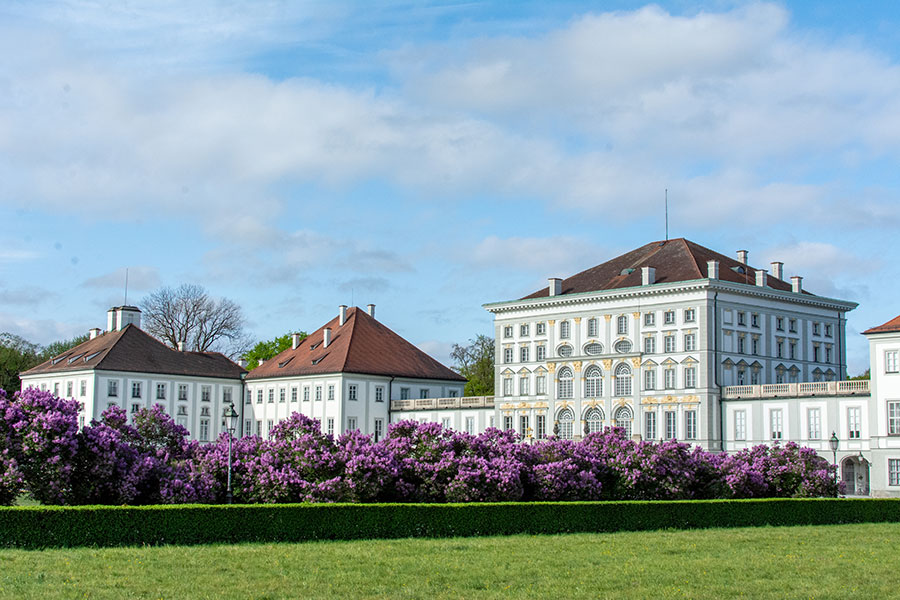
If you’re planning your time in Munich and deciding which attractions are worth prioritizing, Nymphenburg Palace in Munich offers a very different experience from the city’s more central sights.
While the Residenz is in the heart of the city, Schloss Nymphenburg transports visitors to another time with its sprawling gardens in the western part of the city. Nymphenburg Palace (Schloss Nymphenburg) is one of the largest and most beautiful royal palaces in Munich, originally built as a summer residence for Bavaria’s rulers. It’s an ideal stop if you have more than one day in Munich and want to balance royal history with green space. Nymphenburg Park wraps around the palace and offers miles of spectacular trails through wooded areas and across calm meadows, sprinkled with delightful smaller palace buildings. It’s my favorite spot in my favorite city.
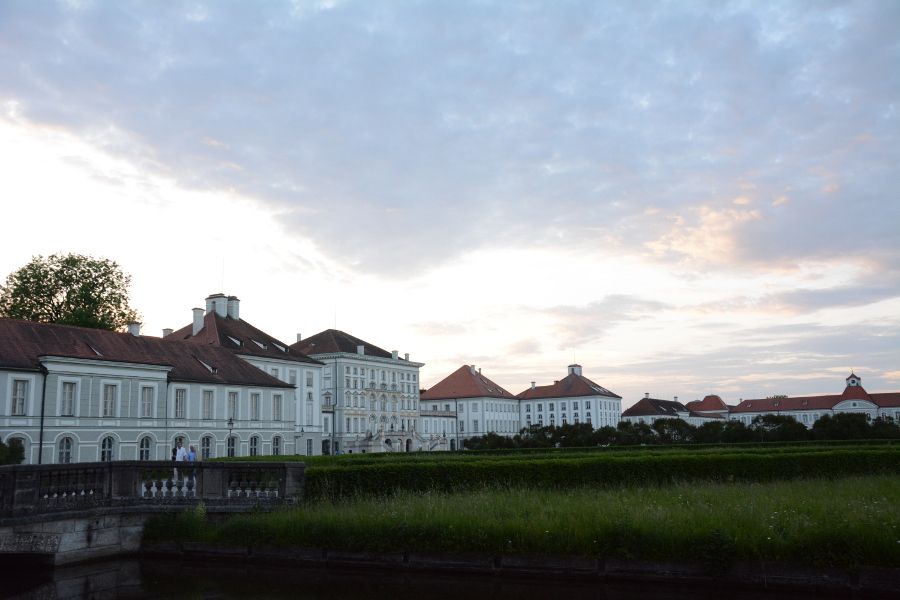
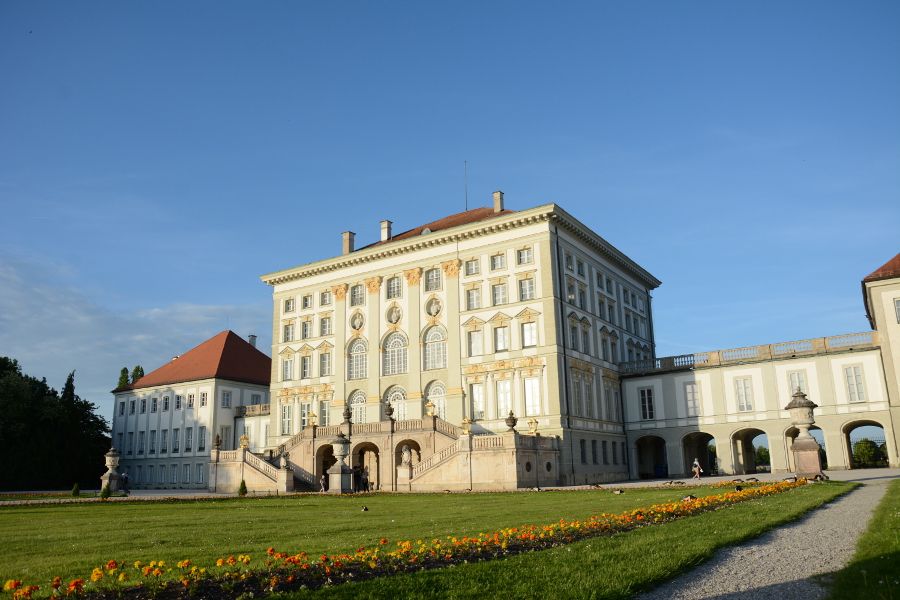
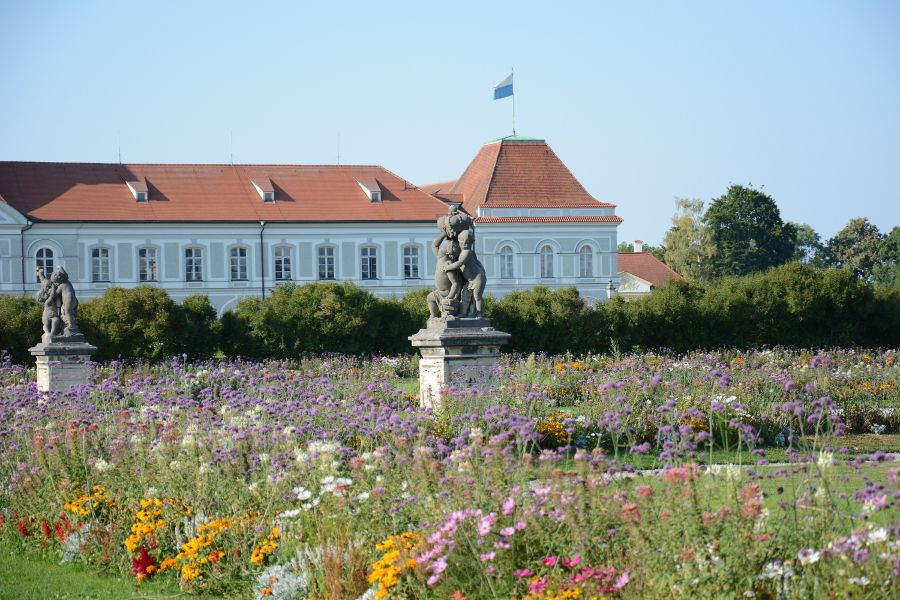
- Location: Western Munich
- Best for: Gardens, palace history, and long park walks
- Time needed: 2–4 hours
- Free: Palace park and gardens
- Tickets: Required for palace interior, park palaces, and museums
Table of Contents
Nymphenburg Palace in Munich: What to Know Before You Visit
For visitors looking to escape the city center, the palace is the perfect spot. With this Nymphenburg Palace guide, get to know this unique spot better and decide if it’s right for your Munich itinerary.
Is Nymphenburg Palace Worth Visiting?
Yes — Nymphenburg Palace is especially worth visiting if you want green space, fewer crowds than central Munich, and a slower, more atmospheric palace experience.
It’s particularly well-suited to first-time visitors who already plan to see central sights like the Residenz and want a contrast.
There are enough things to do at Nymphenburg Palace and Park that it could easily be a day trip within the city.
How Much Time Do You Need at Nymphenburg Palace?
Plan to spend at least two or three hours on a visit to Nymphenburg Palace to see inside the palace and the immediate gardens. A half-day allows time for the park palaces and museums, while a full day is best for walking deeper into Nymphenburg Park.
You can easily turn it into a full day or half day in Nymphenburg if you see the palace park buildings, explore the park more in-depth, and visit Marstall and Nymphenburg Porcelain Museums.
What’s Free vs Ticketed at Schloss Nymphenburg?
The grounds and park at Nymphenburg Palace are free. To enter the palace or any of the palace park buildings, there is an entrance fee. The museums also have an entrance fee.
If you’re prioritizing budget-friendly attractions, Nymphenburg also pairs well with other free things to do in Munich.
History of Nymphenburg Palace (Schloss Nymphenburg)
Who Built Nymphenburg Palace and Why
While it might not seem far from downtown Munich and the Residenz, Nymphenburg Palace was built as the summer residence for Bavarian Elector Ferdinand Maria and his wife, Henriette Adelaide of Savoy. Italian architect Agostino Barelli, who is responsible for the bright yellow Theatine Church on Odeonsplatz, designed the palace. Construction began in 1664 and was completed in 1679.
How the Palace Expanded Under Bavaria’s Electors
The palace changed each time a new elector came into power. The initial Munich palace wasn’t very large. It was under the rule of the couple’s son, Max Emanuel, that the palace was enlarged to what it is today. Court architect Henrico Zuccalli added a structure to either side of the main building. The once cubist structure now had more of a flow to it.
Italian, French, and Bavarian Influences on the Palace Design
While the earlier Nymphenburg Palace architecture was influenced by Italian design, French tastes took over by 1715. It was then that Max Emanuel returned to Bavaria after living away for a period during the Spanish War of Succession. French talents, as well as local craftsmen, were added to Nymphenburg by way of landscape and gardens, paintings, and stucco work.
It was also around this time that the Nymphenburg garden pavilions began being erected.
Under the reign of Elector Maximilian III Joseph (reigned from 1745 to 1777), the palace became more lavish. The Great Hall saw a collaboration from Johann Baptist Zimmermann and François Cuvilliés the Elder. The Nymphenburg Porcelain Manufactory also took its spot at the front of the palace estate during this time. And you can still visit it there today!
Exploring the Gardens of Nymphenburg Palace
The Formal Gardens and Palace Canal
The formal gardens at Nymphenburg Palace originally began in the Italian style in 1671, before being redesigned in a French style and then, under Friedrich Ludwig Sckell, in an English style in the 19th century.
18th-century canals, drawing on the River Würm, run out west and east from the palace. In the east, it terminates at Hubertusbrunnen, more than a mile from the palace. To the west, the waterways connect to a larger system that runs all the way to Schloss Schleissheim, more than ten miles away. Centuries ago, a plan was devised to travel between the two palaces on a gondola via the waterway. Unfortunately, it never fully came to fruition.
Seasonal Highlights in the Nymphenburg Palace Gardens
Summer and spring in Munich can be delightful. The palace gardens and park start to come alive, with flowers lining the canal behind the palace.
Nymphenburg Palace in the fall is beautiful, with the park’s trees starting to turn a variety of shades of red, orange, and yellow.
In winter, there are still cool-weather plants lining the canals. But blooms are limited. The palace’s exterior statues and sculptures also get boarded up in winter for protection.
For most travelers, spring and autumn are the best time to visit Nymphenburg Palace, offering mild weather and fewer crowds.
In early spring, the park begins to wake up again, and the park palaces typically reopen toward the end of March.
Gondola Rides and Fountains at Nymphenburg
During the peak season (April through October), visitors can enjoy a gondola ride at Nymphenburg Palace on the canals behind the palace. Weather-permitting, the rides can last 30 or 60 minutes.
Walking Trails and Nature in Nymphenburg Park
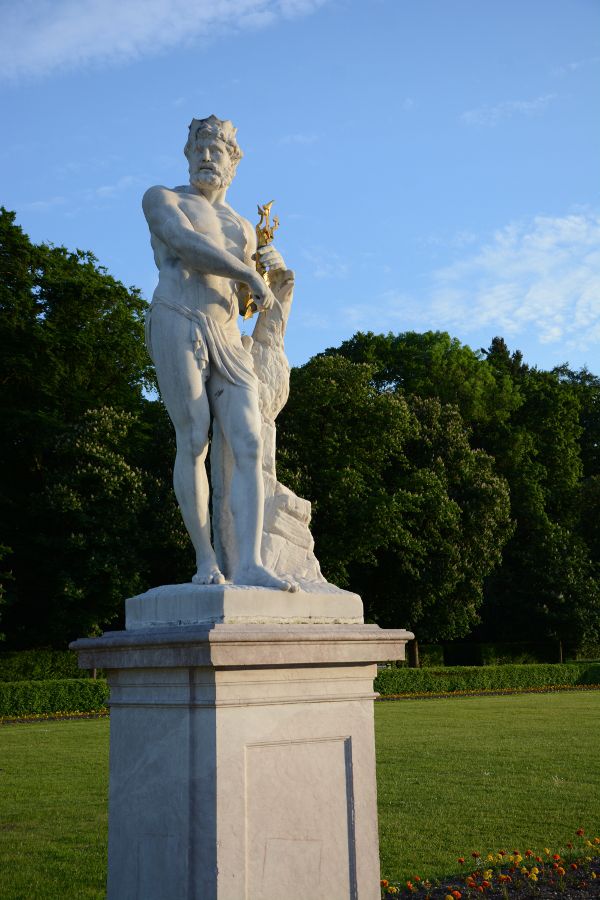
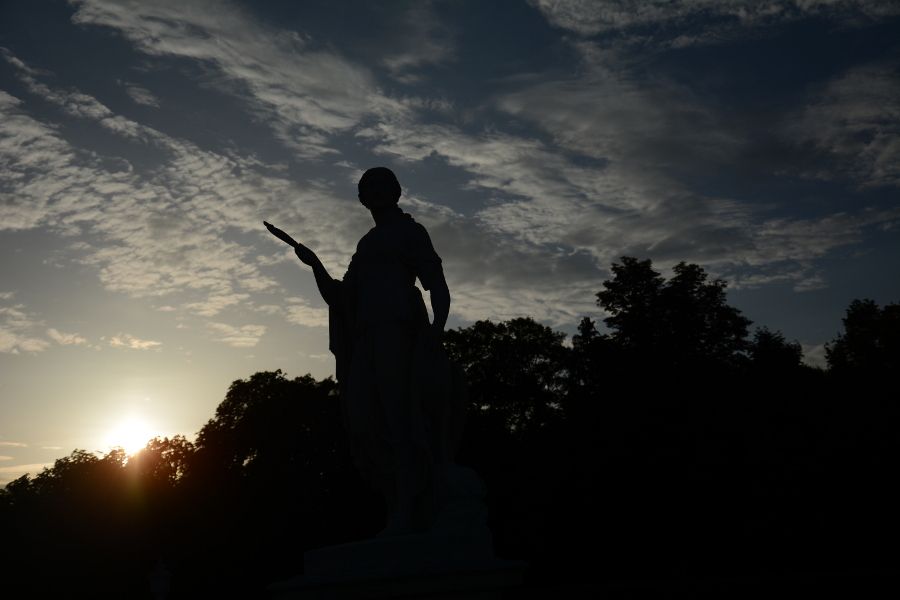
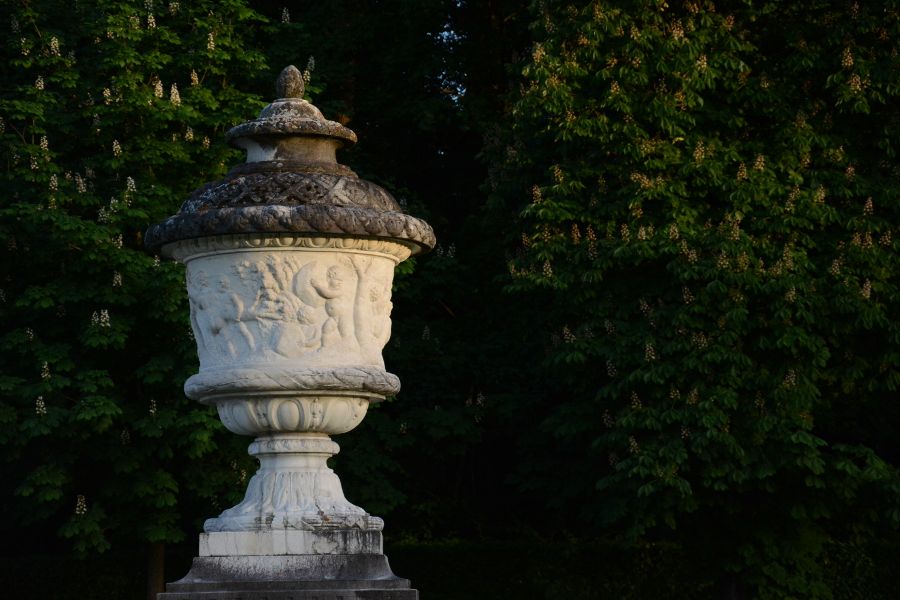
Past the formal gardens immediately around the palace lies Nymphenburg Palace Park. One of the great pleasures of exploring the more than 400 acres of the park is that you never know what you’ll find. If you search carefully, you’ll stumble upon Pan hidden under a tree with his flute. Elsewhere, small palace buildings dot the landscape.
What Makes Nymphenburg Park Feel Like a Local Park
Nymphenburg Park, quite simply, is a local park. While the eastern portion with the palace is typically full of tourists, much of the remainder is a quiet Munich park popular with local neighbors.
On any given day, and especially on weekends, you’ll spot friends catching up or joggers getting in their run.
Wildlife and Hidden Corners of the Park
There are so many hidden spots in Nymphenburg Park, you never know what you’ll find. I once encountered a deer, and I’m not sure which of us was more surprised.
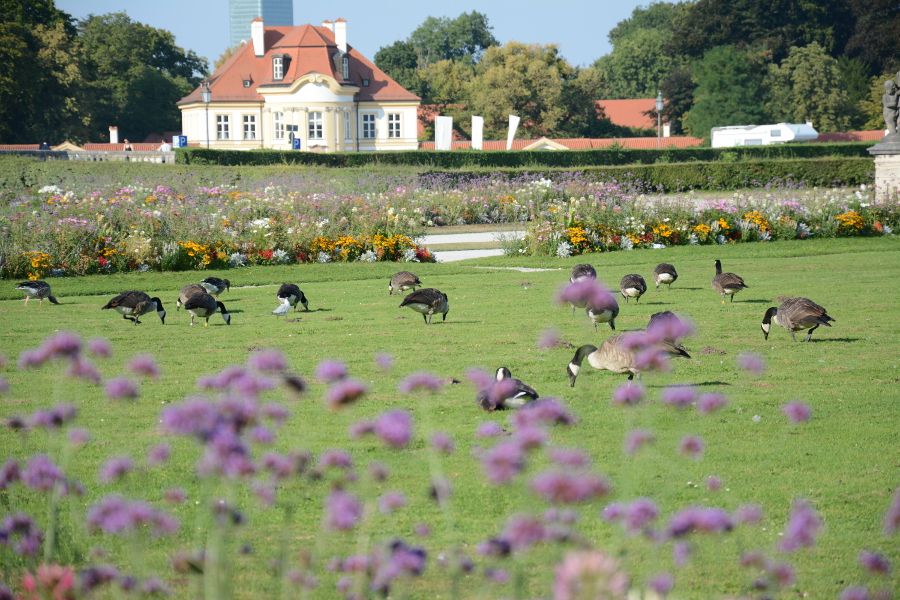
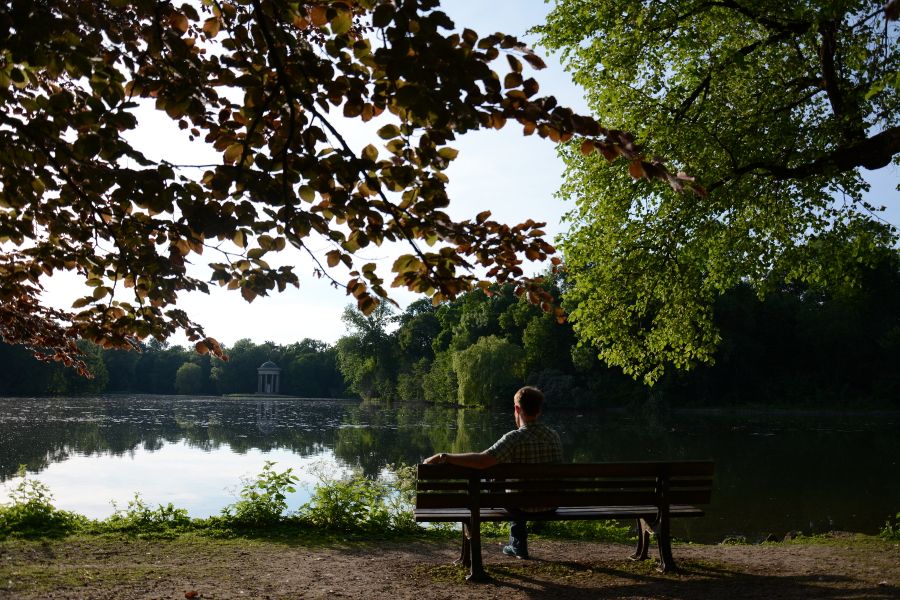
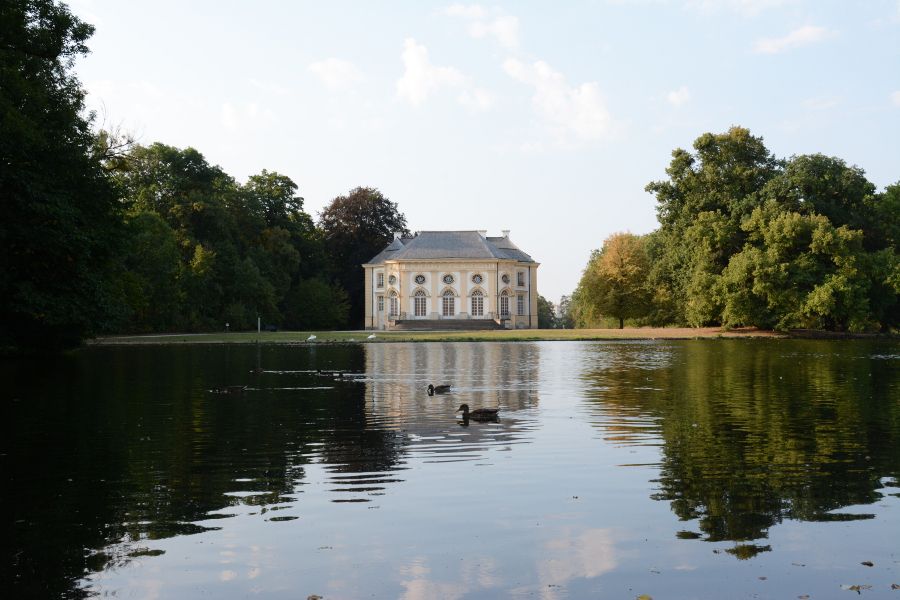
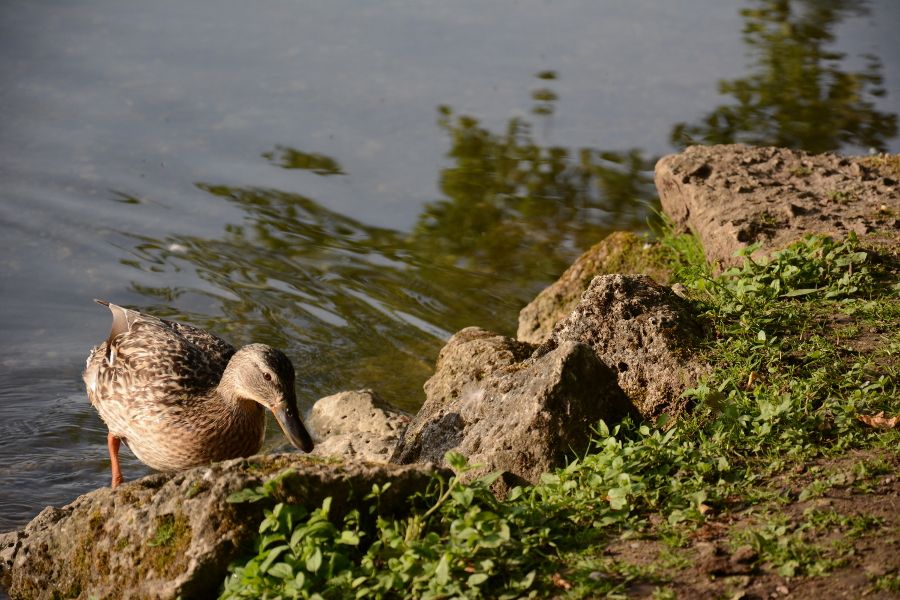
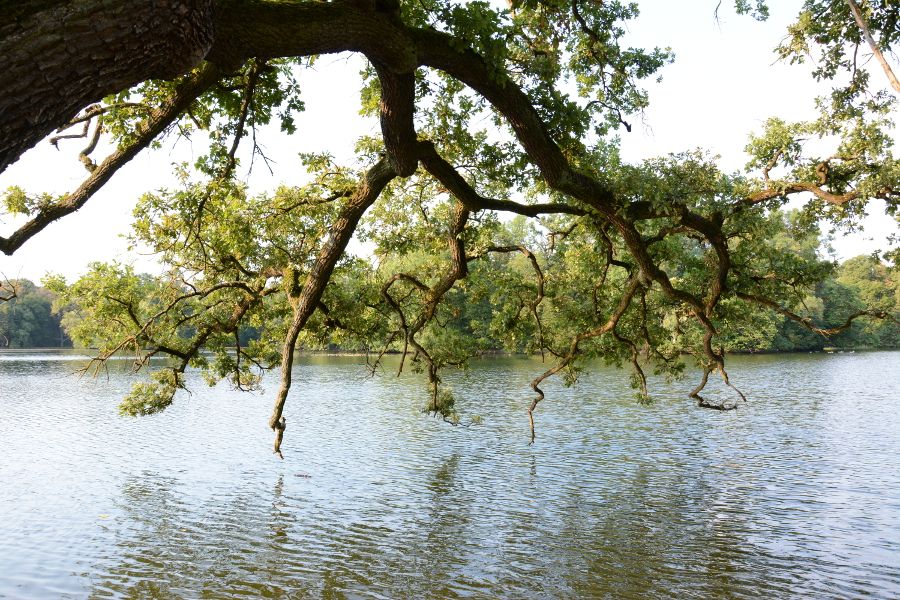
The park is rich with other wildlife, including birds. The park’s largest pond, Badenburger See, is a guaranteed spot for ducks and geese. It’s a favorite spot where my husband and I love to sit and watch the birds.
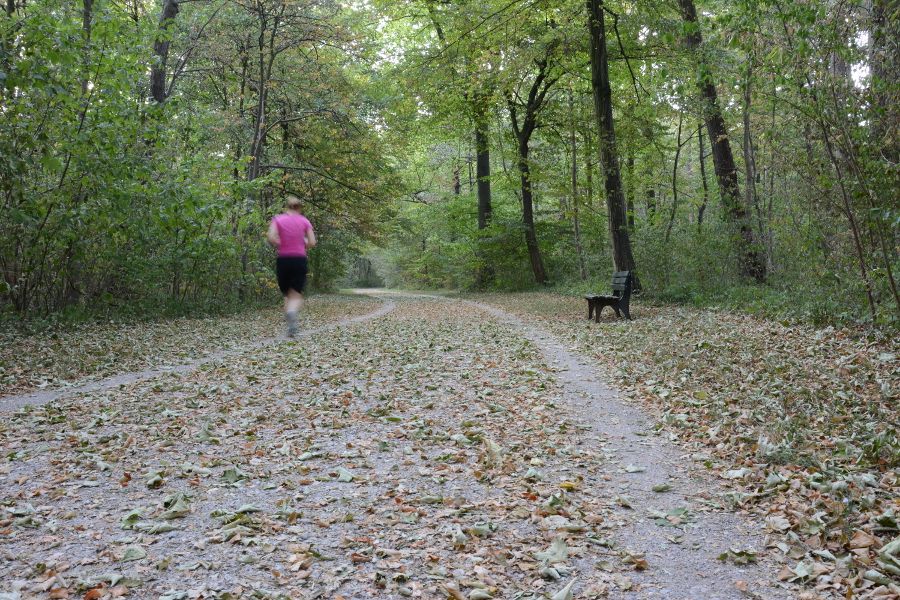
Best Areas for Walking, Jogging, and Photography
The deeper into the park you go, the better for walking and jogging in Nymphenburg Park. Main paths tend to have a mix of locals and tourists, but the smaller side trails are usually more locals.
Photography at Nymphenburg Palace can’t be limited to a single spot. It’s all picturesque! But if you prefer nature photography, head farther into the park. If landscapes and architecture catch your eye, stick to the main paths for the palace and park palaces.
Park Palaces at Nymphenburg: Hidden Buildings to Visit
Four smaller palaces are nestled in the park surrounding the main palace. While the Schloss Nymphenburg park palaces may seem small, you’ll get a surprise once inside: they are really quite spacious and sumptuously decorated!
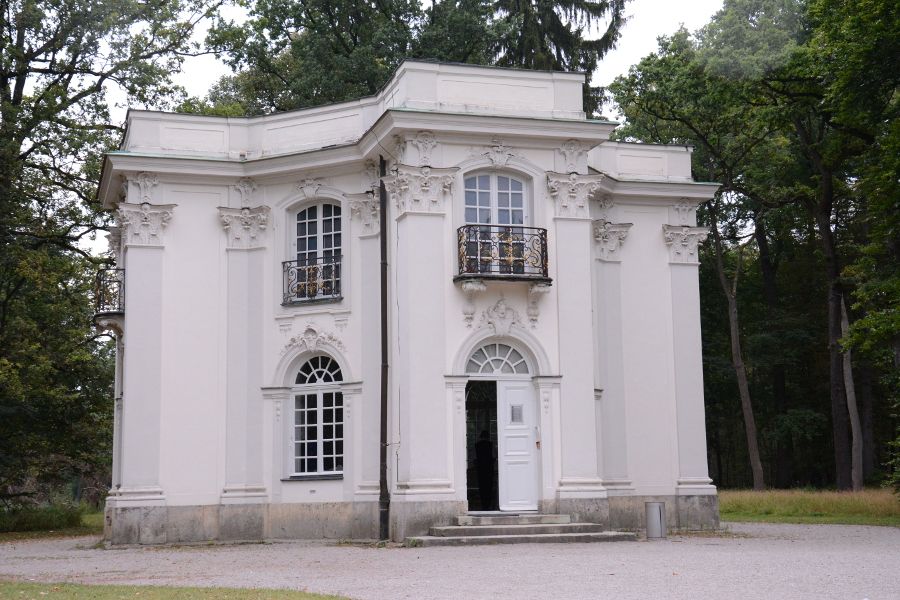
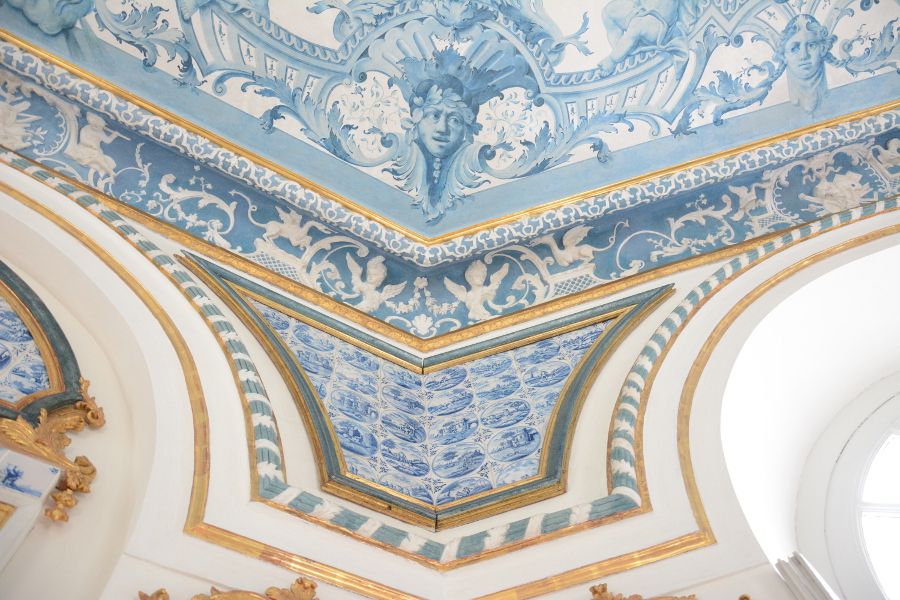
Pagodenburg Palace
Elector Max Emanuel commissioned the Pagodenburg, the first of the park palaces. It was built between 1716 and 1719 by architect Joseph Effner before a Rococo update by François de Cuvilliés the Elder in 1767.
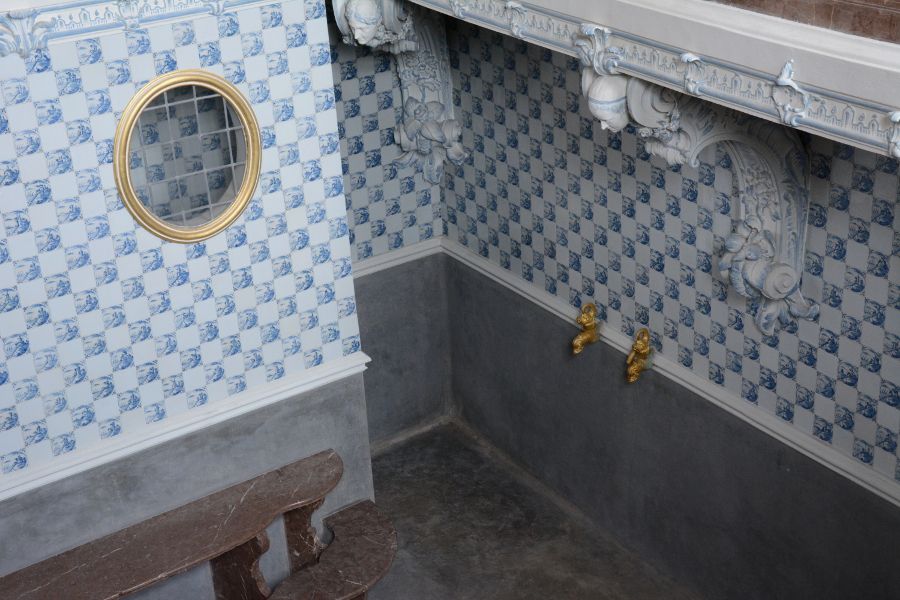
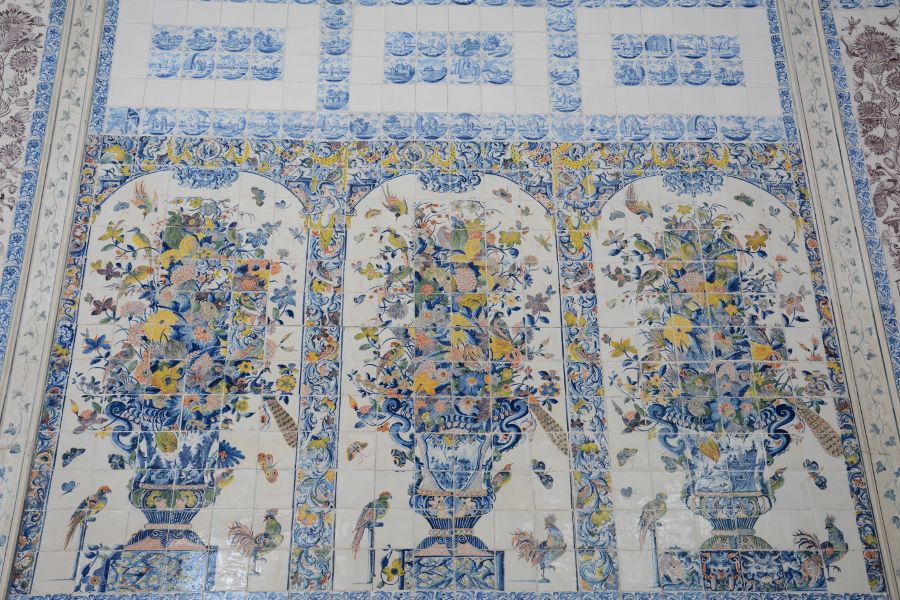
The ground floor of the two-storey building is a single room decorated largely in blue and white Delft tiles depicting Chinese imagery, including the production of porcelain. Upstairs, several small rooms, including a Chinese Drawing Room and Chinese Cabinet, continue to the styling that was then in vogue.
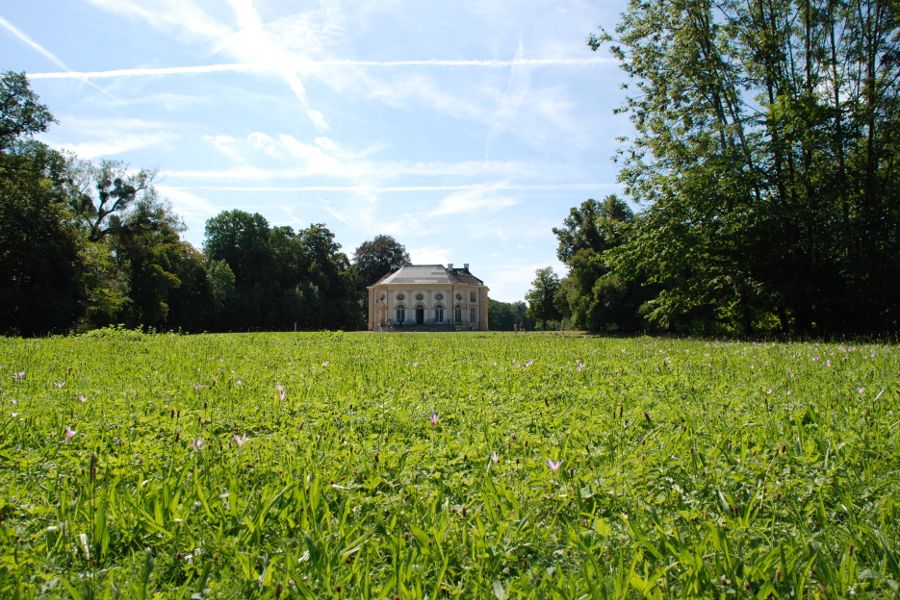
Badenburg Palace and Bathhouse
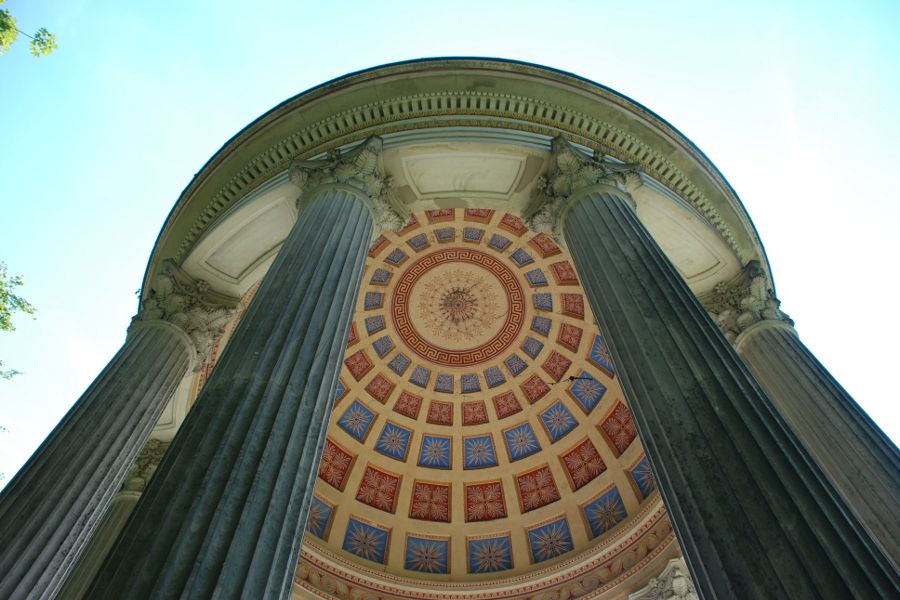
With the Badenburg bathhouse overlooking Badenburg Lake, Effner took a page from the great bathhouses of the Roman emperors. Built from 1718 to 1722, the building is an indulgent gem.
The centerpiece is the two-storey Bathing Hall that includes a pool covered in Dutch tiles. Above, a walkway with a wrought-iron railing runs the perimeter of the room. A heating system for the water sits in the basement. Lavishly decorated Chinese wallpaper covers the walls of the Electors’ Apartments.
Magdalenenklause Hermitage
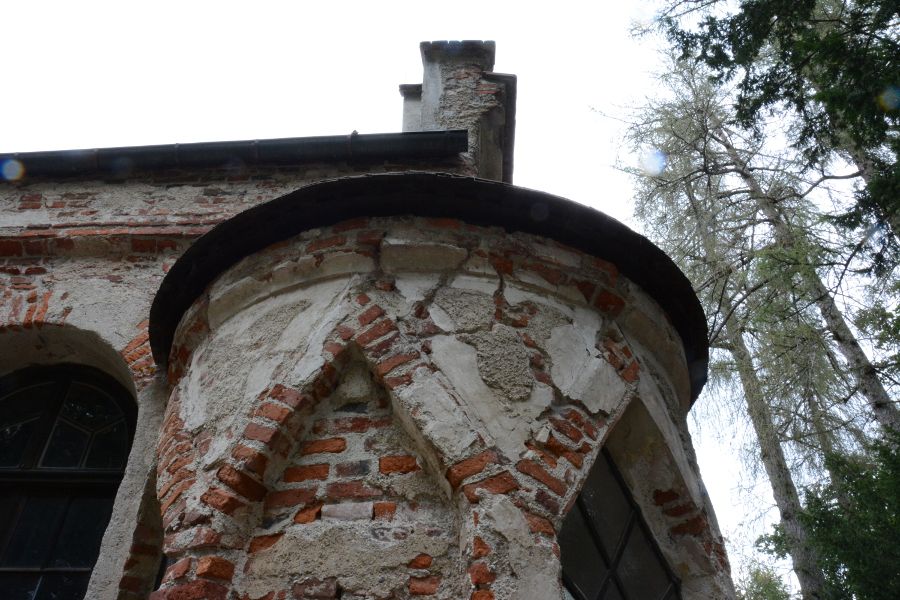
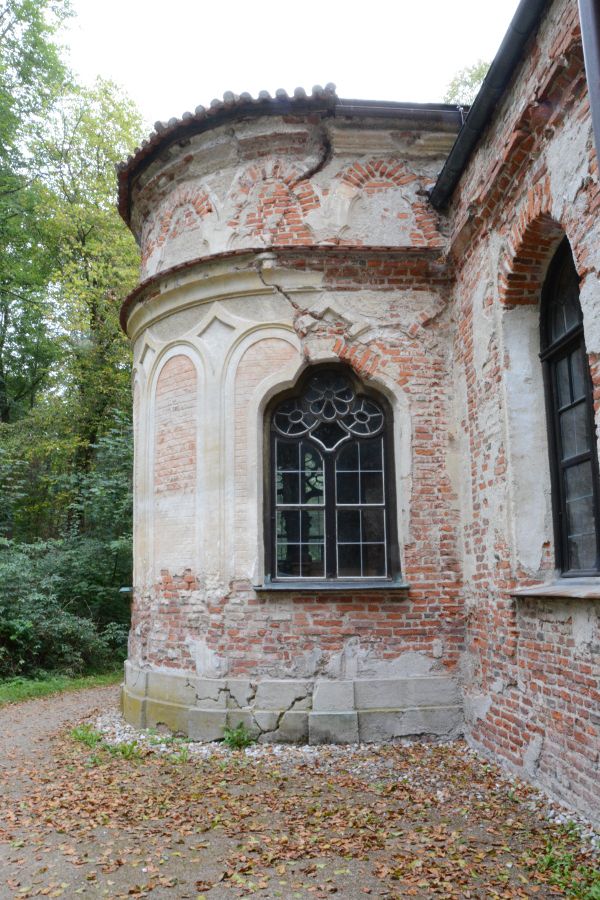
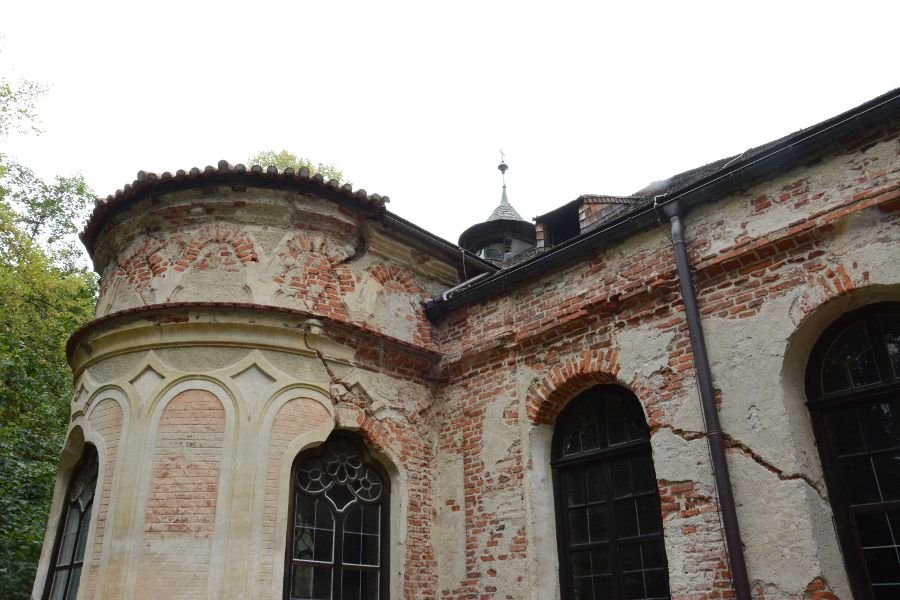
Perhaps the most visually interesting of the park palaces is the Magdalenenklause. Constructed from 1725 to 1728 for Elector Max Emanuel, the building was designed by Effner to intentionally look derelict and rundown. (This style of having intentionally rundown garden buildings became somewhat of a trend in Europe, and the Magdalenenklause was one of the first.)
The purpose of the building was to give the Elector a place to escape the luxury and power of his position. The building, dedicated to St. Mary Magdalene, provides a place for reflection and contemplation.
Effner designed the one-storey building to resemble the home of a hermit, hidden amongst overgrown woods and brush. Plaster, complete with large cracks, covers the brick exterior unevenly.
Inside the building is a different story. There is a grotto chapel, moodily lit with its walls largely covered in shells below an arched ceiling of religious paintings. Oak paneling covers the walls in the Electors’ Apartments.
Amalienburg Rococo Palace
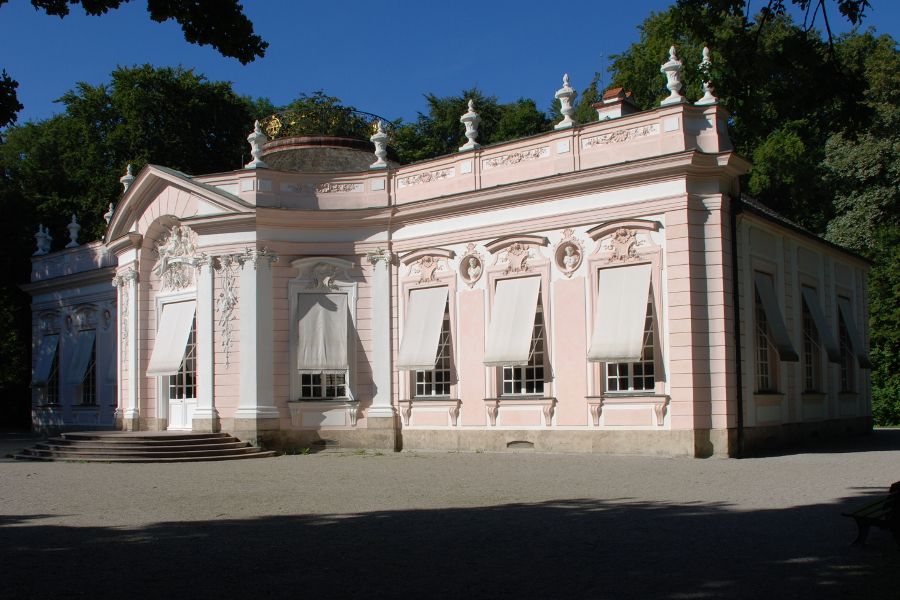
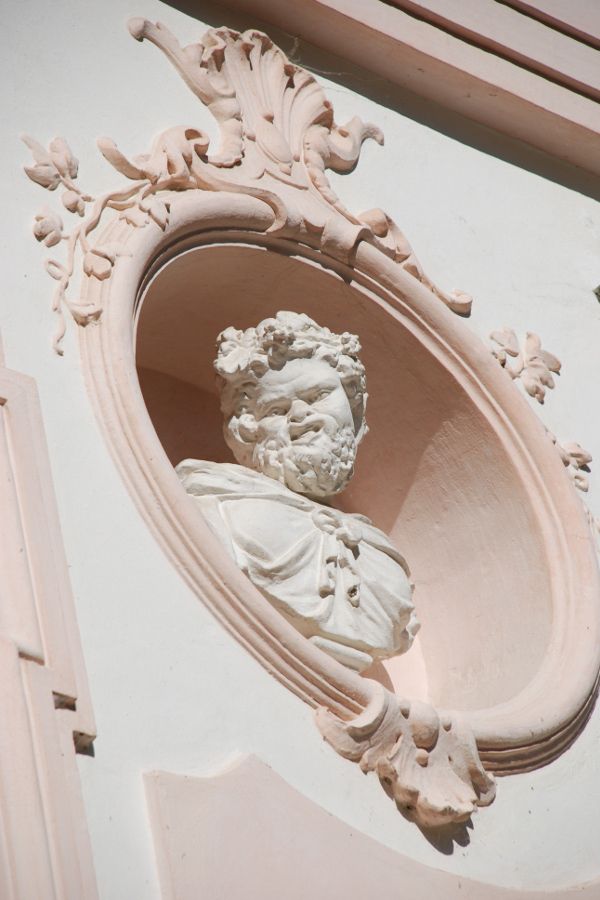
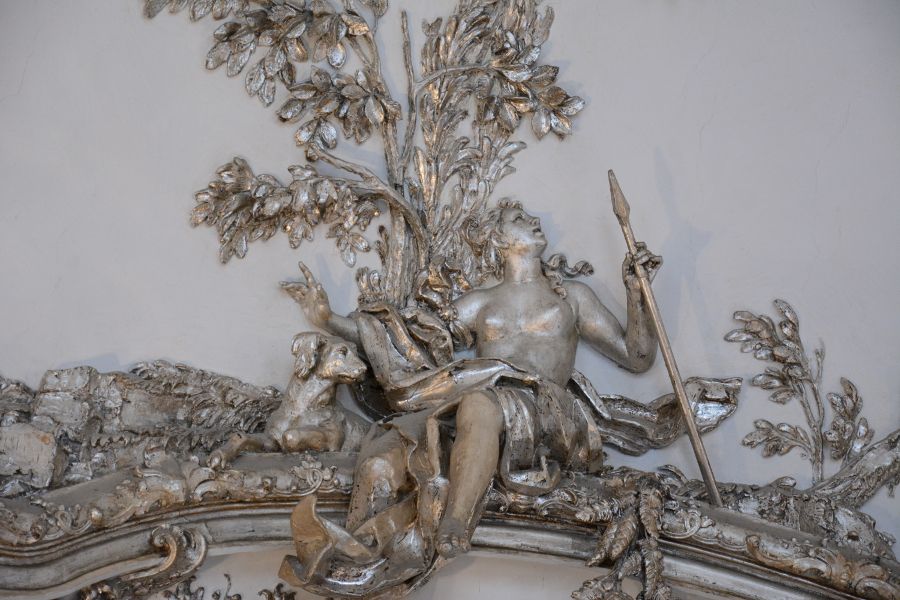
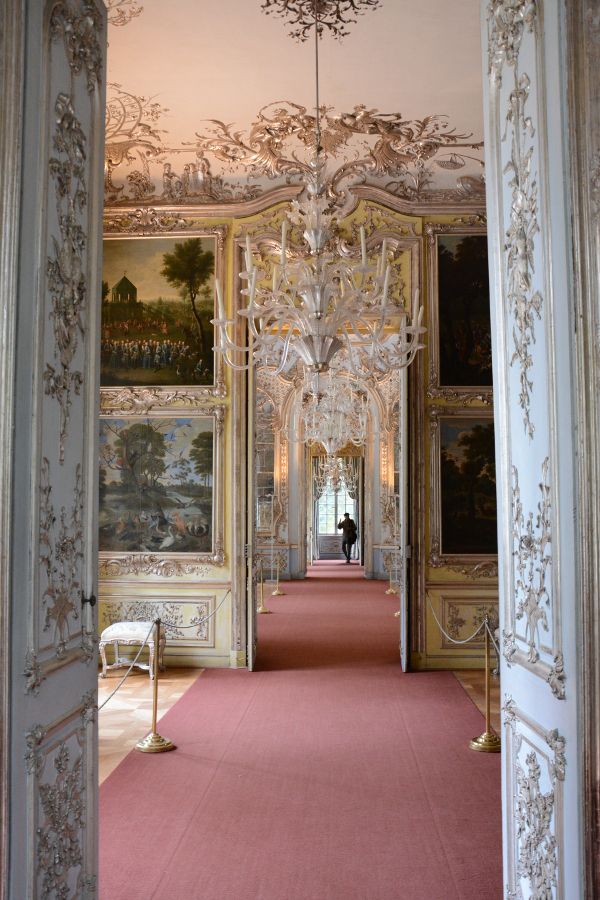
Completed in 1739, Amalienburg is a Rococo-style hunting lodge designed by François de Cuvilliés the Elder. It was commissioned by Elector Karl Albrecht (later Charles VII, Holy Roman Emperor) for his wife, Maria Amalia.
At the center of the building is the circular Large Salon (also known as the Hall of Mirrors), which reflects the wooded area outside. In addition to a rest room for the Empress, a kitchen covered in valuable Delft tiles, there is a hunting room as well as a dog room that served as a kennel.
As is befitting a hunting lodge, there’s a platform atop the building that was originally intended for pheasant hunting.
Nymphenburg Palace Tickets, Hours, and Tours
Different Nymphenburg Palace tickets are needed for many of the sights at the palace. Visitors can choose between individual tickets or a combination ticket covering most attractions.
Nymphenburg Palace Ticket Prices Explained
The Combination Ticket includes Nymphenburg Palace, entry into the park palaces, Marstall Museum (which includes the Museum of Nymphenburg Porcelain).
Alternatively, you can purchase entry to each site — the palace, the park palaces, the museums — individually.
Nymphenburg Palace ticket prices vary based on the season. Full access combination tickets are most useful from spring through autumn, when the park palaces are open. This is largely because the park palaces close for the winter (typically between mid-October and late March).
Nymphenburg Park is always free.
- Park & grounds: Free
- Palace interior: Ticket required
- Park palaces: Seasonal tickets
- Best value: Combination Ticket
Opening Hours for the Palace and Park Palaces
Opening hours at Nymphenburg Palace vary by season. Additionally, each of the individual sites — the park, park palaces, and the museums — have their own hours. Hours can be found on the palace’s website.
Is the Bavarian Palaces Pass Worth It?
Maybe — it depends on your travel plans.
The 14-day Bavarian Palaces Pass is 40 Euros for one person. If you’re planning to visit Munich Residenz and Nymphenburg (and all of their museums), you’ll break even. A Nymphenburg Combination Ticket, which includes all of the palace’s sites and museums, is 20 Euros (from April through October) for one person. The Munich Residenz Combination Ticket is also 20 Euros. At that point, any additional palace-run site you visit would be “free.”
It’s worth noting that even with the 14-day pass, many of the palaces still require pass holders to stand in line and show the pass in order to get a ticket.
Marstallmuseum and Nymphenburg Porcelain
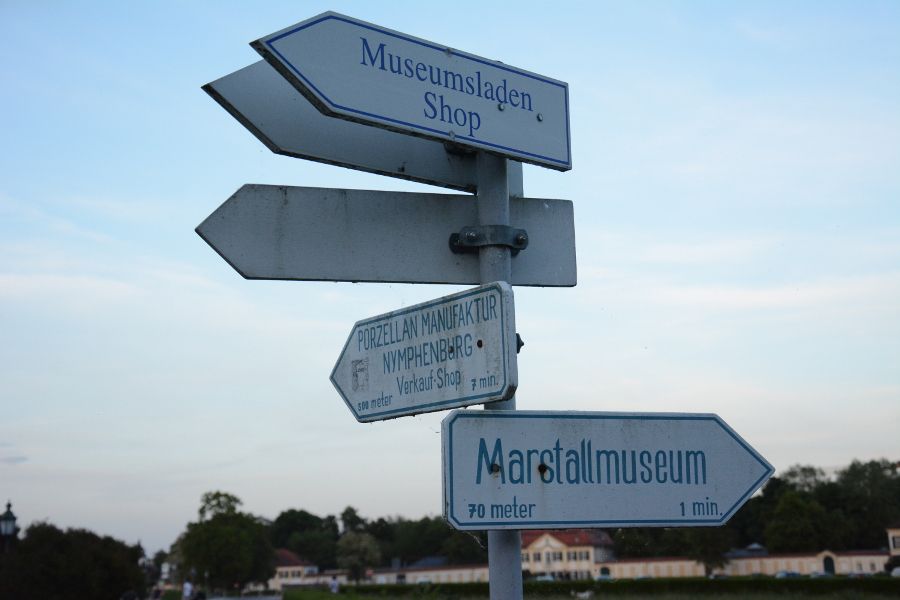
While many come to see the sprawling palace complex, the Marstallmuseum and Nymphenburg Porcelain Museum in the palace shouldn’t be missed! The pair of museums can easily be visited during a single trip to the palace.
Historic Carriages and Sleighs
Anyone looking to check out royal indulgence need look no further than the Marstallmuseum. What was once the palace’s riding stables is now home to a fascinating museum showcasing an impressive array of coaches, sleighs, and carriages.
The exhibits are well restored and well displayed, with modern touch screens offering a chance to get a closer look at some of the most remarkable details of the coaches. In addition to the coaches and carriages, there are riding accoutrements and paintings on display.
One of the highlights of the museum is the large gilded French Rococo-style coronation carriage of Emperor Karl VII.
Nymphenburg Porcelain Manufactory Collection
Since 1761, the Nymphenburg Porcelain Manufactory has operated from a building on the circle just outside of the palace. Today, the Museum of Nymphenburg Porcelain is upstairs from the Marstallmuseum.
The collection of porcelain is quite remarkable. Some are fabulous dishes in a variety of patterns and colors. While elsewhere, Nymphenburg Porcelain does some of what it does best: animal sculptures, delicate flowers, and other designs that are difficult to believe are made from porcelain.
How to Get to Schloss Nymphenburg
There are several easy ways to reach the palace if you’re wondering how to get to Nymphenburg Palace from central Munich.
Getting to Nymphenburg Palace by Tram
Using the tram to reach Nymphenburg Palace is the best bet when it comes to using public transit. Tram 17 runs past the palace, with a Nymphenburg Palace stop near the canal. Alternatively, visitors can easily access the palace from the Romanplatz stop, too.
Public Transportation vs Walking from Nearby Stops
The U-Bahn and S-Bahn connections are less convenient than the tram. The closest S-Bahn station is Laim, which is relatively close to the southern edge of the park but somewhat further from the palace itself. The nearest U-Bahn stops, Gern and Rotkreutzplatz, lie closer to the end of the palace’s canal. From the U-Bahn, there are bus and tram connections available.
Given the opportunity to walk in the Nymphenburg neighborhood, I highly recommend it. The area is charming, with many residences full of history.
Parking at Nymphenburg Palace
There are about 450 free parking spaces available directly around the palace.
Where to Stay Near Nymphenburg Palace
Hotels Within Walking Distance of Nymphenburg
The Nymphenburg-Neuhausen area is my preferred area to stay in Munich. It avoids some of the rush of the heart of the city but still has great transportation connections on the S-Bahn Stammstrecke, a core line with stops through downtown.
The Holiday Inn Express Munich City West lies near Hirschgarten and isn’t a far walk from Schloss Nymphenburg. This no-frills hotel is affordable, clean, and comfortable.
Best Time to Visit Nymphenburg Palace and Park
The best time to visit Nymphenburg Palace depends on your preferences. Each season brings something different and special to the palace and park.
Visiting Nymphenburg in Spring and Summer
Nymphenburg Palace is at its peak in spring and summer. The trees and flowers are in bloom, and the park palaces are open to visitors. The downside is that the crowds are highest during the height of the summer travel season.
Fall Foliage and Quiet Walks in Nymphenburg Park
Nymphenburg Palace in the fall is beautiful, with the park’s trees starting to turn a variety of shades of red, orange, and yellow — one of the reasons autumn is one of my favorite times to visit Munich. Before it gets too chilly, the trees start to change colors. This is my favorite time to visit.
But take note of when the park palaces close for the season, typically in mid-October. Once that occurs, the park starts to wind down a bit. Sculptures are put in protective boxes for the winter, and the park palaces are no longer open to the public. The palace and the museums do remain open.
Visiting Nymphenburg Palace in Winter
Seeing Nymphenburg Palace in winter, covered in a coating of snow, and its canal frozen, is quite the sight! It’s a quiet time to visit. The palace and museums are open, and you can explore the park if you bundle up!
Nymphenburg Palace vs Munich Residenz: Which Should You Visit?
It’s difficult to do a Munich palaces comparison as they’re quite different. Here are the details to help guide your choice.
Location and Experience Compared
The Residenz is a busy city palace that you could spend a full day getting lost in. As a spacious summer palace, the palace is set in a sprawling park outside the city center.
Generally, expect larger crowds at the Residenz, but be prepared for bus tours at Nymphenburg.
Which Palace Is Better for First-Time Visitors?
The Munich Residenz is a busy city palace that you could spend a full day getting lost in. Nymphenburg Palace is a spacious summer palace set in a sprawling park outside the city center. In terms of sightseeing bang-for-your-buck, the Residenz is better for first-time visitors. But Nymphenburg delivers more on the fairytale many are looking for of Bavarian castles and palaces.
Nymphenburg Palace FAQs
Is Nymphenburg Palace free to visit?
Nymphenburg Palace Park is free to visit, but tickets are required for the palace interior, park palaces, and museums. Visitors can walk the gardens and park grounds at no cost, while paid areas include the main palace, Marstallmuseum, and Nymphenburg Porcelain Museum.
How long does it take to visit Nymphenburg Palace?
Most visitors spend 2 to 3 hours at Nymphenburg Palace in Munich. A half-day visit allows time to explore the palace interior and gardens, while a full day is ideal for exploring the park palaces, museums, and walking trails in Nymphenburg Park.
Is Nymphenburg Palace worth visiting?
Nymphenburg Palace is worth visiting if you have more than one day in Munich and enjoy palaces, gardens, or nature. Its vast park, quieter location, and smaller palace buildings offer a distinct experience from Munich’s central attractions, such as the Residenz.
When is the best time to visit Nymphenburg Palace?
The best time to visit Nymphenburg Palace is spring or autumn, when temperatures are mild and crowds are smaller. Summer offers blooming gardens but more visitors, while winter is quieter with limited access to the park palaces.
How do you get to Nymphenburg Palace from Munich city center?
The easiest way to get to Nymphenburg Palace from Munich city center is Tram 17, which stops near the palace canal. Romanplatz is another nearby stop, both offering a short walk to the palace entrance.
If you’re planning a Munich itinerary that includes Nymphenburg Palace, these guides will help you explore more of the city:
- Ultimate Munich Travel Guide: Tradition, Culture & Local Secrets
- 24 Hours in Munich, for fitting Nymphenburg into a short stay
- Botanical Garden Munich-Nymphenburg, which has an entrance from Nymphenburg Park
- Munich Residenz, for more of the city’s royal history
Save this post for later on Pinterest!
All photos and opinions are my own, based on repeated visits over several years. This post contains affiliate links.


This sounds like a perfect place for an autumn day! I loved the photo of the garden with a girl running – it made me want to go for a run as well. And those geese look so funny in front of the Palace.
I went to Munich for the first time in 2016. Hate that I didn’t know about this place! I will have to put it on my list for next time!
Wow this is like something out of an ancient fairy tale the grounds are gorgeous. It actually reminds me a little of Powerscourt in Ireland with its dramatic statuary and incredible statues.
Wow, not heard of this palace but it looks like a fantastic place for a day out! I love it when you stumble across something like this. Lovely to see something a bit different.
I love how you’ve captured the artwork at Amalienburg. I hadn’t heard of Nymphenburg Palace before, but looks like a great place to visit.
Wow, I’ve been to the palace twice and have never explored the gardens — I had no idea that all there were smaller palaces out there! Now I’ll have to go again 😉
I have never heard of this place, but it is stunning! You could definitely spend an entire day walking around as the grounds are huge. Thanks for sharing!
That palace looks incredible!! I will definitely have to add it to my must-see list for Germany 🙂 Great article with so much helpful information 🙂