
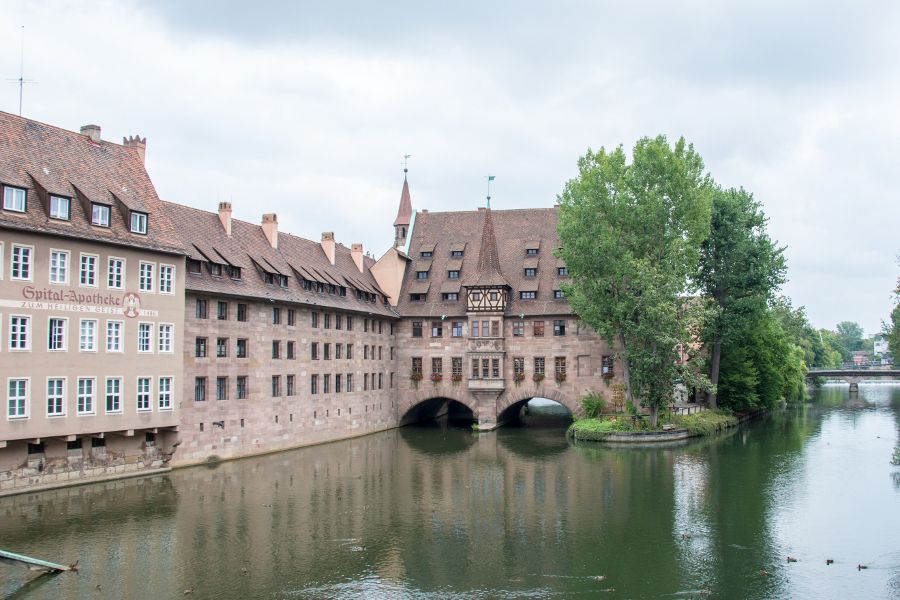
After nearly two weeks in Munich in August, I was ready to escape the crowds at every turn. So I took my first day trip to Nuremberg, Bavaria‘s second-largest city.
Nuremberg is so full of history, art, and food that finding things to do is easy. From its medieval Old Town and Imperial Castle to its Nazi past, there’s history around nearly every corner. And the local Franconian food and red beer aren’t to be missed.
Best Things to Do in Nuremberg
Explore Nuremberg’s Old Town
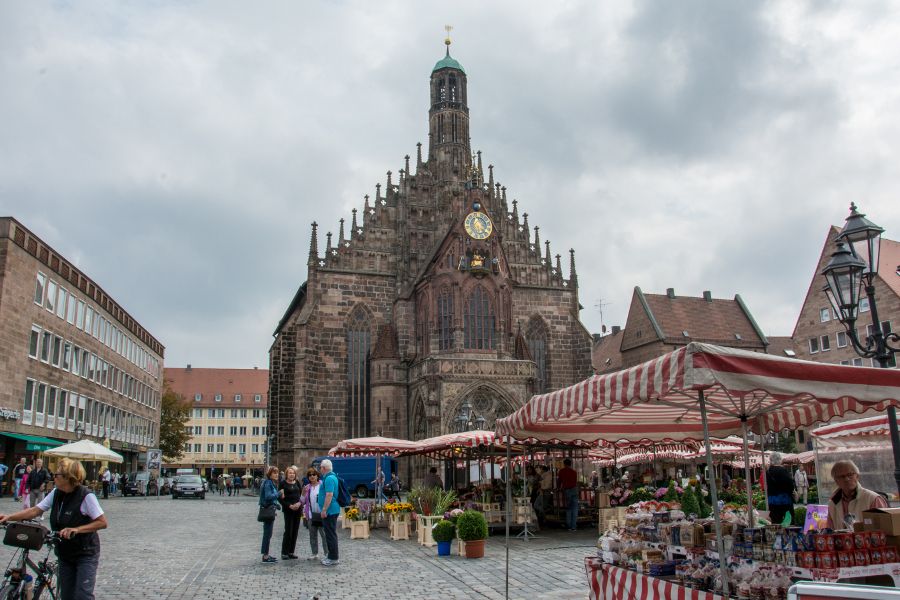
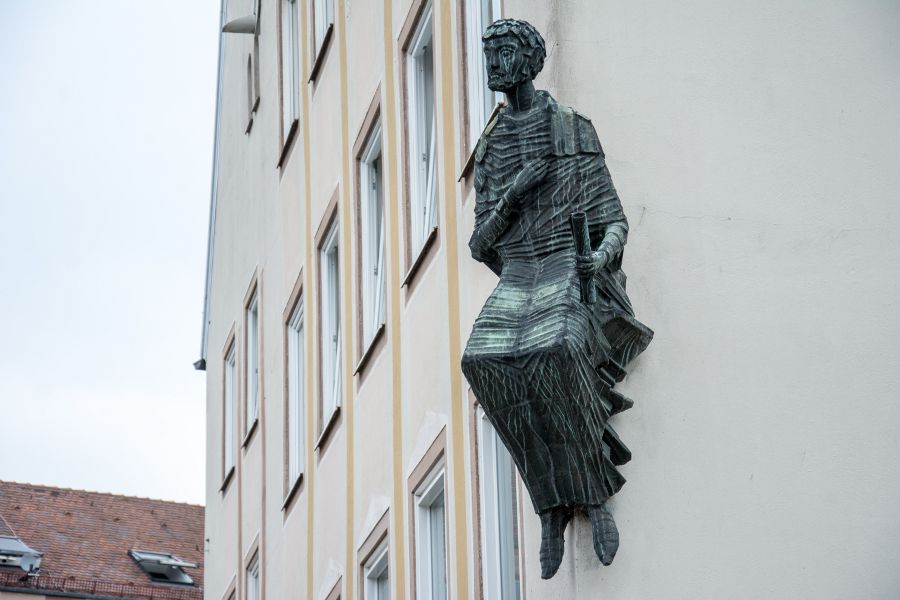
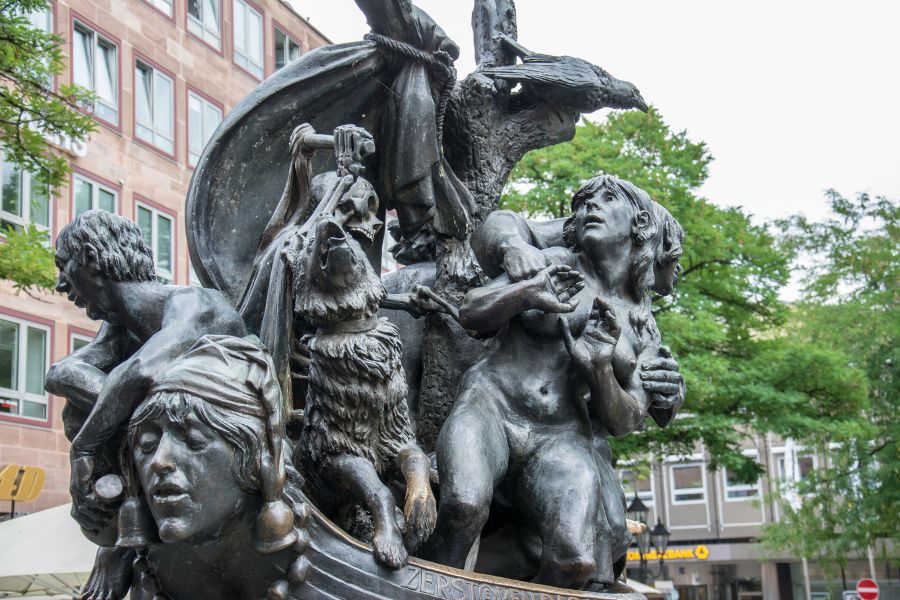
Nuremberg’s Altstadt, or Old Town, is the focal point of the city’s sightseeing area and the best place to start your visit. The Old Town is full of character: half-timbered buildings, narrow alleyways, cobblestone streets, the remnants of the medieval city walls, and more.
The Hauptmarkt, or main market square, is a good central point for exploring the Altstadt. Here you’ll find the Frauenkirche and the famous Schöner Brunnen, while St. Sebald Church and the historic Rathaus are just a short walk away.
Much of the historic center is compact enough to explore on foot, which makes the Old Town especially easy to combine with the castle, Dürer House, and a walking tour. Some of the city’s most recognizable historic buildings are clustered around the Hauptmarkt, while other streets reveal quieter corners of medieval Nuremberg.
Visit Nuremberg Castle
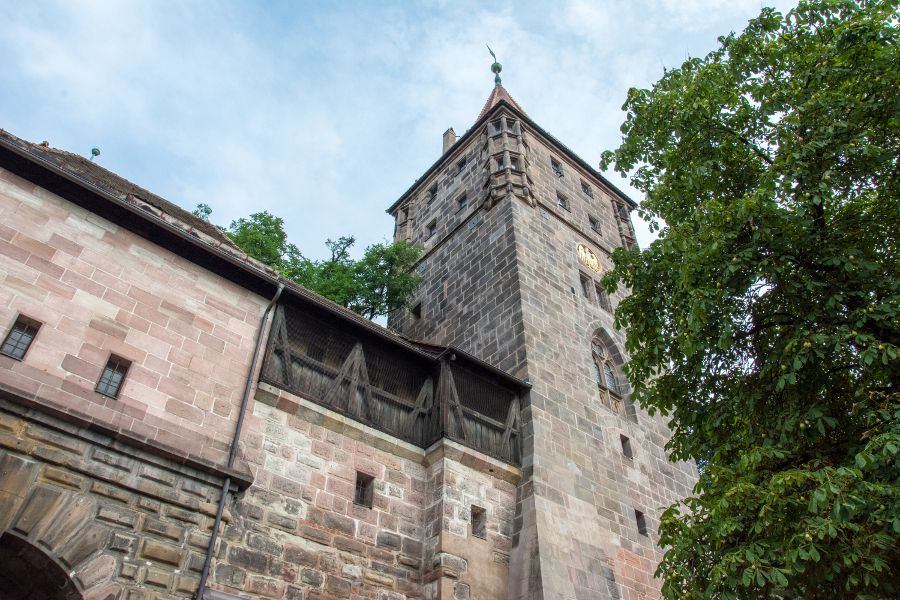
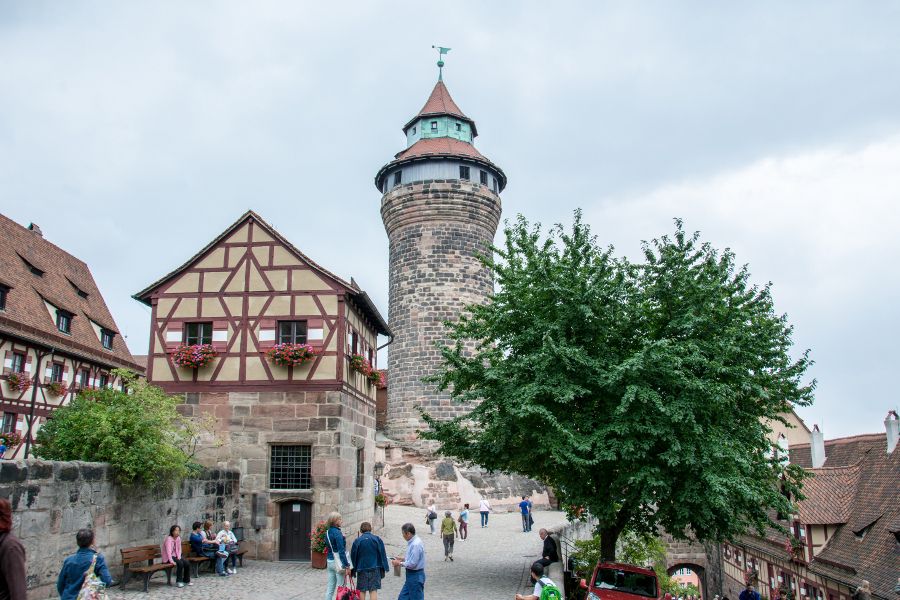
The Imperial Castle of Nuremberg, commonly called Nuremberg Castle, is one of the city’s most recognizable landmarks. Fortifications have occupied this strategic spot overlooking the city for centuries, and the complex served as an imperial residence during the Middle Ages. Today, it’s a collection of buildings that include several stone towers, a chapel, a great hall, and more.
Visitors to Nuremberg Castle can take a tour for a fee or wander the grounds for free. If nothing else, it’s worth a visit to Nuremberg Castle to enjoy the stunning view over the historic city.
Here’s a special tip to save money while you travel in Bavaria. The Bavarian Palace Department offers a special palace pass where, for a single price, you can visit over 40 palaces and castles across the state of Bavaria. Nuremberg Castle is one of those castles.
Visit the Albrecht Dürer House
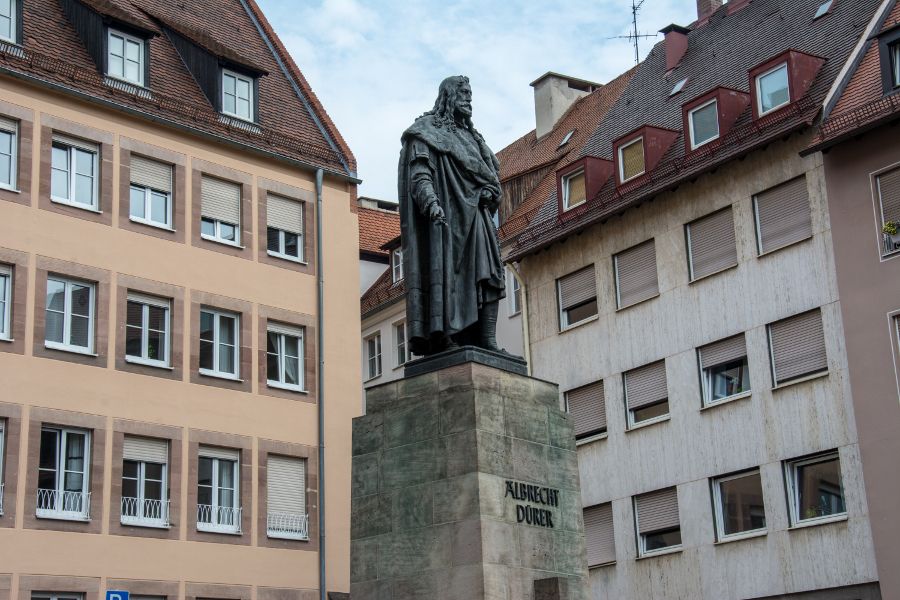
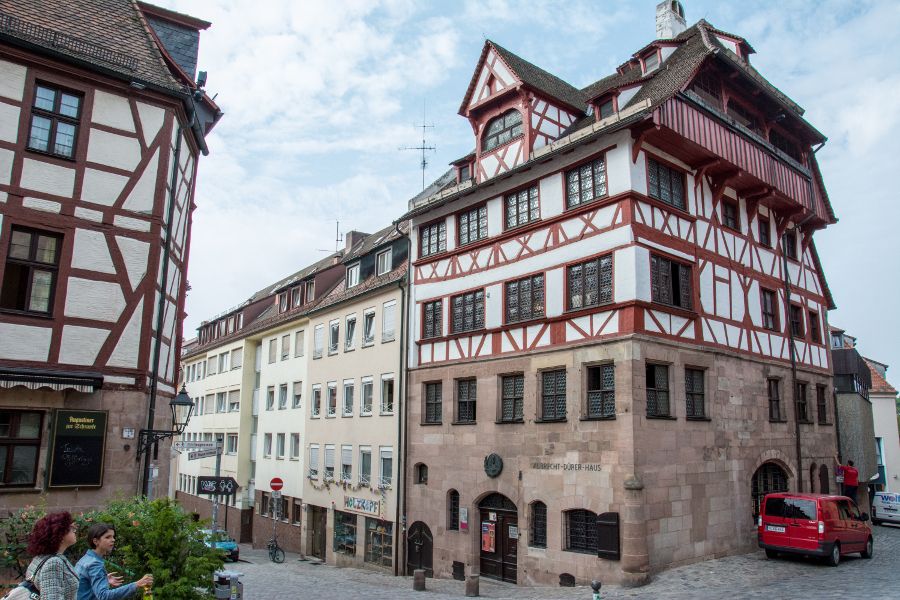
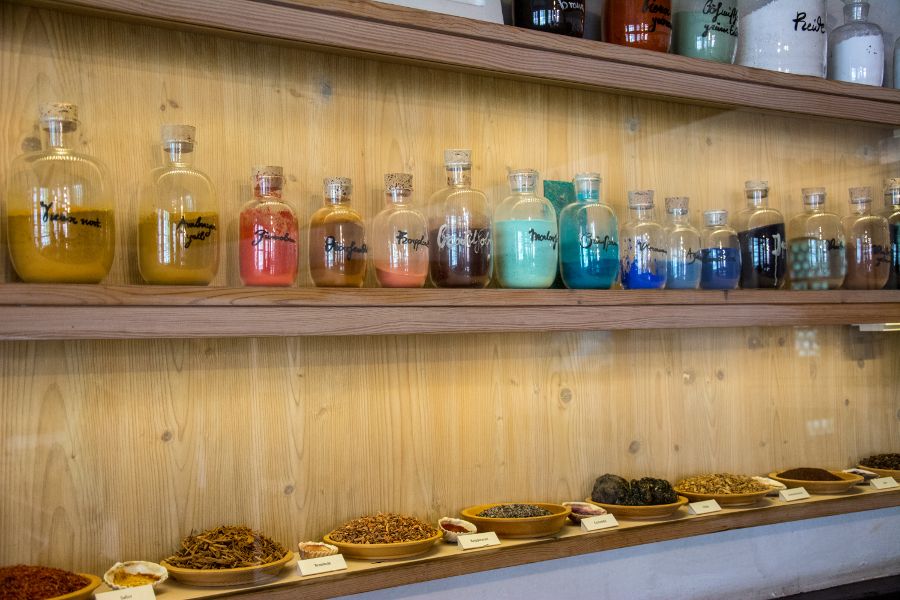
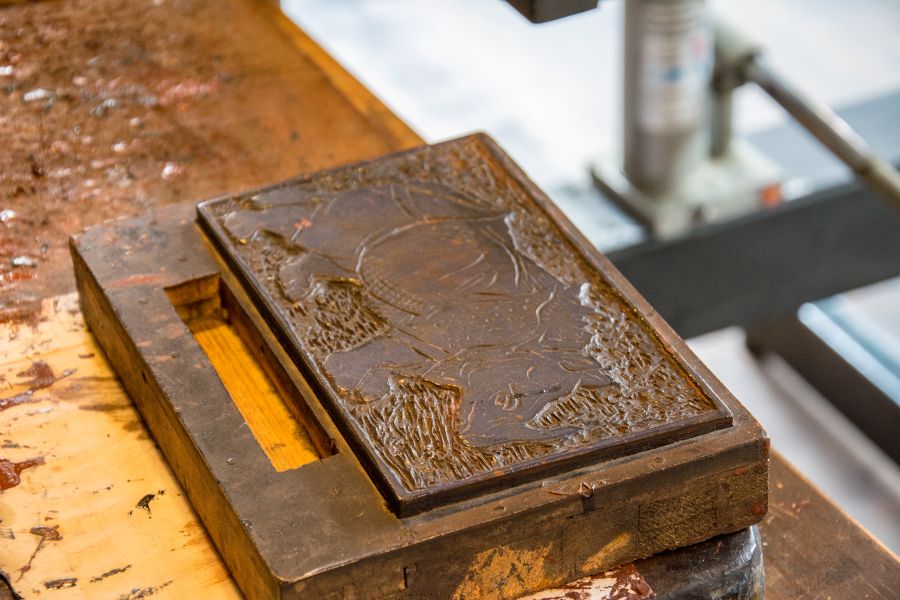
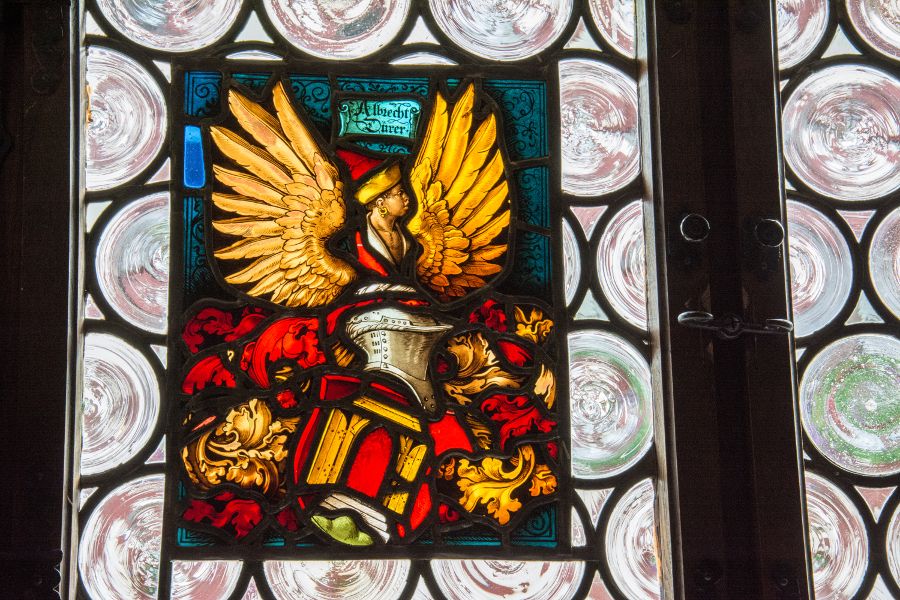
One of Nuremberg’s most famous historical figures is the artist Albrecht Dürer. During his life, Dürer was extremely wealthy, respected, and successful. He’s especially noted for the lifelike quality of his works. Today, the artist’s home and workspace from 1509 until his death in 1528 is a museum that you can visit in the city’s Altstadt section. A stop at the Albrecht-Dürer-Haus is an interesting mixture of the past and the present.
As you progress through the house, you eventually reach touch-screen computers. One is rather innovative, acting as a digital layer in front of physical objects. Touch the area of the glass in front of the object for detailed information. Other monitors act as digital picture frames with additional information on Dürer, his art, and his time period. The museum has an audio guide available that tries to be engaging: the audio tour is “given by” Dürer’s wife, Agnes.
If you’re interested in Dürer, a visit to the house is well worth it. The portion of the house accessible for the tour is rather limited and tours, for better or worse, do not take terribly long. But a visit to this important house is one of my favorite things to do in Nuremberg.
Take a Walking Tour of Nuremberg
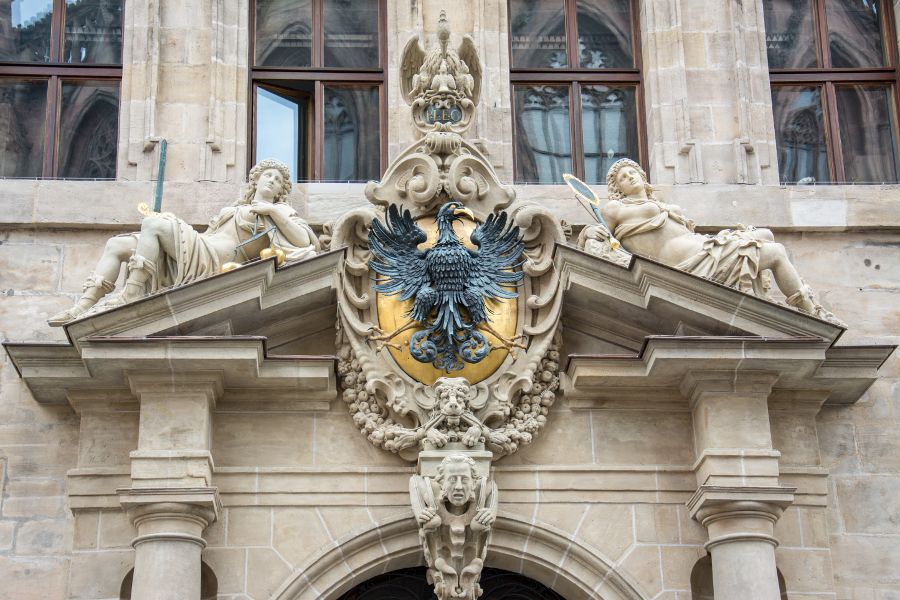
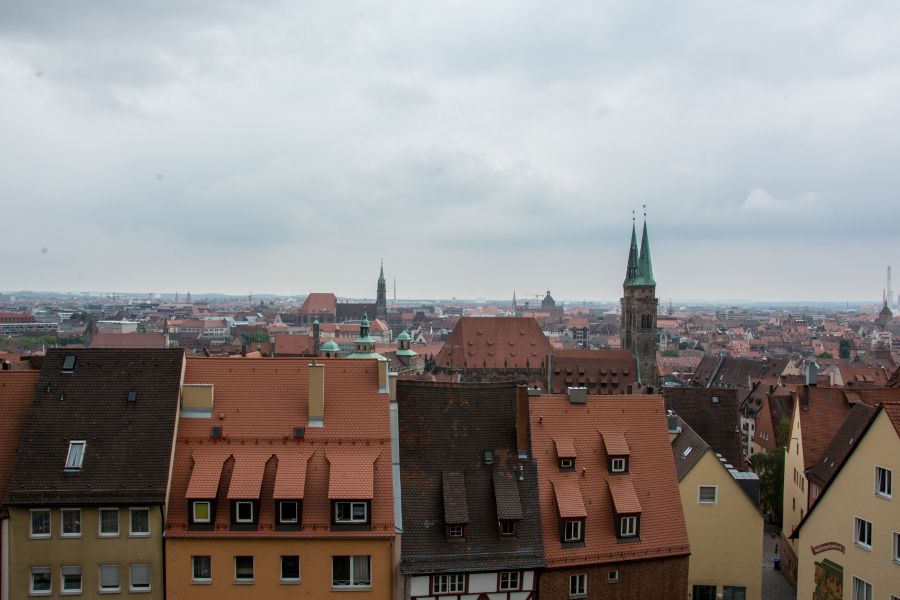
I’m usually pretty independent when I travel. I do my own research, make my own plans, and generally know what I want to see. But the English-language walking tour offered by the city surprised me.
The hour-long tour I took started in the Hauptmarkt, or main market square, and ended at the foot of the Imperial Castle. Even on a cloudy day, the view over the city and the surrounding area is fantastic. Our tour guide provided a lot of information, both historical and current, on the buildings, city, and sights. For example, while Munich might get all the attention for beer, Nuremberg was once a popular beer town. Houses that were breweries could be recognized by a symbol: a 6-pointed star. More than once I caught passers-by stopping to listen in.
I found the walking tour particularly useful because we were only in Nuremberg for a short time. As a foreign visitor, the background information was also helpful for understanding the city beyond what I could learn simply by walking around it. The experience even changed my mind about guided tours.
Visit the Germanisches Nationalmuseum
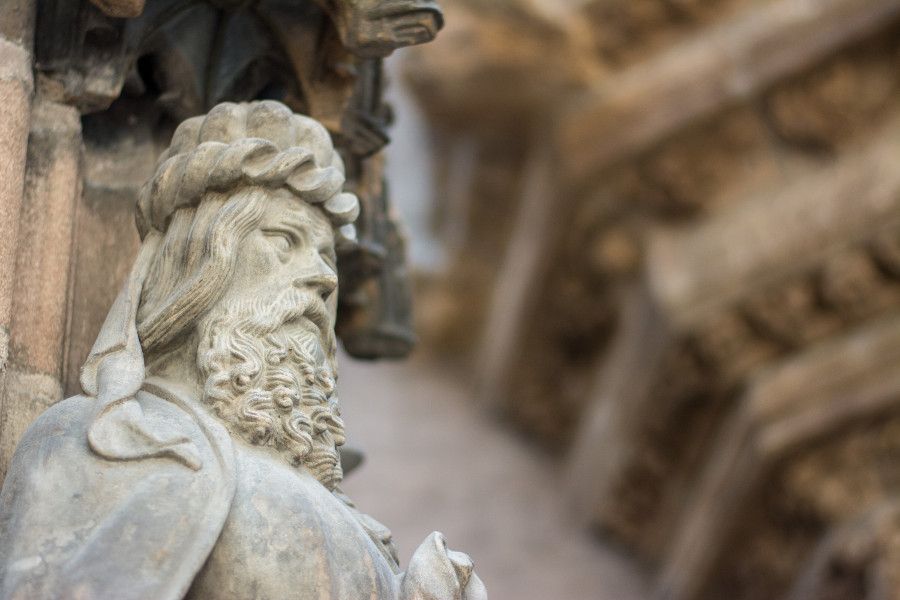
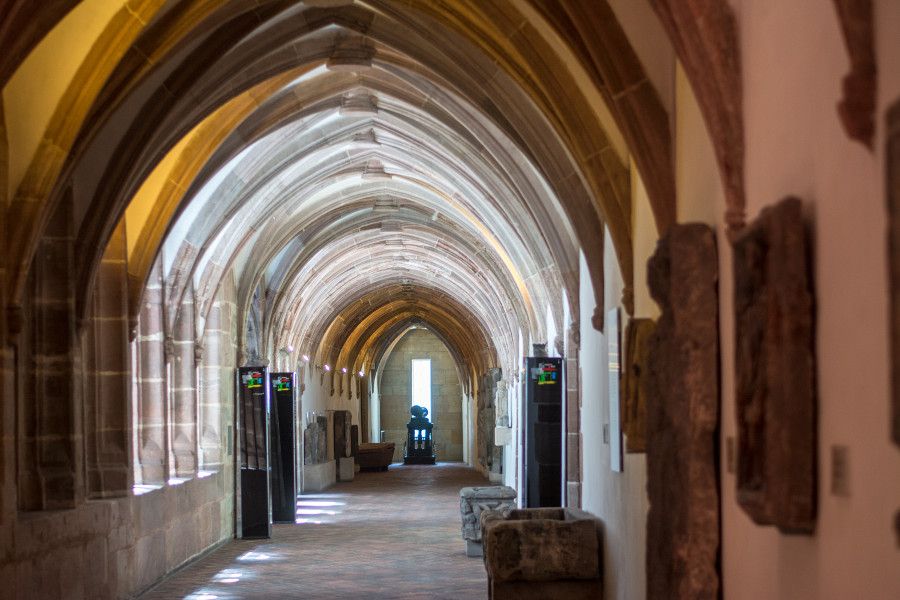
If you’re looking to learn not just about Nuremberg but all of Germany, include the Germanisches Nationalmuseum on your itinerary. The museum’s extensive collection includes remarkable works of art, artifacts, religious items, arms and armor, and much more. All of the objects on display relate to Germany, from the prehistoric era all the way through to today.
Like much of Germany, the museum building is a combination of old and new. A strikingly modern glass building merges with the remains of a monastery that was dissolved in the 16th century.
If you enjoy art, history, or material culture, this is one of the Nuremberg museums I’d prioritize.
Visit the Documentation Centre Nazi Party Rally Grounds
While Nuremberg is full of many wonderful things, the city has a troubled recent past. To put it lightly. Favored by the Nazis and considered by them to be the most German city, Nuremberg became the site of the Nazi Party Rally Grounds. It was also the location of an astonishingly large and outrageously designed Congress Hall that was to seat 50,000. Located in the south of the city, the Grounds still exist and can be visited. Also accessible is the Congress Hall. Although it was never completed, it is finished enough to make clear the excessive intentions of the builders.
The Documentation Centre Nazi Party Rally Grounds sits on the location and utilizes the Congress Hall building but with modern additions. The preexisting building has been retrofitted with modern glass and steel designs. As you explore the exhibits within the museum, there are exposed brick walls, some crumbling. The museum has undergone major renovations, so check the official website for the current exhibition and visitor information before your visit.
It’s a moving and often upsetting reminder of what happened here and the consequences of the Nazi regime.
What to Eat in Nuremberg
Pretty much every city has its culinary specialties, and Nuremberg is no different. Perhaps the city’s most famous specialties are its Lebkuchen, a kind of gingerbread, and its sausages, Nürnberger Rostbratwurst.
Try Nürnberger Rostbratwurst
Similar to German beer, Nürnberger Rostbratwurst has protected geographical status in the European Union. This means there are strict rules as to what a Nürnberger Rostbratwurst is. It’s a pork sausage seasoned primarily with marjoram. Each sausage is about the size of a small finger; that is, they’re several inches long and relatively narrow. Although there have been tweaks over the centuries, the original basis of the Nürnberger Rostbratwurst can be traced to the 14th century.
As for the taste? It’s kind of like an American link sausage. (No doubt that comparison will get me into all sorts of trouble.) But what makes Nürnberger Rostbratwurst taste infinitely better is the fact that it’s grilled on a wood stove. Beechwood is usually the wood of choice. The smoky flavor from the wood is an excellent complement. Add a side of potato salad, horseradish, or sauerkraut and perhaps a touch of mustard. There’s no question, you’ve got a winner.
If you’re looking to try this specialty—and you really should—I wouldn’t settle for a market stand just for convenience. When I visited, I skipped the market stands and went directly to Bratwursthäusle bei St. Sebald. Across from city hall, just up the steep street from the market and just next to St. Sebald Church, you can’t miss the cozy but busy little restaurant.
Try Nuremberg’s Rotbier
Looking to quench your thirst? Nuremberg is also famous for its Rotbier, or red beer.
In Nuremberg, they have been brewing red beer since at least the Middle Ages. Nuremberg breweries must follow local regulations for Rotbier. These regulations strictly regulate what ingredients can be used. Since 1303, Nuremberg breweries may only use barley malt for their beer.
Today there’s been a resurgence of interest in Rotbier. But at its peak in 1597, the city had 35 red beer breweries, plus its own wheat beer brewery.
Don’t Leave Without Trying Nuremberg Lebkuchen
The city is also famous for its Nuremberg Lebkuchen, a soft gingerbread with culturally protected status dating to the 14th century. Lebkuchen Schmidt is one of the city’s most famous Lebkuchen bakeries, where you can get one of these cake-like cookies to try. Even if you’re visiting outside the Christmas season, it’s worth seeking out because Nuremberg Lebkuchen is available year-round.
How Much Time Do You Need in Nuremberg?
One day in Nuremberg is enough to see the highlights. You can explore the Old Town, visit the Imperial Castle and Dürer House, take a walking tour, and fit in one major museum or the Documentation Centre.
Two days gives you considerably more breathing room and allows you to see additional museums and historic sites without rushing.
How to Get to Nuremberg from Munich
As the second-largest city in Bavaria, Nuremberg has good connections with Munich and the nearby area. This makes it easy to visit, whether by train or by car.
Munich to Nuremberg by Train
High-speed ICE trains run directly from Munich to Nuremberg in just over an hour and are the fastest option. Regional RE trains also run directly between the cities but take closer to two to three hours. The advantage is that RE trains are covered by the Deutschland-Ticket, while the ICE requires a separate ticket.
Munich to Nuremberg by Car
The A9 Autobahn connects Munich and Nuremberg and takes roughly two hours, depending on traffic. The distance is 105 miles (170 kilometers).
Can You Visit Nuremberg as a Day Trip?
Yes, Nuremberg works very well as a day trip from Munich. One day gives you enough time to explore the Old Town, see the castle, visit one or two museums, and stop for some of the city’s specialties. You won’t see everything, but you can get a good feel for the city.
If you have more time, though, I’d stay longer. Nuremberg has enough museums, historic sites, and neighborhoods to fill a second day without repeating what you saw on your day trip.
When to Visit Nuremberg
Nuremberg is worth visiting year-round, but each season offers a somewhat different experience.
- Spring is pleasant for walking and avoids peak summer crowds
- Summer offers longer days for outdoor sightseeing
- Autumn has cooler temperatures that can make walking around the Old Town particularly pleasant
- Winter is especially popular because of the Nuremberg Christkindlesmarkt
Final Thoughts on Nuremberg
I went to Nuremberg because I wanted a break from Munich. I left wishing I’d had more time. Between the medieval Old Town, Dürer’s legacy, Franconian food, and the city’s complicated modern history, Nuremberg has far more depth than I expected from a day trip. There’s still more I’d love to discover, especially the famous Christmas market.
Save this post for later with Pinterest!
All photos and opinions are my own.


Pingback: Giveaway & Review: Self-Guided Walking Tour App - Reverberations