
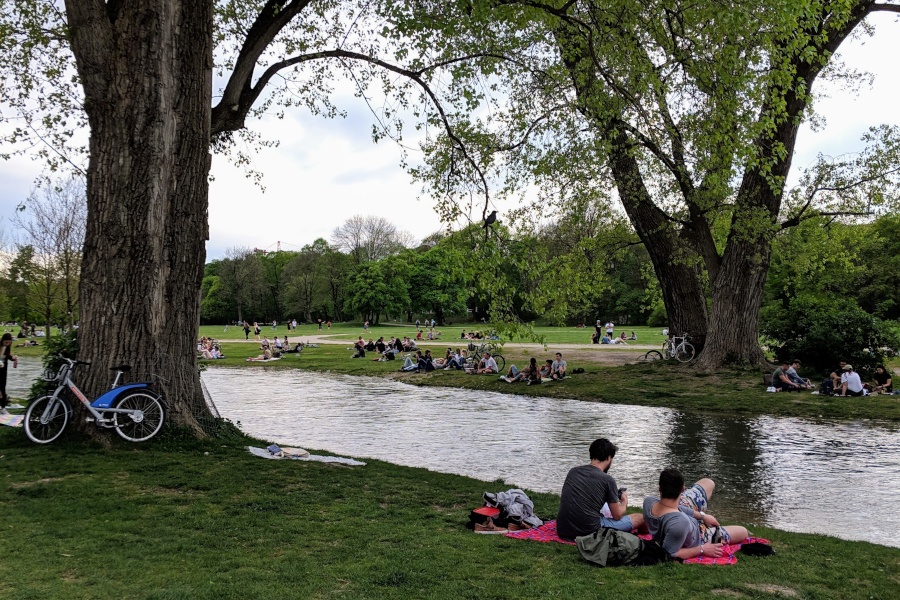
Munich’s Englischer Garten is one of the world’s largest urban parks, even larger than New York’s Central Park. After getting thoroughly lost there on my first visit, I believe it. Since then, the Munich park has become a regular destination for me. I love strolling the paths at this giant park and soaking in the natural beauty that’s uniquely blended with surfers and biergartens (it is Bavaria, after all). It’s where you can walk amongst the locals as they catch up and relax in their free time.
Whether it’s your first time in Munich or you’re a seasoned visitor, this guide covers the best things to see, where to eat, and walking routes for exploring the English Garden. If you’re planning your overall Munich itinerary, my Munich travel guide covers the city’s top sights, neighborhoods, practical tips, and day trip ideas.
The English Garden (Englischer Garten) is Munich’s largest park, home to the famous Eisbach surfers, traditional beer gardens, scenic walking trails, and one of the city’s best skyline viewpoints from the Monopteros.
Quick Guide
| Location | Munich, Germany |
|---|---|
| Cost | Free (food, drinks, and boat rentals cost extra) |
| Time Needed | 2 to 3 hours for the highlights; half a day if you plan to relax at a beer garden or explore the northern park |
| Best Entrance | Southern entrance near the Eisbach Wave for first-time visitors |
| Closest U-Bahn Stations | Odeonsplatz, Universität, and Münchner Freiheit |
| Don’t Miss | Eisbach Wave, Monopteros, Chinese Tower, and Kleinhesseloher See |
| Best Time to Visit | Late spring and early autumn for comfortable weather and fewer crowds |
| Family Friendly? | Yes! Wide walking paths, open meadows, playgrounds, a carousel, and plenty of room to explore. |
| Wheelchair Accessible? | Mostly. Many of the main paths are paved or hard-packed gravel, though some trails and grassy areas may be more difficult to navigate. |
| Good For | Walking, picnics, photography, beer gardens, cycling, and watching the famous Eisbach surfers |
How to Get to Englischer Garten
The English Garden stretches for more than three miles (5 km) from south to north, so the best way to get there depends on which part of the park you want to visit. If it’s your first visit, I recommend starting at the southern entrance near the Eisbach Wave and working your way north.
By U-Bahn
The easiest way to reach the English Garden is by Munich’s U-Bahn. For the southern entrance and the Eisbach Wave, get off at Odeonsplatz and walk through the Hofgarten for about 10 minutes.
If you’re planning to explore the middle of the park, Universität is another convenient option, while Münchner Freiheit works well for visiting Seehaus and the northern half of the park.
By Tram or Bus
Several tram and bus routes stop along the edges of the English Garden, making it easy to reach different sections without walking the park’s full length. This is especially useful if you’re heading directly to Seehaus, Hirschau, or Aumeister.
The tram stop near the Bavarian National Museum is especially convenient for the Eisbachwelle and the Chinesischer Turm.
On Foot
If you’re staying in Altstadt-Lehel or nearby neighborhoods, walking to the English Garden is easy. The southern entrance is only about a 10-minute walk from Odeonsplatz and pairs nicely with a visit to the Hofgarten or Munich Residenz.
Why Visit the English Garden?
More than a park, the English Garden is part of everyday life in Munich. It’s the green lungs of the city.
The park dates to the late 18th century when the unpopular Karl Theodor became the Elector of Bavaria. Wanting to improve the city and win over its citizens, he created the public park, which was designed by Friedrich Ludwig Sckell, the royal gardener.
Since then, the park has become an icon of Munich that offers a little of everything for everyone. Today, the English Garden covers nearly 900 acres (375 hectares), making it one of the largest urban parks in Europe. There are tree-lined paths for walking and fields for sports and recreation. The park is full of wildlife, with birds a popular sight at the ponds. For tourists, it offers a break from sightseeing in nature while still offering some stunning photography opportunities. For locals, it’s their backyard.
Best of all, the English Garden is completely free to visit, making it one of the easiest ways to experience Munich without spending a euro. It’s also one of my favorite recommendations in my guide to free things to do in Munich.
To help you get your bearings, here’s a map of the English Garden highlighting the major sights mentioned throughout this guide.
Best Things to Do in the English Garden

Watch the Eisbach Surfers
If you spend enough time in Munich’s Altstadt, you will undoubtedly spot someone walking or cycling down the street with a surfboard. For the uninitiated, it comes as a surprise.
The Eisbach is an arm of the Isar, Munich’s main river, that flows a little over a mile through Englischer Garten. At the southern entrance to the park near the Haus der Kunst, the canal-bed creates a perfect wave, the Eisbachwelle, that’s attracted surfers from around the world.
Munich’s surfing wave has been attracting surfers for decades and has become internationally famous in recent years, so expect a crowd. Many stop to watch the surfers from the banks along the Eisbach or from the bridge above the wave.
Climb to the Monopteros

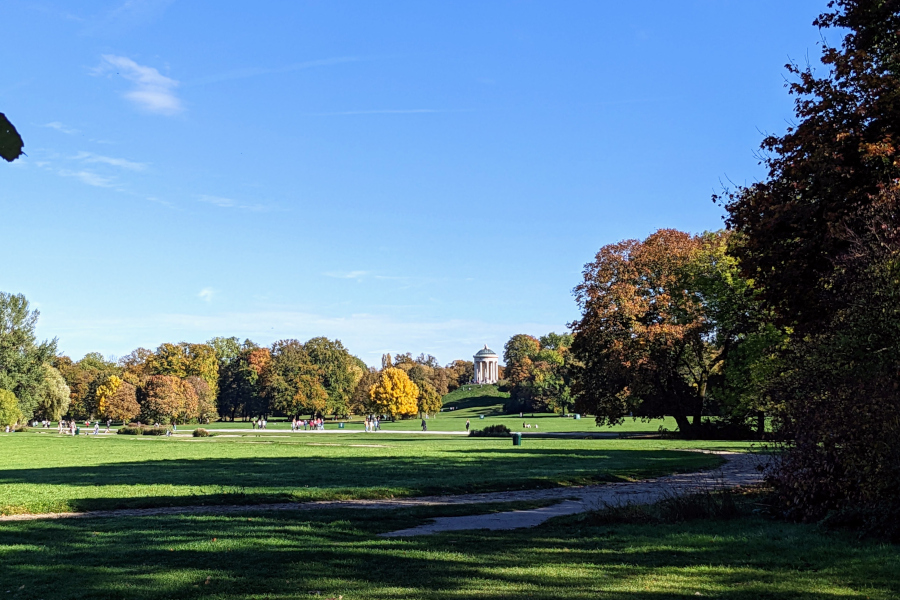
One of several landmarks in the park is the Monopteros, a round, 16-meter-high (nearly 52.5 feet high) Greek-style temple built on an artificial hill in the 1830s. King Ludwig I commissioned it in honor of Elector Karl Theodor and King Maximilian, and it’s constructed of Kelheim limestone
Monopteros offers one of the most unappreciated views of the skyline of Munich’s Altstadt (and it’s free!). Facing south, you have the opportunity to catch a glimpse of both sunrise and sunset from the hill immediately overlooking a meadow.
Visit the Chinese Tower
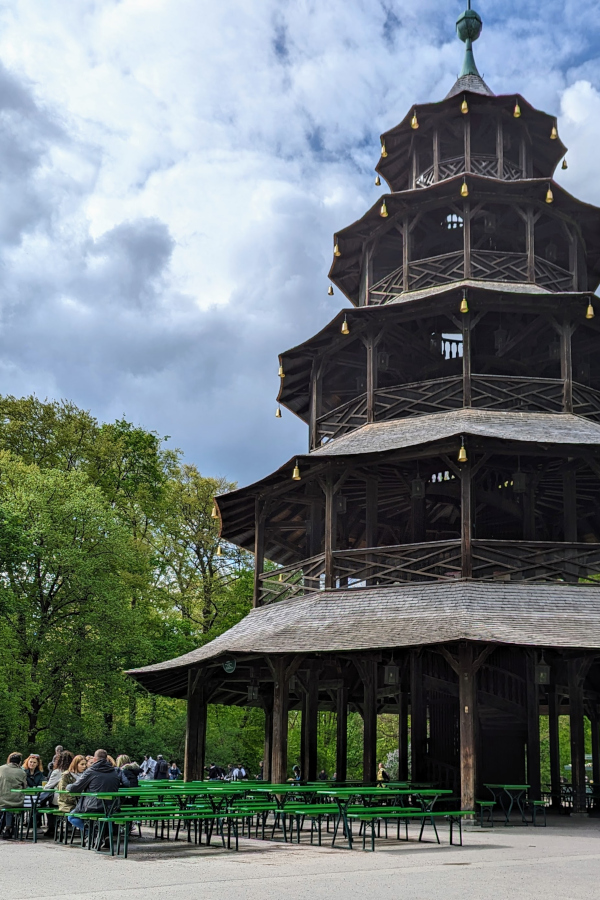
In the southeastern part of the park is the Chinesischer Turm, or Chinese Tower. A bit of an oasis in a clearing, the tower today serves as a landmark for the adjacent biergarten.
The 25-meter-tall (about 82 feet) tower is an original part of the park, dating to the 1790s, when it was built as an observation deck. It was inspired by the Royal Botanic Gardens of Kew’s Great Pagoda in London, though not as tall. Built out of wood, it has, unfortunately, burned down several times and been rebuilt. The last instance was when it was rebuilt following a bombing at the end of World War II.
These days, the tower serves more commonly as the bandstand, where brass bands sit to perform to those in the biergarten. Once a year, in late July, they perform for the Kocherlball, an event when traditionally servants gathered in the early hours of the morning.
The tower also serves as the central focal point each winter for the Christkindlmarkt.
Even if you don’t stop for a beer or an Apfelschorle, it’s worth wandering through the area because this is one of the liveliest gathering spots in the park.
Relax at Kleinhesseloher See
For a quieter experience, head north of the Chinese Tower to the largest lake in the park, Kleinhesseloher See. Added around 1803 at what was then the northernmost section of the park, it increased in size several times.
The area was a rest area of sorts for local workers, selling beer, milk, meals, and eventually hosting a dance hall. The restaurant grew into the Seehaus, a biergarten that stands on the edge of the lake. The one standing today is from 1985.
With waterfront views, the lake offers a spot to relax in the biergarten or picnic. During the warmer seasons, paddle boats are available for rental so you can take to the water.
Find the Hidden Corners
There is no right or wrong way to explore Englischer Garten. That’s what makes it fun. Sometimes, you never know what you might discover. The farther you head north, the quieter things tend to get with fewer tourists.
In the quieter northern section of the park, you’ll find parents teaching their children to ride bikes, friends catching up over a picnic, and locals enjoying long afternoons outdoors. On sunny days, groups often gather with a case of beer or bottles of Spezi cooling in the Eisbach while music drifts across the meadows.
You can find wildlife throughout the park: crows frequent the beer gardens, while large water birds take to the ponds and lakes. One of my favorite things is watching the wildlife and having a different experience with each visit.
Best Beer Gardens in the English Garden
One of the best reasons to visit the English Garden Munich is to enjoy a meal or a cold beer outdoors after going for a walk. Whether you’re looking for a lively atmosphere with live music or a quiet spot overlooking the water, there’s a beer garden for every type of visitor.
Chinese Tower Beer Garden (Chinesischer Turm)
The Chinese Tower Beer Garden is the most famous beer garden in the English Garden and one of Munich’s classic outdoor dining experiences. With thousands of seats beneath chestnut trees, it can be busy but has an unmistakably Bavarian atmosphere, especially when the brass band is performing.
I almost always end up lingering here longer than I planned. It’s one of those places where it’s easy to order one more drink and simply watch the afternoon go by.
Best for: First-time visitors, traditional atmosphere, live music, and classic Bavarian food.
Pro tip: Visit on a weekday or earlier in the day if you’d like a quieter experience. Weekend afternoons can be especially busy during good weather.
Seehaus
Located along Kleinhesseloher See, Seehaus offers one of the most scenic settings in the park. With its location overlooking the lake, it’s an ideal spot for a leisurely lunch or dinner.
Best for: Lakeside dining, couples, and sunsets.
Pro tip: Grab a table overlooking the water if you can. It’s one of the prettiest places to relax in the English Garden.
Hirschau Beer Garden
Farther north in the English Garden Munich, Hirschau feels noticeably quieter than the Chinese Tower. It’s a favorite with locals and visitors who want to escape the busiest parts of the park.
Best for: A peaceful meal, families, and visitors exploring the northern half of the English Garden.
Pro tip: Combine a visit with a longer walk through the less-visited northern section of the park.
Aumeister
Located near the northern end of the English Garden, Aumeister has long been a popular stop for walkers and cyclists. Because it’s farther from Munich’s city center, it attracts fewer tourists and has a relaxed neighborhood feel.
Best for: Cyclists, long walks, locals, and anyone exploring beyond the park’s main attractions.
Pro tip: If you only have a couple of hours in the English Garden, you probably won’t make it this far north. Save Aumeister for a return visit or if you’re planning a longer walk through the park.
Looking for even more places to enjoy a Maß in Munich? Check out my guide to the best beer gardens in Munich, where I compare the city’s most iconic spots and share my favorites.
Suggested English Garden Walking Route
As someone who has gotten a bit lost in the park, I can assure you it’s a good idea to have at least a loose plan for your walk. If you’re visiting Munich for the first time, this route takes you past the English Garden Munich’s most famous sights, without requiring a full day. You’ll see the Eisbach surfers, climb to the Monopteros, stop at the Chinese Tower, and finish with a relaxing break by the lake.
Walking Route at a Glance
| Distance | Approximately 3.5 miles |
|---|---|
| Time Needed | 2 to 3 hours (allow extra time for a meal or biergarten stop) |
| Difficulty | Easy, mostly flat paved and gravel paths |
| Best For | First-time visitors who want to see the English Garden’s highlights |
| Starting Point | Odeonsplatz U-Bahn Station |
| Ending Point | Seehaus Biergarten (or return to Odeonsplatz via the same route) |
Step-by-Step Route
- Odeonsplatz – The U-Bahn station for Odeonsplatz is the most major station close to the park’s southern entrance. It’s an easy and pleasant walk through the Hofgarten and cross over Prinzregentenstrasse
- Eisbach Wave – The first stop in the park is the Eisbachwelle at the entrance between Haus der Kunst and the Bavarian National Museum. You can get a great view of the wave from the bridge or watch from either side of the Eisbach.
- Japanese Tea House – On select weekends, April through October, the Japanese Tea House is open for visits.
- Monopteros – After leaving the Tea House, you’ll cross one of the park’s expansive meadows before reaching the Monopteros. Don’t skip the short climb to the top. From here, you’ll get one of the best panoramic views over Munich’s Old Town, and it’s one of my favorite places in the park to pause for a few minutes before continuing.
- Chinese Tower – Not far from the Greek temple is the Chinesischer Turm. Stop for a drink or lunch beneath the chestnut trees before continuing north.
- Kleinhesseloher See – About 15 minutes north on foot of the Chinesischer Turm is the Kleinhesseloher See.
- Seehaus – After that long walk, unwind on the edge of the lake at the Seehaus’ biergarten.
Best Time to Visit

With each season, you can experience something different from Englischer Garten.
Spring
Spring is one of my favorite times to visit the English Garden. As the trees begin to leaf out and flowers bloom, the park comes back to life after winter. It’s warm enough for long walks without the crowds that arrive later in the summer, and the reopening of Munich’s biergartens makes it an especially enjoyable time to visit.
If you’re visiting Munich in spring, the English Garden is just one of many places to enjoy the city’s green spaces and outdoor attractions. See my guide to Munich in spring for more ideas.
If I had to pick one time to visit, I’d choose late spring. The weather is comfortable, the beer gardens are open, and the park hasn’t yet reached its summer crowds. Just beware the uncertainty of rain.
Best for: Comfortable sightseeing and fewer crowds.
Expect: Blooming trees, changing weather, and cool evenings.
Summer
During the summer, Englischer Garten is lively and busy. The meadows fill up with sunbathers and families while the walkers and cyclists fill the park’s paths. Those who like to live dangerously may even take a dip in the Eisbach as it cuts through the park.
Best for: Experiencing the park amongst the locals.
Expect: The busiest time of year, especially on sunny weekends.
Autumn
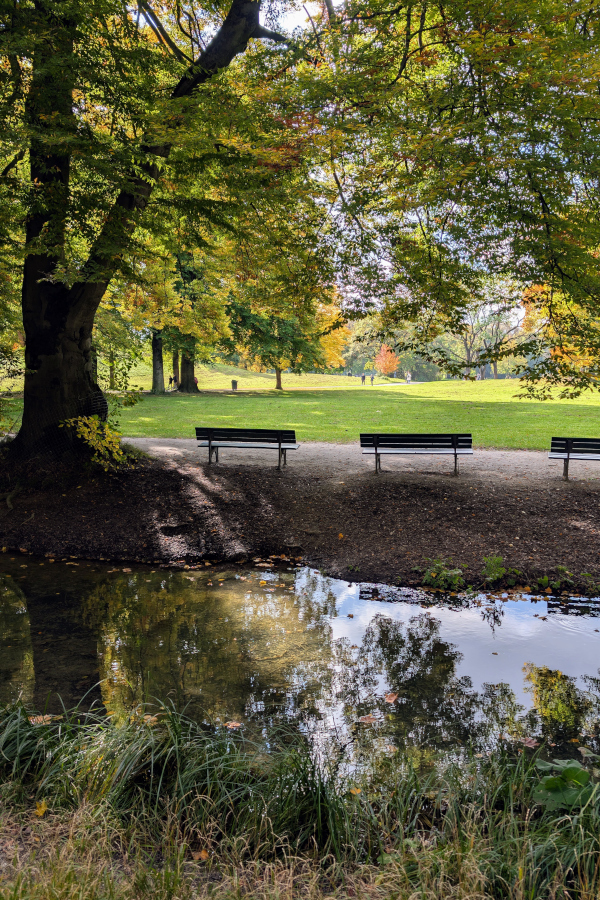
When the park’s leaves reach their peak, autumn in Englischer Garten is simply beautiful. The cooler temperatures and smaller crowds allow for comfortable strolls through the park or relaxing on a bench to watch people and nature. For more seasonal recommendations, see my guide to Munich in autumn.
Best for: Fall colors and peaceful walks.
Expect: Cooler weather and shorter daylight hours.
Winter
In winter, the park takes on a different kind of beauty. If there happens to be snow, it becomes almost magical. While the weather is likely to keep many away, you can still expect many visitors to be bundled up to enjoy a more peaceful park.
And don’t forget about the surfers. Despite the cold temperatures, they’ll still be surfing that infinite wave!
My guide to Munich in winter shares more ideas for making the most of the colder months.
Best for: A peaceful escape from the city without going far.
Expect: Bare trees and chilly temperatures.
Practical Tips
- Wear comfortable shoes.
- Pace yourself. The park is much larger than many visitors expect. If you’re visiting several attractions in one day, my 3-day Munich itinerary shows how to combine the English Garden with the Residenz, Old Town, and other nearby sights.
- Bring water.
- During the peak season, beer gardens can be busy on weekends.
- Explore beyond the southern section if you want a quieter experience.
- Respect the park by taking your trash with you and keeping noise reasonable.
Nearby Attractions
One of the best things about visiting the English Garden is how easily it fits into a day of sightseeing. Several of Munich’s top attractions are just a short walk from the park, making it simple to combine multiple stops into one itinerary.
Munich Residenz
Just a short walk from the southern entrance, the Munich Residenz was once home to Bavaria’s rulers. Its lavish rooms, treasury, and courtyards make it one of the most expansive museums in Munich and an easy addition before or after visiting the English Garden.
Odeonsplatz
Odeonsplatz serves as the gateway to the southern end of the English Garden. Surrounded by historic buildings, churches, and cafés, it’s also one of Munich’s most recognizable public squares and an excellent starting point for exploring the city.
Hofgarten
Between Odeonsplatz and the English Garden sits the peaceful Hofgarten. This formal Renaissance-style garden offers a quieter contrast to the sprawling English Garden and is well worth strolling through on your way into the park. It’s one of my favorite spots to walk, especially in the autumn.
Bavarian National Museum
Located beside the southern entrance, the Bavarian National Museum houses one of Germany’s finest collections of decorative arts, medieval sculptures, armor, and royal treasures. It’s an excellent stop if you enjoy history or art.
Haus der Kunst
Standing just outside the English Garden, Haus der Kunst is one of Munich’s leading contemporary art museums. Even if you don’t visit the exhibitions, you’ll pass the impressive building on your way to the famous Eisbach Wave.
Munich Old Town (Altstadt)
The English Garden is only a short walk from Munich’s historic center, making it easy to combine with Marienplatz, the Viktualienmarkt, or climb nearby St. Peter’s Church for another of the best views in Munich. If you’re planning your itinerary, my Munich travel guide highlights my favorite attractions, neighborhoods, restaurants, and day trips.
Final Thoughts
Whether you spend an hour watching the surfers or an entire afternoon wandering shaded paths and relaxing in a biergarten, the Englischer Garten is one of the places that keeps drawing me back every time I visit Munich. It’s where the city slows down and where you’ll see locals enjoying everyday life alongside visitors discovering one of Munich’s most iconic attractions. If it’s your first visit to Munich, I highly recommend setting aside a few hours here. You might arrive planning to see the surfers and climb the Monopteros, but don’t be surprised if you end up lingering much longer than expected.
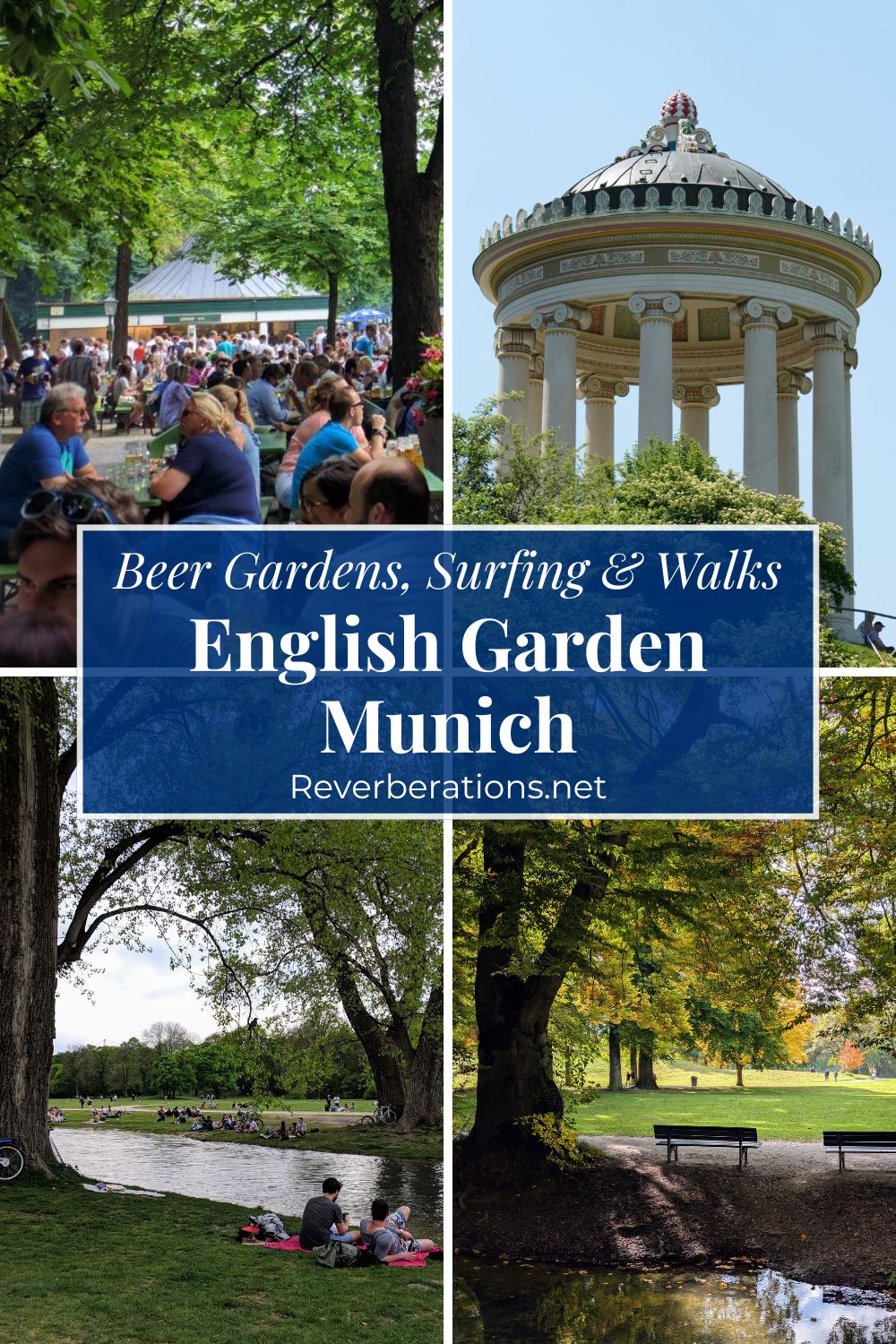
Save this post for later with Pinterest!
Englischer Garten FAQs

Is the English Garden free?
Yes, the Englischer Garten is completely free to visit. You can walk the trails, watch the Eisbach surfers, climb to the Monopteros, and relax by Kleinhesseloher See without paying an entrance fee. The only costs you’ll encounter are optional, such as food and drinks at the beer gardens or renting a paddle boat on the lake.
How long should you expect to spend there?
I recommend allowing at least two to three hours to see the English Garden’s highlights, including the Eisbach Wave, Monopteros, Chinese Tower, and Kleinhesseloher See. If you’d like to stop for a meal at one of the beer gardens or explore the quieter northern section of the park, plan on spending half a day.
Can you swim in the English Garden?
Although swimming in the Eisbach is very popular, especially during hot weather, it is prohibited. The fast-moving current can be dangerous, and several accidents have occurred over the years. While you’ll almost certainly see locals cooling off in the water during summer, it’s important to understand the risks and follow local regulations.
Can beginners surf the Eisbach Wave?
No. The Eisbach Wave is intended for experienced surfers only. The powerful current, confined space, and concrete channel make it a challenging and potentially dangerous place to surf. Even if you don’t surf, it’s worth stopping to watch the talented locals and visitors take on one of Munich’s most unique attractions.
Which beer garden is the best?
It depends on what you’re looking for. The Chinese Tower Beer Garden is the classic choice for first-time visitors and offers a traditional Bavarian atmosphere. Seehaus offers lakeside dining and relaxing with a view, while Hirschau and Aumeister are quieter options that attract more locals and are ideal if you’re exploring the northern half of the park.
Is the English Garden worth visiting?
Absolutely! The Englischer Garten is one of my favorite places in Munich because it offers much more than a typical city park. Whether you want to watch surfers ride the Eisbach Wave, enjoy a beer beneath chestnut trees, photograph the Monopteros, or simply wander peaceful paths, there’s something here for every type of traveler.
How do you get to Englischer Garten?
The easiest way to reach the English Garden is by U-Bahn. For first-time visitors, I recommend getting off at Odeonsplatz and walking through the Hofgarten to the southern entrance near the Eisbach Wave. Universität and Münchner Freiheit are also convenient stations, depending on which part of the park you’d like to explore.
What is the best entrance to Englischer Garten?
For most visitors, the southern entrance near the Eisbach Wave is the best place to start. It’s within easy walking distance of Odeonsplatz and puts you close to many of the park’s most famous attractions, including the surfers, Monopteros, Chinese Tower, and the walking route outlined in this guide.
Can you picnic in the English Garden?
Yes! Picnicking is one of the most popular activities in the English Garden, especially during the warmer months. Bring a blanket and enjoy one of the park’s many open meadows, or pick up food from a nearby bakery before heading into the park. Just remember to clean up after yourself and help keep the park beautiful.
Is the English Garden good for children?
Yes! The English Garden is an excellent place for families thanks to its wide walking paths, open lawns, wildlife, and plenty of space for children to run around. Kids also enjoy watching the Eisbach surfers and riding the historic carousel near the Chinese Tower.
What is the best time of year to visit the English Garden?
The English Garden is beautiful year-round and offers something special with each season. My favorite season is autumn, when the trees turn brilliant shades of gold and orange, and the beer gardens are still open without the peak summer crowds. Spring is also wonderful, with plants just starting to bloom.
All photos and opinions are my own.


