
The Outer Banks of North Carolina have something for just about every type of traveler, from long stretches of beaches and historic sites to outdoor activities and small coastal towns. There are miles of beaches, historic sites like the Wright Brothers Memorial and Roanoke Island, outdoor adventures like hang gliding, and a laid-back attitude.
This travel guide will help you plan your next trip to the Outer Banks, just as I have since I was a child on summer vacations with my family.
Where Are the Outer Banks?
The Outer Banks are a chain of barrier islands off the coast of North Carolina. They stretch from near the Virginia border south for roughly 200 miles. The northernmost area, Carova Beach, is only accessible by 4WD vehicles. The southernmost area, Ocracoke Island, can only be reached by ferry or boat. While most of the popular beach towns are on the barrier islands, nearby places like Roanoke Island are also considered part of the broader Outer Banks region.
Best Things to Do in the Outer Banks
Visit the Outer Banks Lighthouses

The Outer Banks is home to some of the nation’s most recognizable lighthouses. Cape Hatteras’ black-and-white candy stripe is iconic, but each of the historic lighthouses has its own character and history. Visiting them is one of my favorite ways to experience the area’s maritime history, and they also make easy additions to other sightseeing stops.
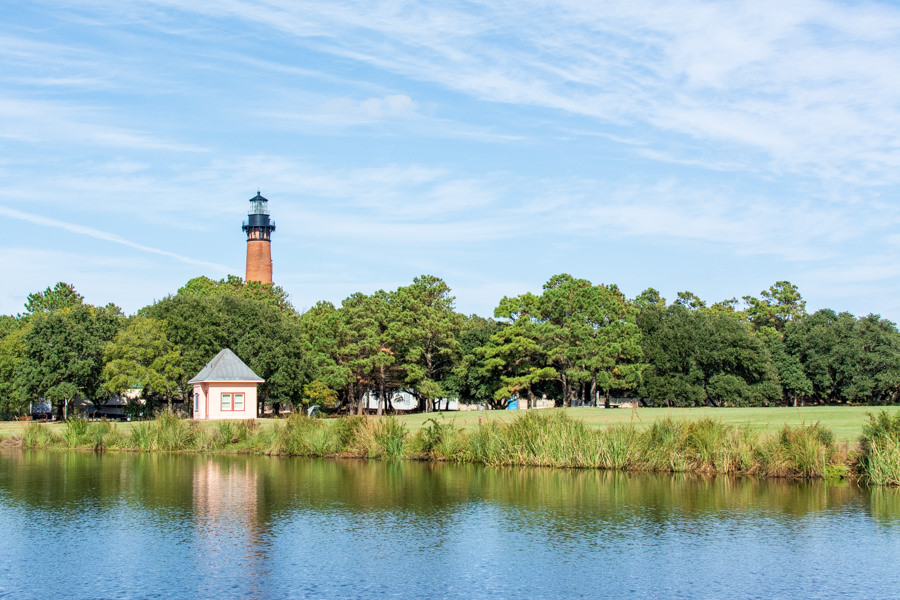
Currituck Beach Lighthouse fits naturally into a day exploring Corolla, while Bodie Island Lighthouse is close to several attractions around Nags Head. Depending on the season and current restoration work, some towers may be open for climbing while others are not.
For a closer look at the lighthouses, including which ones you can climb and what to expect at each one, see my guide to the Outer Banks lighthouses.
Visit the Outer Banks National Park Service Sites

The Outer Banks has several National Park Service sites that preserve important pieces of the area’s natural and cultural history. Cape Hatteras National Seashore protects much of the area’s coastline, while the Wright Brothers National Memorial commemorates the first successful powered flights. On Roanoke Island, Fort Raleigh National Historic Site preserves the site of England’s attempts to establish a settlement in the New World, including the story of the Lost Colony.
Together, these sites offer a good introduction to the history and landscape of the Outer Banks, and they’re worth considering even if you’re visiting primarily for the beaches.
See my guide to the Outer Banks National Park Service sites for what to see at each site and how to plan your visits.
Explore Jockey’s Ridge State Park
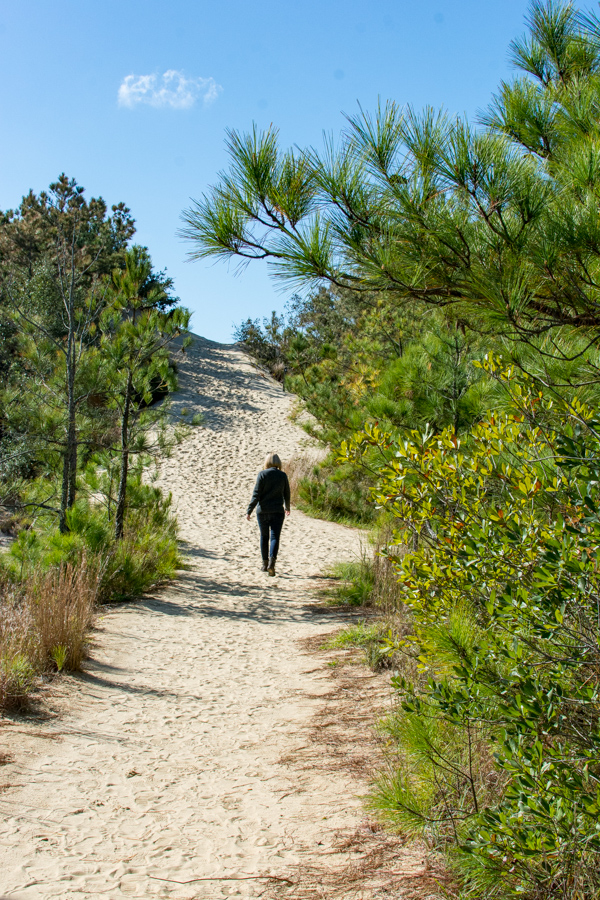
Jockey’s Ridge is one of the most remarkable landscapes on the Outer Banks. The park is home to the tallest active sand dune system on the East Coast, and the dunes offer a very different experience from the beaches just across the street.
You can walk across the dunes, take in views of the ocean and the sound, and learn more about the unusual environment at the park. Jockey’s Ridge is also a popular spot for hang gliding. If that’s a bit too adventurous for you, flying a kite is also a popular activity.
See my guide to Jockey’s Ridge State Park for more information about visiting the park and what to expect.
Discover What to Do Beyond the Beach
If you need a break from the sand and sun, or you’re simply not the biggest beach person, there’s plenty to do on the Outer Banks. You can explore aviation and maritime history, visit historic sites and gardens, climb lighthouses, explore unusual coastal landscapes, and spend time in the area’s small towns.
These attractions can also be especially useful on cooler or rainy days, when a full day at the beach isn’t particularly appealing.
I’ve put together a separate guide to things to do in the Outer Banks besides the beach with more ideas.
Spend Time on the Beach
Of course, you can’t talk about visiting the Outer Banks without talking about the beaches. Miles of coastline are one of the main reasons people come here, whether you’re looking for a traditional summer beach vacation or simply want to walk along the water during a less busy time of year.
Beach access, parking, rules, and conditions vary throughout the Outer Banks, so check local information before heading out. Some beaches are also much busier than others, particularly during the summer.
If the beach is the main reason you’re visiting, where you stay can make a big difference in how much time you spend driving to and from the places you want to visit.
Where to Go and Stay in the Outer Banks
Corolla

Corolla is at the northern end of the Outer Banks and has a somewhat quieter feel than the more developed areas farther south. The area is known for its beaches, Currituck Beach Lighthouse, and Historic Corolla Village.
The wild horses are also an important part of Corolla’s history and landscape, but I don’t recommend seeking them out as a must-do activity or tourist attraction. If you encounter them while exploring the area, give them plenty of space and never feed or approach them. Follow posted rules and stay out of restricted areas.
If you plan to continue north into the Carova area, keep in mind that this section of the Outer Banks is accessible only by 4WD vehicle, and a permit is required for parking. If you’re planning to explore this area, make sure you understand the access and parking rules before you go.
Corolla is a good choice if you want a quieter northern base and don’t mind being farther from attractions in the central Outer Banks.
See my guide to the best things to do in Corolla for more on what to see and do.
Duck and Southern Shores
Duck and Southern Shores sit between Corolla and the more developed central Outer Banks. The area is more residential and less attraction-heavy, with convenient beaches. Expect small local shops and some restaurants, especially along the soundside Duck Boardwalk, rather than major tourist attractions.
This area works well if you want a quieter, more residential setting while staying relatively close to the central Outer Banks.
Kitty Hawk and Kill Devil Hills
Kitty Hawk and Kill Devil Hills are the spots everyone knows. They are centrally located and convenient for a first Outer Banks trip. You’ll find beaches, restaurants, shops, and several major attractions nearby, including the Wright Brothers National Memorial.
These towns are a good choice for first-time visitors who want a central location with easy access to beaches, restaurants, and major attractions.
Nags Head
Nags Head is one of the most recognizable Outer Banks towns and is home to several popular attractions, including Jockey’s Ridge State Park. It’s also a convenient base for exploring the central Outer Banks, with plenty of places to stay, eat, and access the beach.
Its location makes Nags Head particularly useful if you want to combine beach time with sightseeing without spending your entire trip driving.
Manteo and Roanoke Island
Manteo, on Roanoke Island, is just across the sound from the main barrier islands of the Outer Banks. While much of the region feels like a beach town, Manteo offers a small-town feel with a historic waterfront. The island is home to attractions including Fort Raleigh National Historic Site, the Elizabethan Gardens, and the historic downtown area.
Because Roanoke Island is connected to the mainland and the barrier islands by bridges, it also provides a different perspective on the Outer Banks than staying directly on the beach.
This is a good option if you prefer history, a small-town atmosphere, and soundside surroundings rather than staying directly on the beach.
Hatteras Island
Hatteras Island extends south from the central Outer Banks and has a quieter, less developed feel than the areas around Nags Head and Kitty Hawk. Much of the island is part of Cape Hatteras National Seashore, making it a good choice for beaches, nature, and exploring the area’s lighthouses and maritime history.
The communities are spread out along the island, so keep the distances in mind when choosing where to stay.
Hatteras Island is best suited to travelers who want a quieter beach experience and don’t mind being farther from the attractions around the northern Outer Banks.
Ocracoke
Ocracoke Island is at the southern end of the Outer Banks and can only be reached by boat or ferry. That extra effort gives it a distinctly different feel from the more easily accessible northern and central Outer Banks.
The village has a small-town atmosphere, historic buildings, shops, restaurants, and the Ocracoke Lighthouse. Ocracoke works particularly well for travelers looking for a slower-paced experience and a change of pace from the more developed northern Outer Banks.
When Is the Best Time to Visit the Outer Banks?
The best time to visit the Outer Banks depends largely on whether you want a traditional beach vacation or prefer quieter conditions for sightseeing and exploring.
Outer Banks in Spring
Spring is an appealing time to visit the Outer Banks if you want milder temperatures. While crowds are lighter than during the peak of summer, popular areas can still be busy. It’s a particularly good season for sightseeing, walking, and exploring the area’s historic sites without the intensity of the summer crowds.
The trade-off is that ocean temperatures are still cold, and some seasonal businesses and attractions may have limited hours.
My guide to the Outer Banks in spring provides more details on what to expect.
Outer Banks in Summer
Summer is the peak Outer Banks beach season. You can expect warm weather, the warmest ocean temperatures, and the greatest number of visitors. If your main focus is swimming and spending long days on the beach, this is when you’ll find the conditions most people associate with an Outer Banks vacation.
It’s also the busiest and often the most expensive time of year, so expect more traffic and crowded beaches and plan accommodations well in advance.
Outer Banks in Fall
Fall is one of my favorite times to visit the Outer Banks. The summer crowds begin to disappear, temperatures become more comfortable for sightseeing and walking, and you can still have pleasant beach days early in the season.
The later you visit, however, the more seasonal businesses and attractions may reduce their hours or close for the year.
See my guide to the Outer Banks in fall and the off-season for more about visiting after the summer crowds have gone.
Outer Banks in Winter
Winter is the quietest time of year on the Outer Banks, and it isn’t the right choice if you’re looking for a classic beach vacation. But if you enjoy long walks, historic sites, lighthouses, nature, and having popular places largely to yourself, there’s still plenty to see.
The biggest consideration during winter is that some seasonal businesses, attractions, and restaurants close or operate on reduced schedules.
How Many Days Do You Need in the Outer Banks?
3 Days in the Outer Banks
Three days gives you enough time to experience some of the highlights of the central Outer Banks, but you’ll need to be selective. A first trip could include a lighthouse, the Wright Brothers National Memorial, Jockey’s Ridge, some beach time, and one or two other attractions.
Three days can work well for a first visit if you focus on the central Outer Banks rather than trying to see everything. I would stay around Kitty Hawk, Kill Devil Hills, or Nags Head so you can spend less time driving between attractions.
5 Days in the Outer Banks
Five days gives you considerably more flexibility. You can spend time on the beach while also visiting several historic sites and attractions, and you have enough time to explore beyond the immediate area where you’re staying.
Depending on your priorities, you could spend part of your trip exploring the northern Outer Banks and central attractions, then devote another day to Hatteras Island or Roanoke Island. Hatteras Island is a longer drive from the central Outer Banks, so consider whether you want to make it a day trip or stay farther south. You’ll still want to group attractions geographically rather than spending hours driving back and forth.
7 Days in the Outer Banks
With a week, you can slow down and explore more of the Outer Banks instead of treating every day as a checklist. This is enough time to combine beach days with sightseeing and venture farther south toward Hatteras Island or Ocracoke.
A week also gives you some flexibility if weather interferes with your plans, which can be particularly useful outside the peak summer season. A week is also a common choice for vacation-rental stays.
How to Get Around the Outer Banks
Do You Need a Car in the Outer Banks?
In general, yes, you do need a car in the Outer Banks. Public transportation is limited. Depending on where you stay, you can walk or bicycle to restaurants, shops, and the beach.
If you want to visit lighthouses, historic sites, state parks, or towns outside your immediate area, having a car gives you much more flexibility.
Driving Between Outer Banks Towns
The Outer Banks is deceptively long. The towns are connected by roads, like Route 12, that generally run along the length of the barrier islands, but getting from one end to another can take considerable time, particularly during the busy summer season.
When planning your itinerary, try to group attractions that are near each other rather than driving the entire length of the Outer Banks several times. A day exploring Corolla looks very different from a day around Nags Head, and visiting Hatteras Island or Ocracoke requires even more time.
Traffic can also add significantly to driving times during summer weekends and holidays. Give yourself some extra time and avoid scheduling too many activities in different parts of the Outer Banks on the same day.
Getting to the Outer Banks
Most visitors arrive in the Outer Banks by car. The northern and central areas are accessible by road from the mainland, while reaching the farther southern areas requires additional planning.
If you’re heading to Ocracoke, you’ll need to take a ferry or arrive by private boat since the island isn’t connected to the mainland by a bridge. Hatteras Island is also connected to the mainland by bridges, but it’s a considerable drive from the northern and central Outer Banks.
If you’re flying, Norfolk International Airport and Raleigh-Durham International Airport are among the larger airports used by visitors to the Outer Banks. Which airport makes the most sense depends on where you’re staying and your overall route.
Outer Banks Travel Tips
Expect Summer Crowds and Traffic
Summer is the busiest time of year on the Outer Banks, particularly on weekends and holidays. Traffic can be heavy, parking can be harder to find, and popular attractions and restaurants can get busy.
If you’re visiting during the peak season, allow extra time for driving and don’t try to pack too many activities into a single day. Starting your day earlier can also make it easier to find parking and enjoy popular attractions before the biggest crowds arrive.
Check Seasonal Hours and Beach Access
The Outer Banks changes considerably with the seasons. Some restaurants, shops, and attractions operate on reduced schedules or close entirely outside the summer season, so check current hours before making plans.
Beach access and parking rules can also vary by town and season. Check local information before heading to the beach, particularly if you’re visiting outside the summer or returning to an area you’ve visited before. Rules, access points, and parking arrangements can change.
Respect the Dunes and Wildlife
The Outer Banks’ dunes and coastal habitats are fragile, so stick to designated paths and beach access points rather than walking across protected dunes. Follow posted signs and stay out of restricted areas, particularly around nesting wildlife.
The same goes for the area’s wildlife. Give wild animals plenty of space, never feed them, and follow local rules and warnings. This is especially important around the Corolla wild horses, which are not domesticated animals and should be treated as wildlife.
What to Pack for the Outer Banks
What you pack will depend on the season, but comfortable shoes, sun protection, and layers are useful year-round. In warmer months, you’ll want a swimsuit, beach gear, and plenty of sunscreen, while a light jacket or hoodie can still be useful in summer when you’re near the water.
If you plan to visit lighthouses, historic sites, or Jockey’s Ridge, bring comfortable shoes. You’ll likely spend more time walking than you expect, even on a trip that is primarily about the beach.
Visiting the Outer Banks With a Dog
Are the Outer Banks Dog-Friendly?
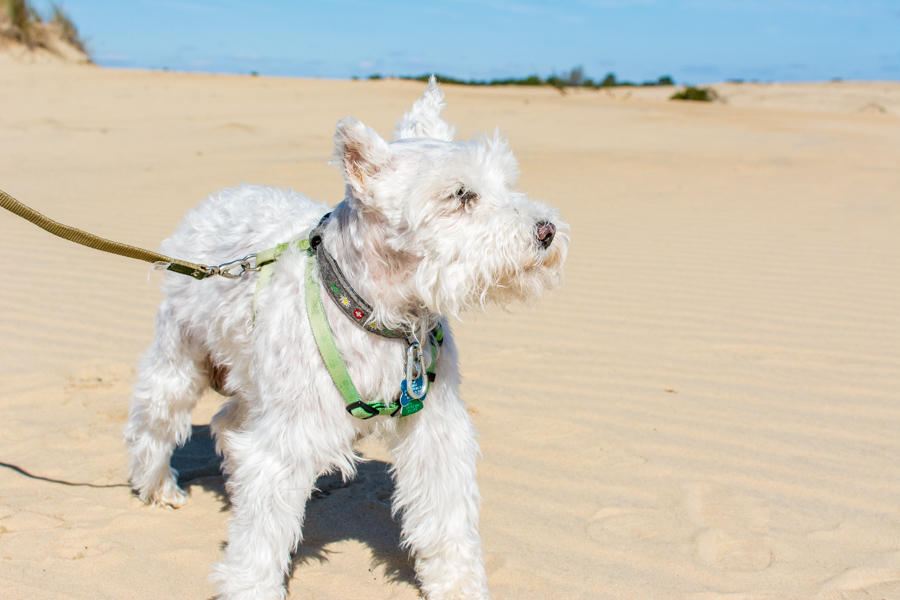
The Outer Banks can be a great destination for a dog-friendly vacation, but rules vary depending on where you’re staying and which beaches and attractions you plan to visit. Some beaches allow dogs year-round with restrictions, while others have seasonal rules or require dogs to be leashed.
Pet-friendly accommodations are also common throughout the Outer Banks, but policies vary, so check the current rules before booking. If you’re planning to bring your dog to the beach, make sure you know the regulations for the specific town you’re visiting rather than assuming the same rules apply everywhere.
I’ve put together a separate Outer Banks dog-friendly vacation guide with more information about traveling with a dog, including beaches and other things to consider when planning your trip.
Free Things to Do in the Outer Banks
Despite what you may think, the Outer Banks doesn’t have to be an expensive vacation. In addition to spending time on the beach, there are plenty of ways to enjoy the area’s scenery, history, and small towns without spending much money.
Walking the Freedom Trail in Manteo, exploring Duck, walking through Manteo’s historic areas, and spending time on the beach are just a few options. You can also find free ways to enjoy the area’s scenery and coastal communities when you don’t want to spend the entire day at the beach.
For more ideas, see my guide to free things to do in the Outer Banks.
Outer Banks Travel FAQs
Is the Outer Banks Worth Visiting?
The Outer Banks is a good fit if you enjoy beaches, coastal scenery, history, lighthouses, outdoor activities, and small towns. And while summer is the traditional time to visit, the Outer Banks has plenty to offer during the spring and fall as well.
The experience does change significantly with the season, so think about what you want from your trip before deciding when to go. A summer beach vacation will be very different from a fall trip focused on sightseeing and long walks.
What Is the Best Part of the Outer Banks to Visit?
There isn’t one best part of the Outer Banks for every traveler. Corolla offers a quieter experience at the northern end, while Kitty Hawk, Kill Devil Hills, and Nags Head are convenient central bases. Manteo and Roanoke Island offer more history and a small-town atmosphere, while Hatteras Island and Ocracoke provide a different experience farther south.
If your priority is being close to major attractions, the central Outer Banks is the most convenient. If you want a quieter setting, consider Corolla, Hatteras Island, or Ocracoke.
Is the Outer Banks Expensive?
The cost of an Outer Banks trip varies considerably depending on when you visit, where you stay, and whether you rent a vacation home or stay in a hotel. Summer is generally the busiest and most expensive time to visit, while prices tend to be lower outside the peak season.
You can also control your costs by choosing a vacation rental with a kitchen, spending more time at free attractions and the beach, and visiting during the shoulder or off-season.
Can You Visit the Outer Banks Without Going to the Beach?
Absolutely. While the beaches are a major reason people visit the Outer Banks, there is plenty to do away from the sand. You can visit historic sites, climb lighthouses, explore museums and gardens, visit state parks, and explore the area’s towns.
I’ve put together a separate guide to things to do in the Outer Banks besides the beach if you’re looking for more ideas.
Can You Visit the Outer Banks in the Off-Season?
Yes. The Outer Banks is much quieter outside the summer season, and spring, fall, and winter each offer a different experience. You’ll find fewer visitors and cooler temperatures, but some seasonal businesses, attractions, and restaurants may have reduced hours or close entirely.
Fall is one of my favorite times to visit, particularly if you want to explore the area without the crowds of summer. See my guide to the Outer Banks in fall and the off-season for more about visiting after the summer crowds have gone.
Do You Need a Car in the Outer Banks?
For most trips, yes. The Outer Banks is spread out along the coast, with attractions, restaurants, beaches, and towns located miles apart. Public transportation is limited, so having a car makes it much easier to explore beyond the area where you’re staying.
Plan Your Outer Banks Trip
If you’re ready to start planning your trip, my Outer Banks guides cover everything from specific attractions and towns to seasonal travel and practical tips.
More Outer Banks Travel Guides
Start with the guides that match your trip:
Places & Attractions
- Best Things to Do in Corolla
- Outer Banks Lighthouses
- Outer Banks National Park Service Sites
- Jockey’s Ridge State Park
- Wright Brothers National Memorial
Planning & Interests
- Things to Do in the Outer Banks Besides the Beach
- Free Things to Do in the Outer Banks
- Outer Banks Dog-Friendly Vacation Guide
When to Visit
Save this post for later with Pinterest!
All photos and opinions are my own.


